
RESTORATION PHOTO-ESSAY
“M” Khorns
A Restoration By Greg Roberts
July 2007
2010 Note
2010 note: please keep in mind as you’re reading through this photo-essay, that it was written in 2007, before I was in business and before I discovered the larger midrange horn format for Khorns. A lot has happened between then and now!
These Poor Khorns Need Help
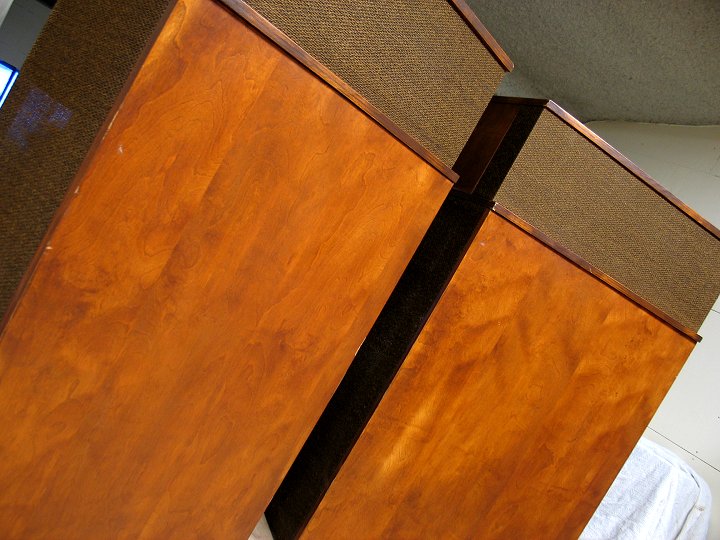
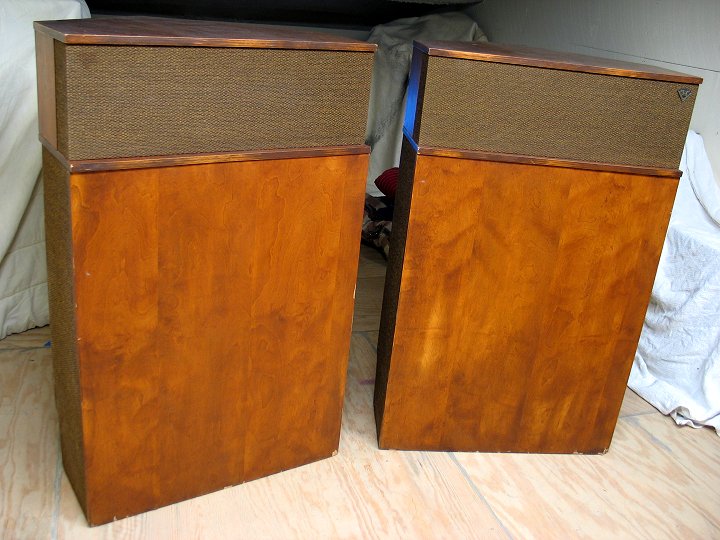
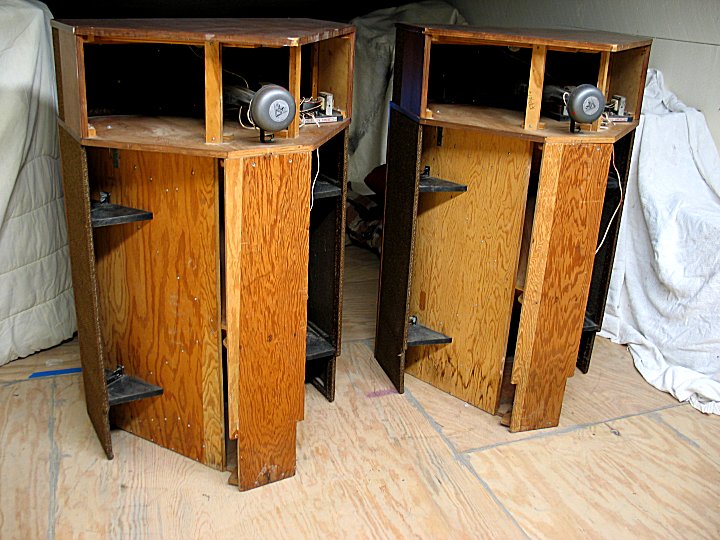
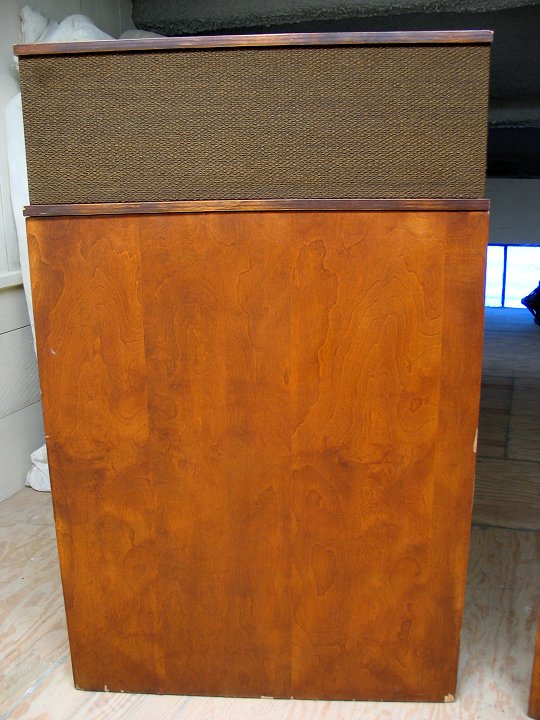
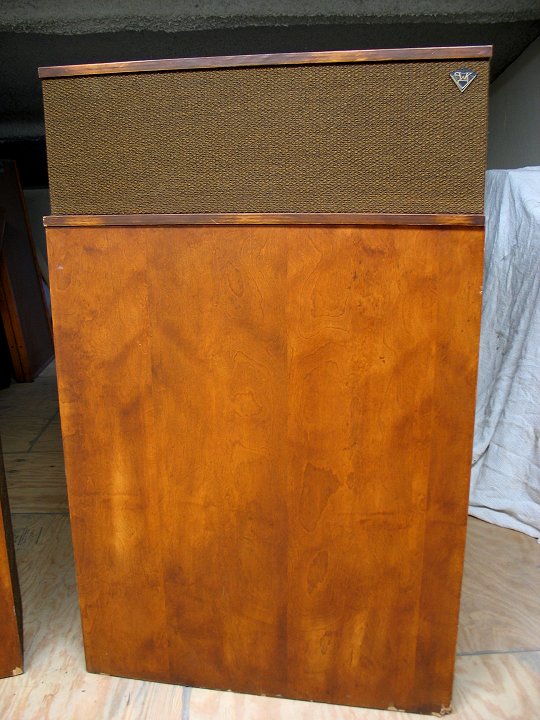
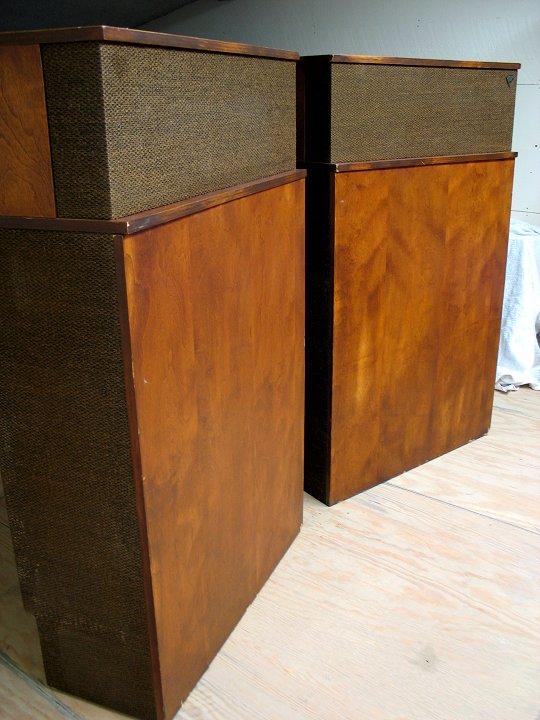
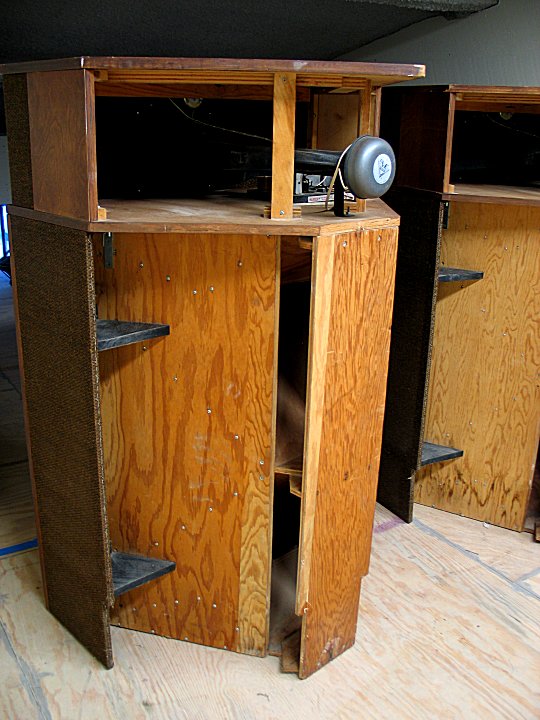
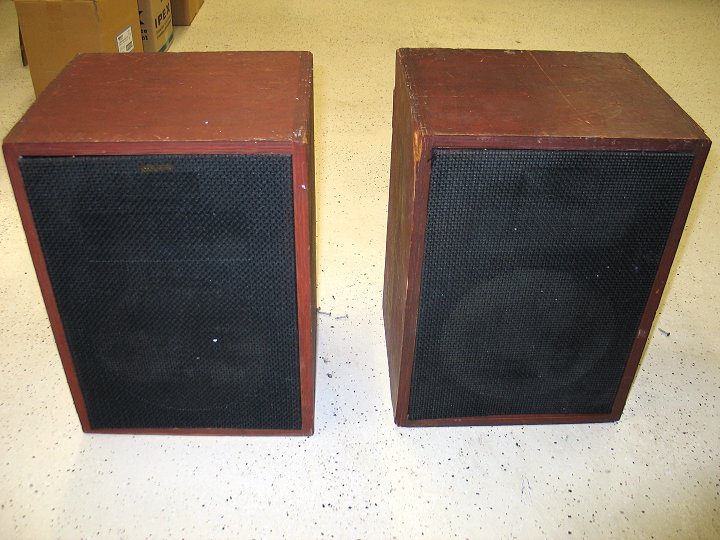
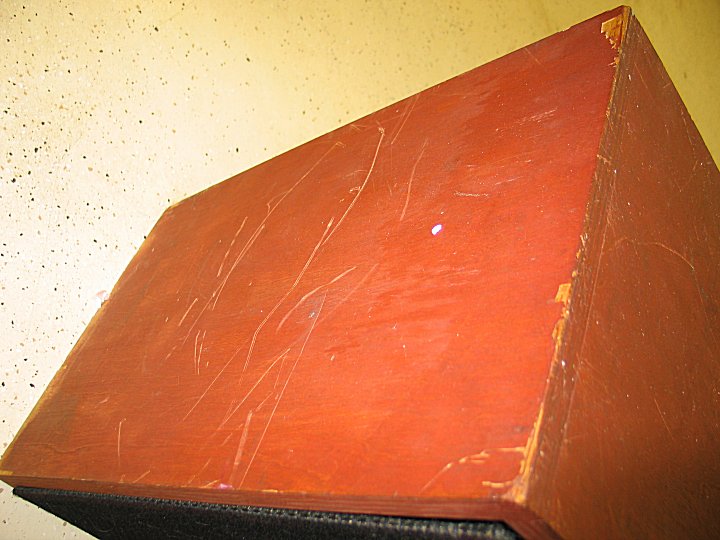
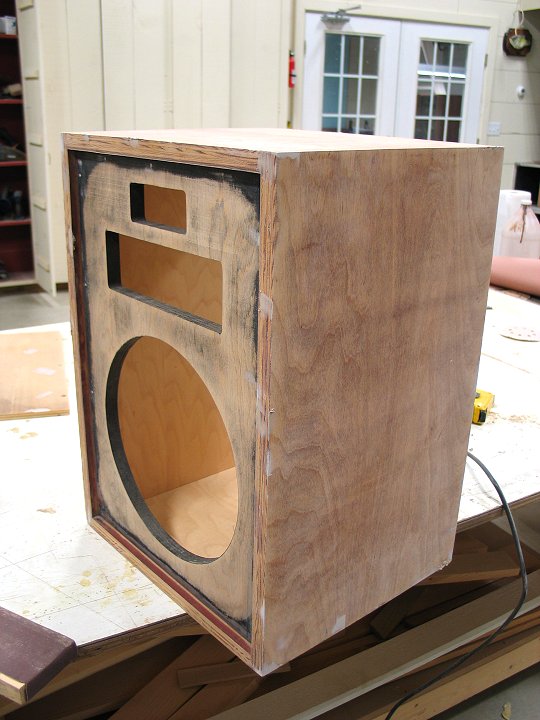
These are in good solid condition overall. I’ve noticed some water marking on the bottoms, meaning that they have seen a little bit of moisture somewhere along the way, but upon close inspection, the plywood has not delaminated at all, and everything seems o.k. to me. The structure of the upper and lower cabinets is sound. These are perfect candidates for a re-veneer job.
Components and Original Details
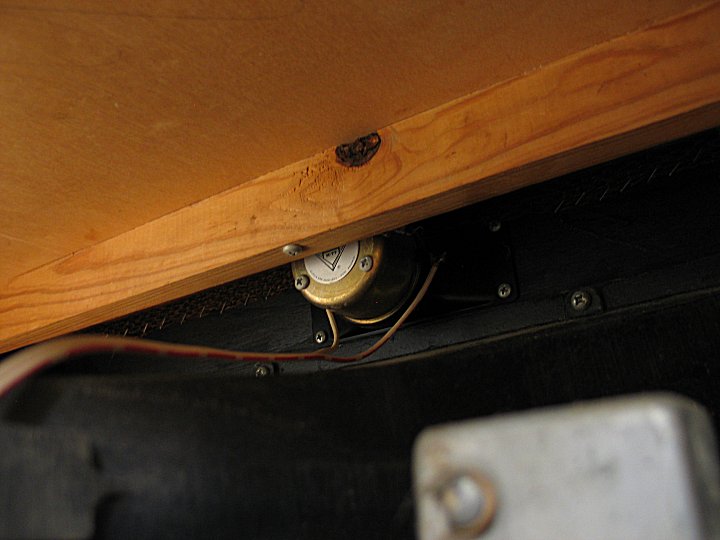
Everything works. They have the preferred vintage round-magnet tweeters and the K-55V midrange. They came with K-33V woofers, which I’ve never seen before. I don’t think these are original. They look like K-43’s in their construction, more of an industrial woofer with higher power capacity. I am going to purchase new K-33 replacements.
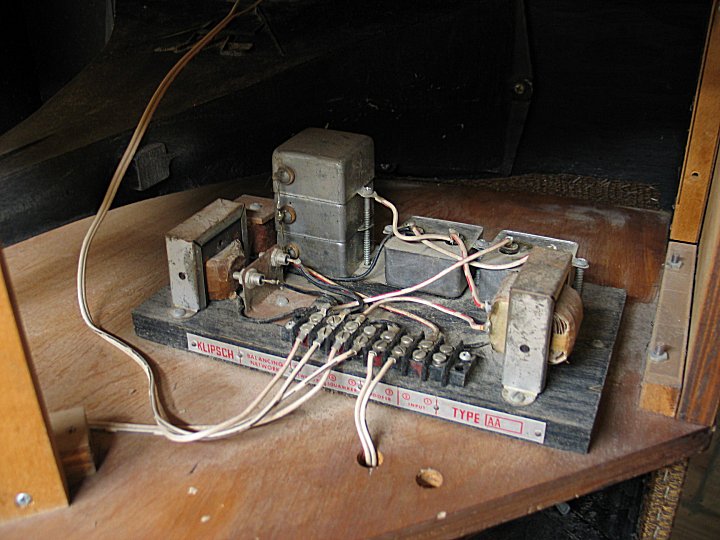
They have the older style AA crossover networks which work fine but could probably benefit from an upgrade, which we’ll talk about later.
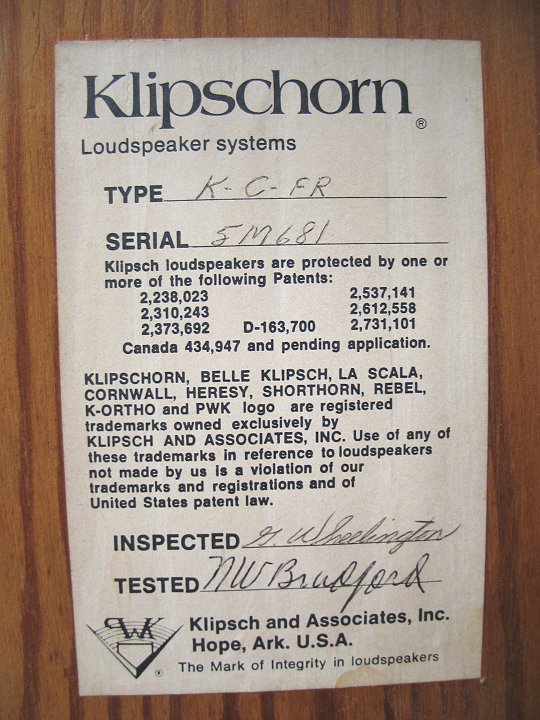
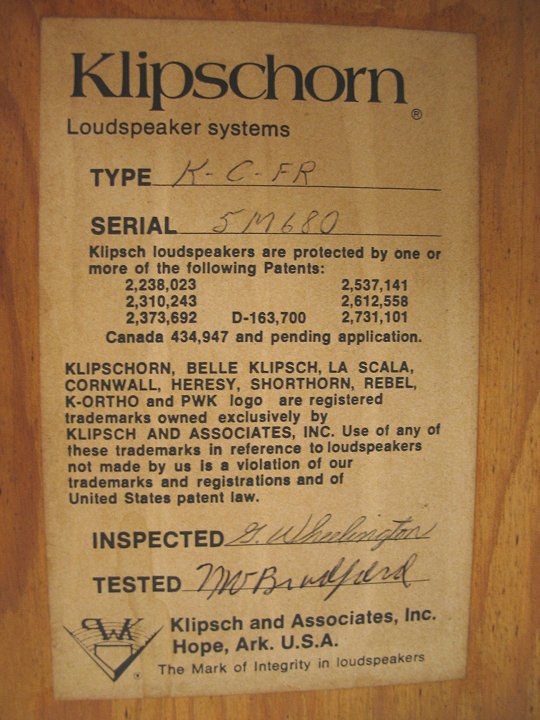
The model as shown on the stickers is K-C-FR. The “K” means Klipschorn, the “C” is the style of the cabinet, and the “FR” means Fir Raw, which means they were made with Fir plywood with the top veneer layer being Fir and they were delivered to the customer without any finish on them.
The serial numbers are 5M680 and 5M681, consecutive. The “M” in the serial numbers indicates that they were built in 1974.
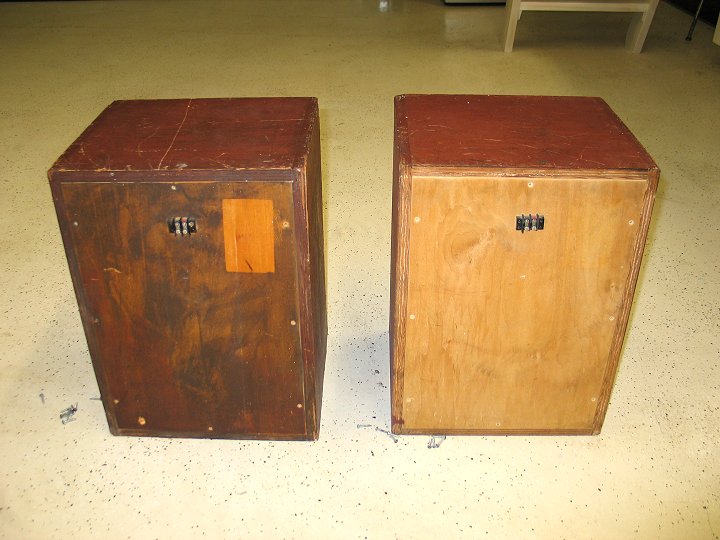
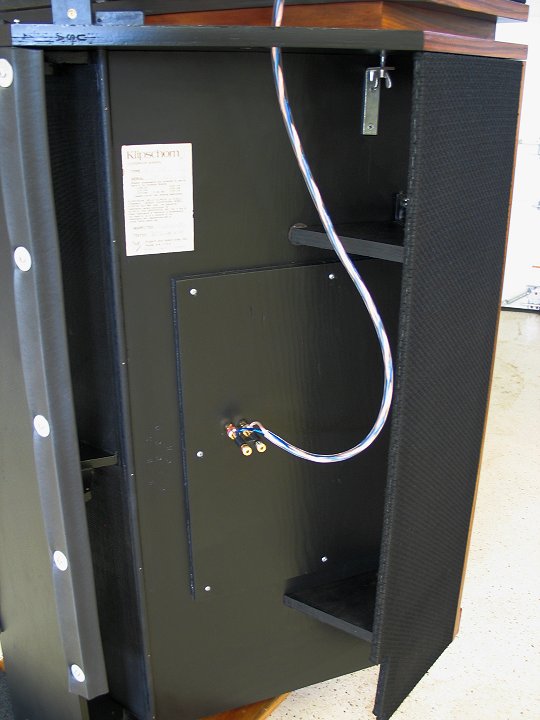
When Klipsch delivered “Raw” speakers, they didn’t finish the backs either. When Klipsch finished speakers, they would paint the backs black, which really looked nice. This is going to be done as part of this restoration.
The grill frames are in great shape, as is the grill cloth, although I think black grills will look the best with Santos Rosewood, so they will be changed to black.
Before Photos and Cabinet Damage
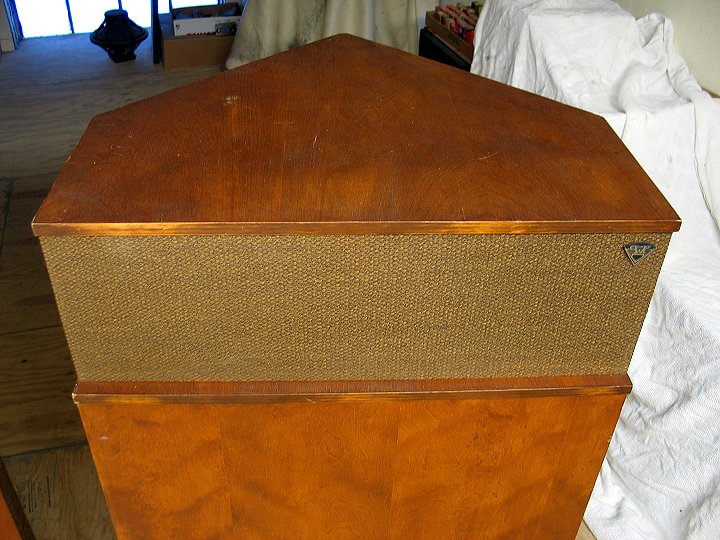
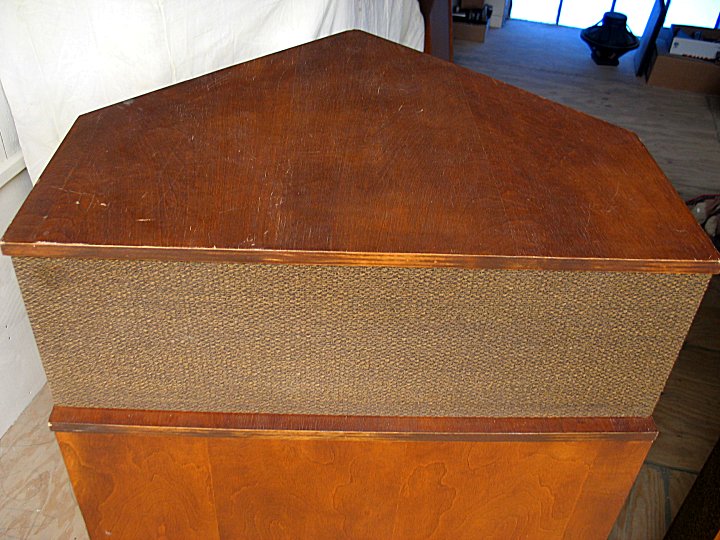
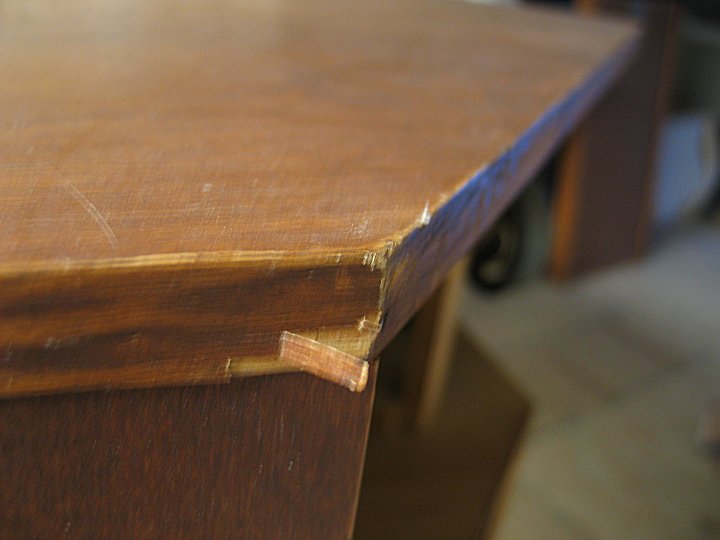
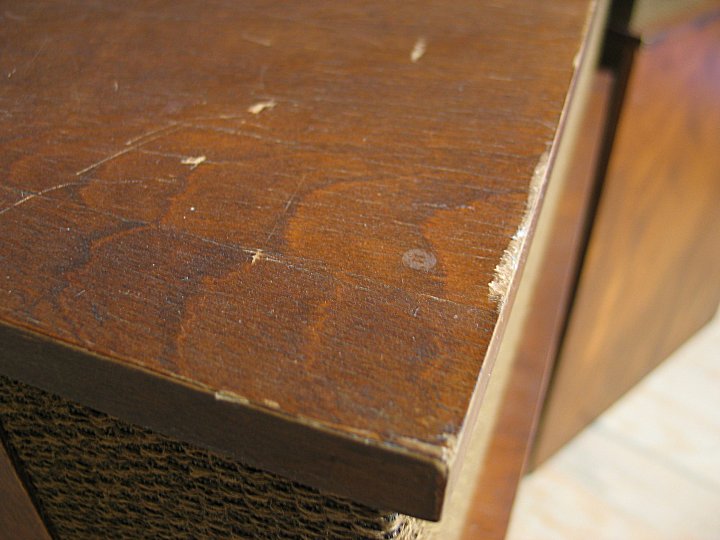
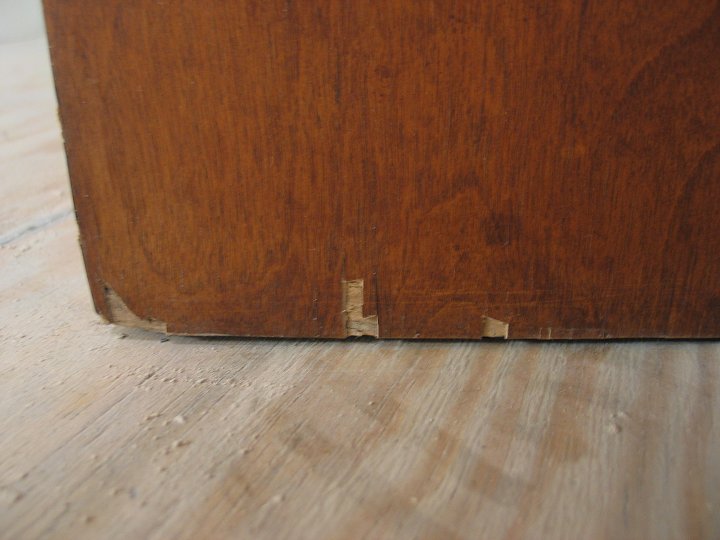
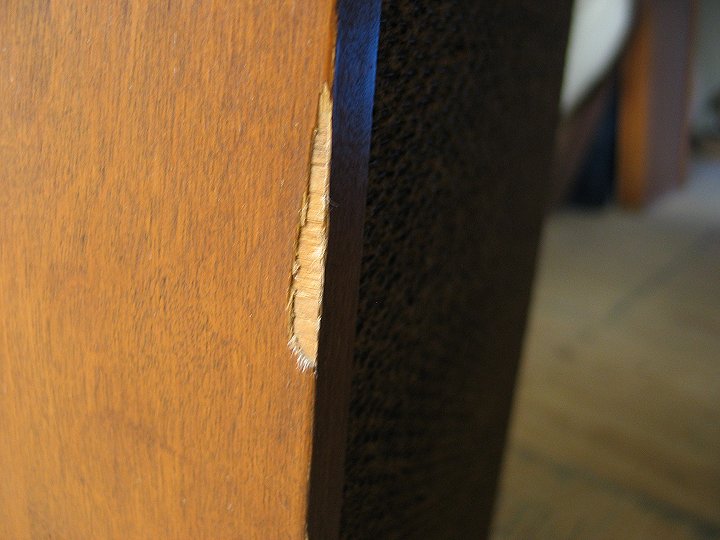
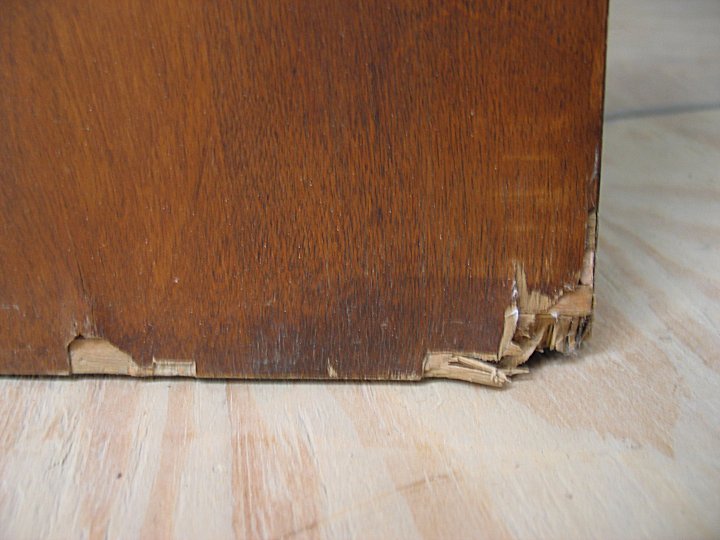
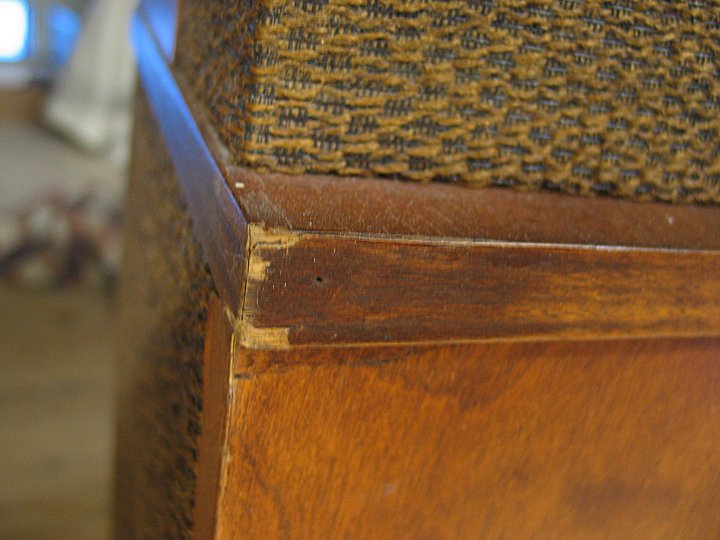
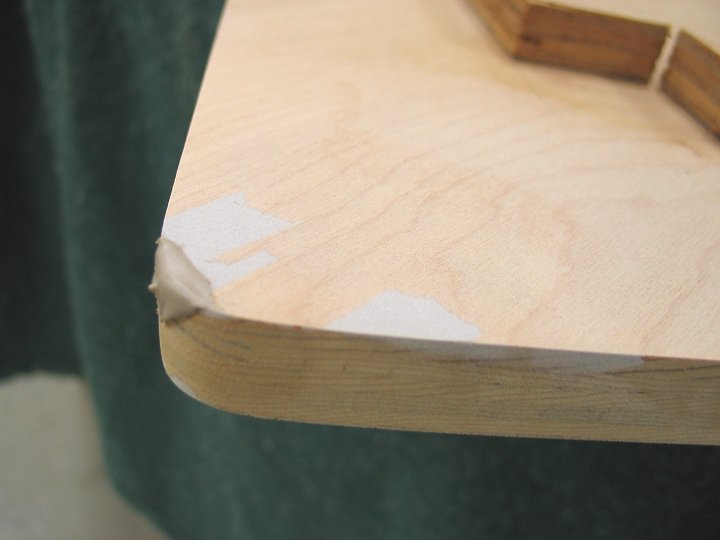
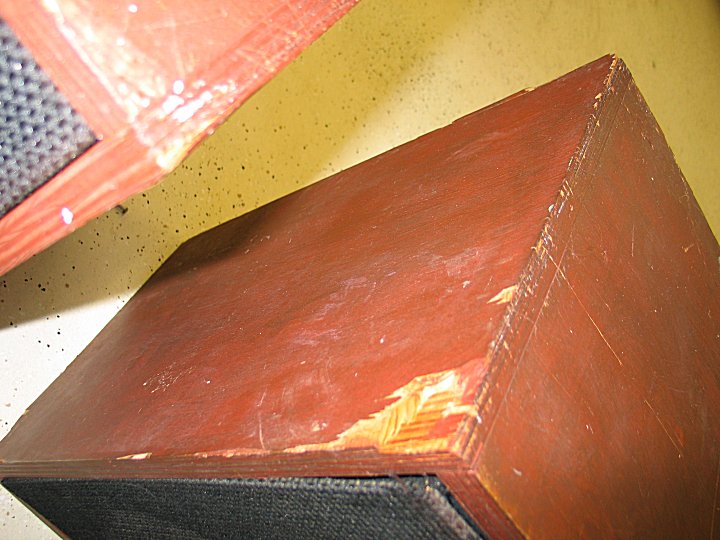
Here’s some more pictures of these speakers in the “before” mode, including detailed shots of the bad spots. Please do not be alarmed by the pictures of the chipped veneer and bad corners, this is all easily repairable with high quality fillers.
One of the most important jobs I do when restoring these speakers is to make sure the cabinets are completely sound before installing the veneer. I spend hours carefully removing chips and any loose wood and filling those voids back in to make sure that the cabinets are as sound as possible before putting the veneer on.
What To Do
So, here’s what I’ll be doing to restore these speakers.
Completely break down the speakers, take out all components and dismantle the various parts to prepare for the restoration.
Check all structural elements of the individual cabinet pieces and repair where necessary.
Check the tweeters and midrange drivers for proper operation and physical condition.
Thoroughly clean and detail those components.
Purchase two new replacement K33 woofers.
Replace any stripped screws.
Paint the midrange horns if necessary.
Sand all wood parts in preparation for new veneer. This includes checking for voids and filling, removing any loose veneer and filling, and basically prepping the wood parts so that all edges are re-squared and solid and ready for the new veneer.
Make risers and new plywood pieces to turn these into “B” style cabinets.
Fix any hardware issues, like the connections of the top horn cabinets to the bass bins, or replace any missing feet on the bottoms of the bass bins, and replace the missing logo.
Install new veneer, sand, detail.
Install trim boards of solid Rosewood on the front bottoms of the bass bins, as Klipsch did on their finished “B” cabinets.
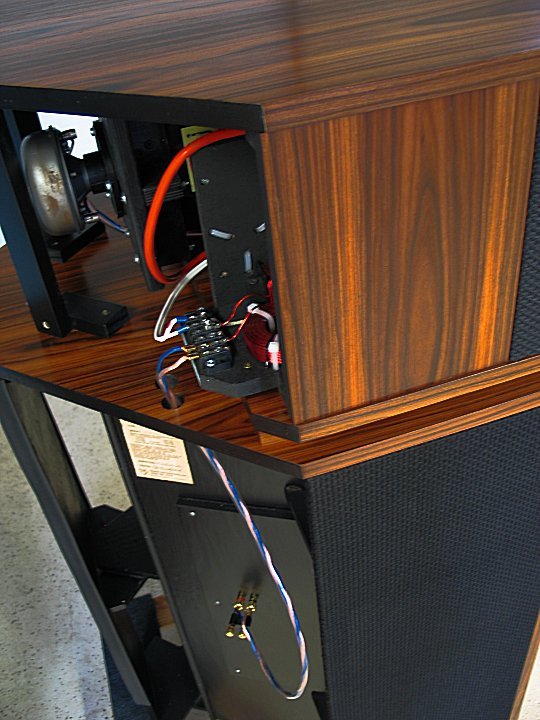
Detail the backs of the speakers and install a primer and satin black paint to the backs of the bass bins and the insides of the upper horn cabinets.
Apply several coats of Minwax Wipe-on Polyurethane.
Install black grills.
Re-install the tweeters, midrange horns and drivers, and the woofers.
Clean all connection points and install new wiring for all drivers.
Install new “A-type” crossovers built by Bob Crites.
Do a final Fit and Finish of the assembled speakers.
Test the speakers to make sure they are functioning correctly.
“C” Style to “B” Style
The speakers right now are the “C” style cabinets, which means the top horn cabinet sits directly on the bass bins.
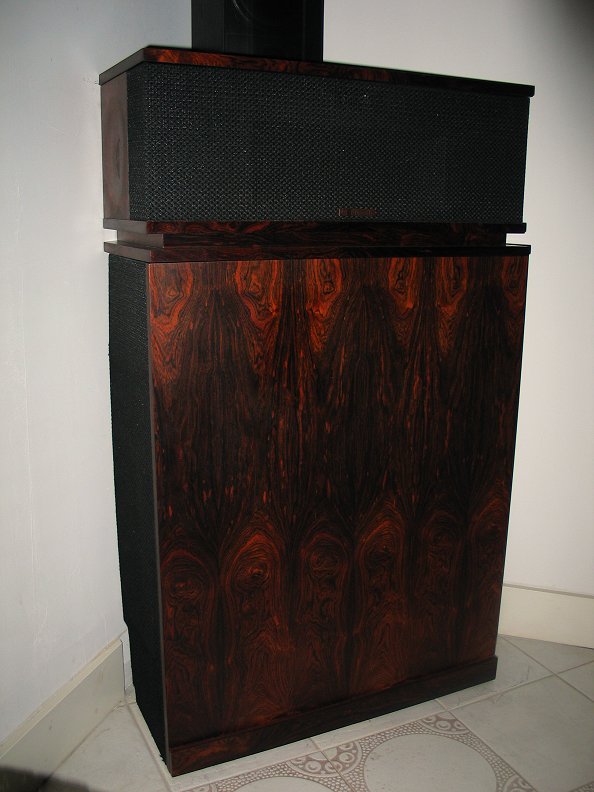
The “B” style cabinet has an extra riser, which lifts the top horn cabinet up off the bass bin by about one inch.
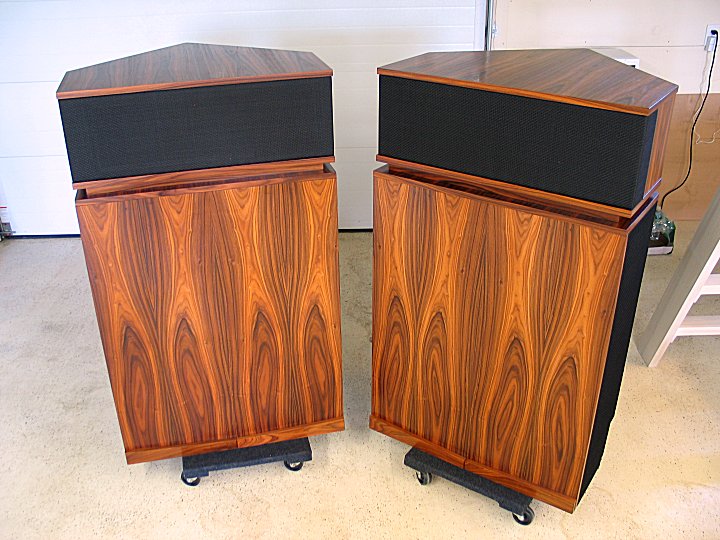
Here’s a picture of the “B” style, which is what I plan to change these to. See how the top horn section is lifted up with an extra spacer?
The First Job
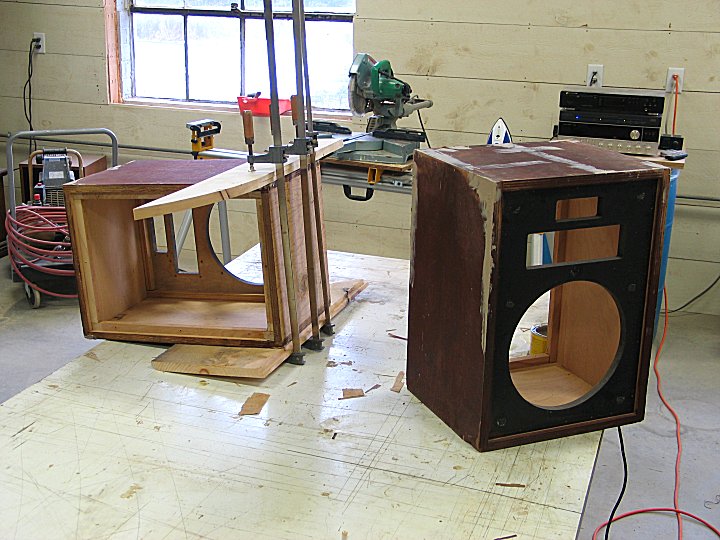
The first job is to disassemble the speakers. The top horn sections unbolt and unscrew apart fairly easily.
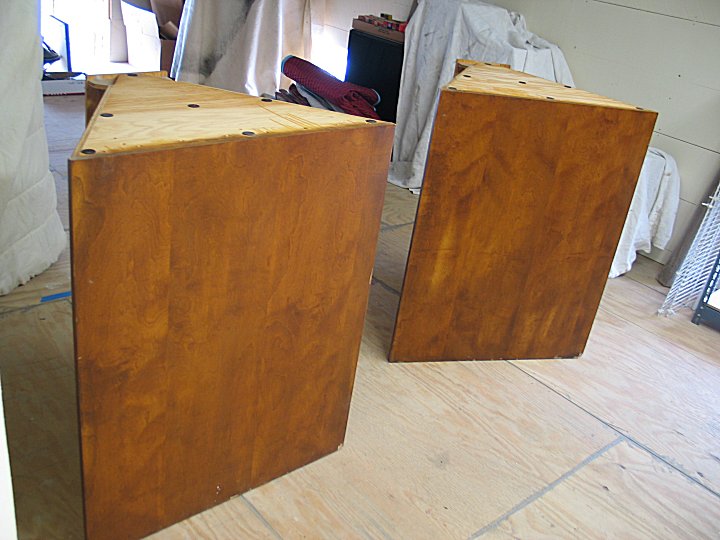
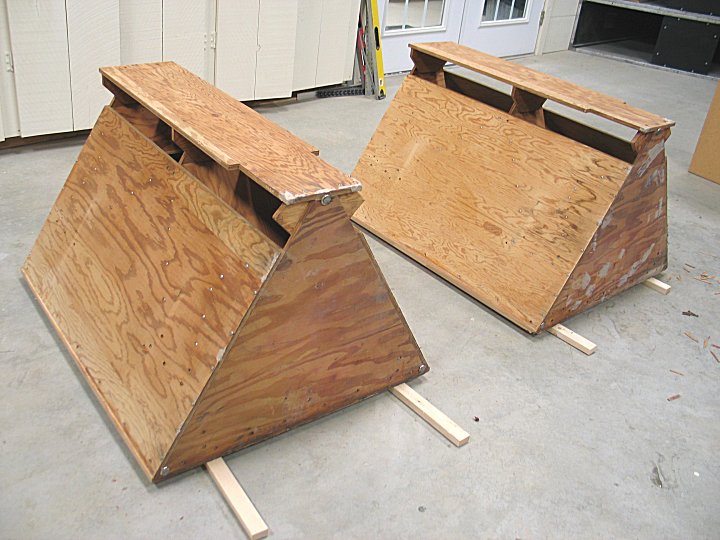
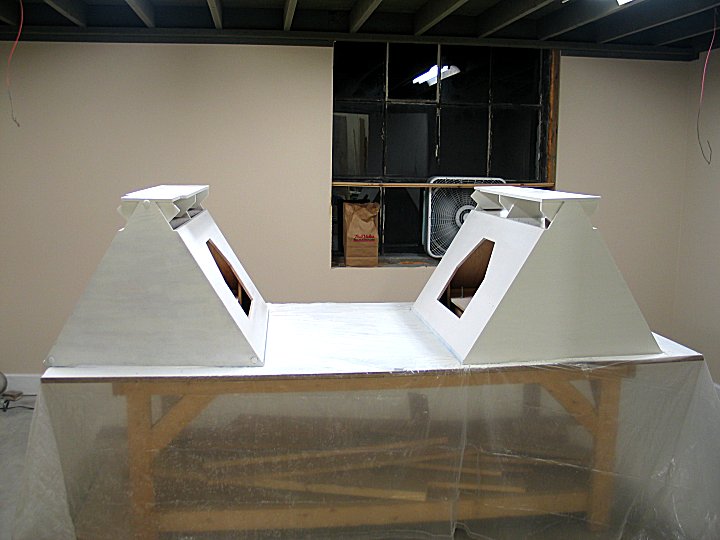
Here are the bass bins by themselves.
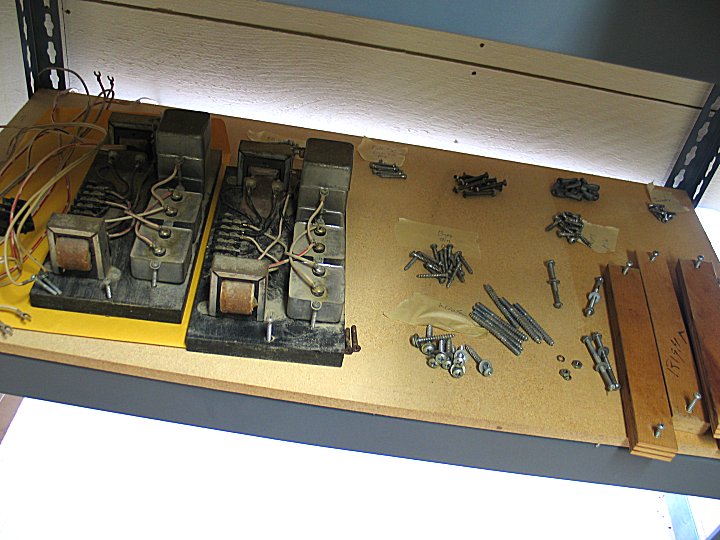
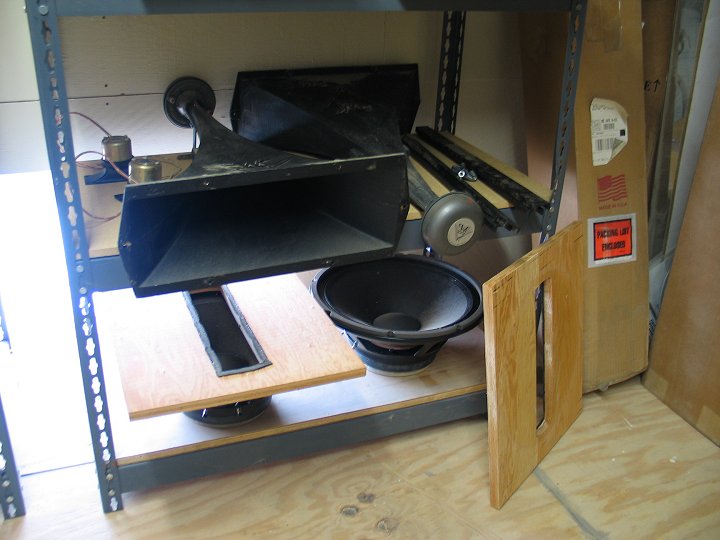
I have plenty of storage for parts.
Disassembly and Cabinet Prep
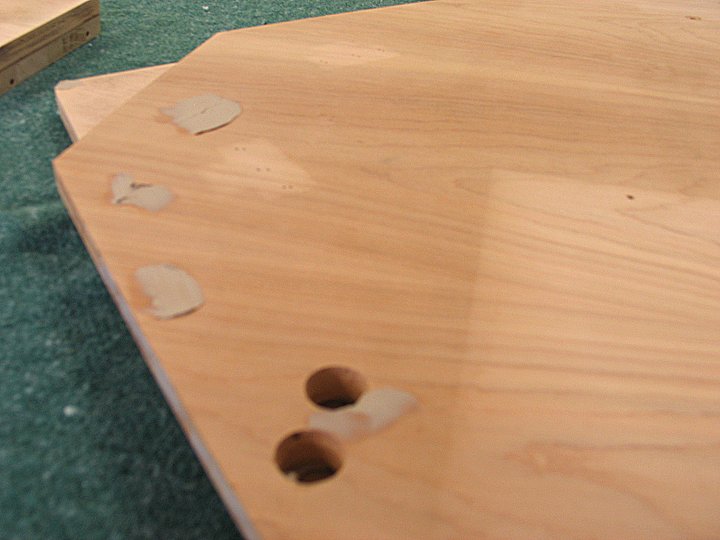
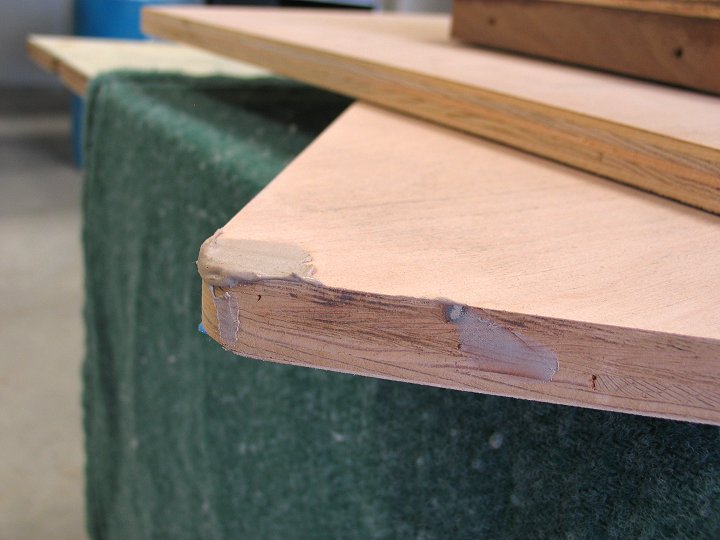
The filler I use is Minwax Hi-Performance Wood Filler. It’s kind of like Bondo, but made specifically for wood restoration.
The repairs made with this filler are stronger than the wood, and they do not chip off like the wood edges.
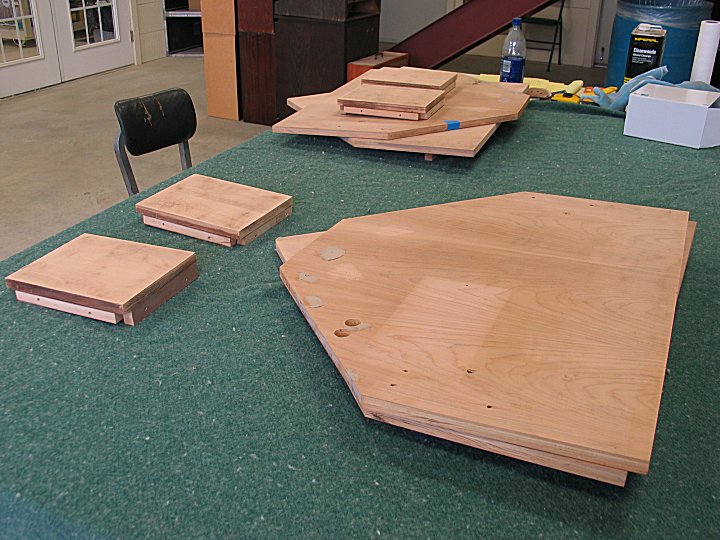
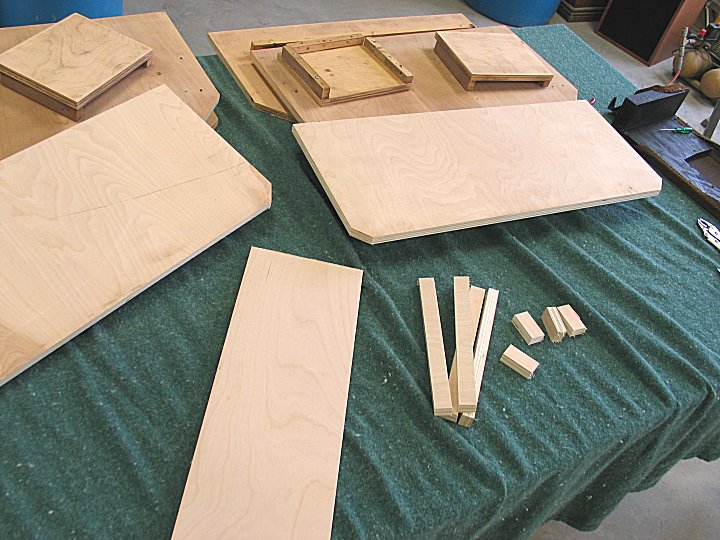
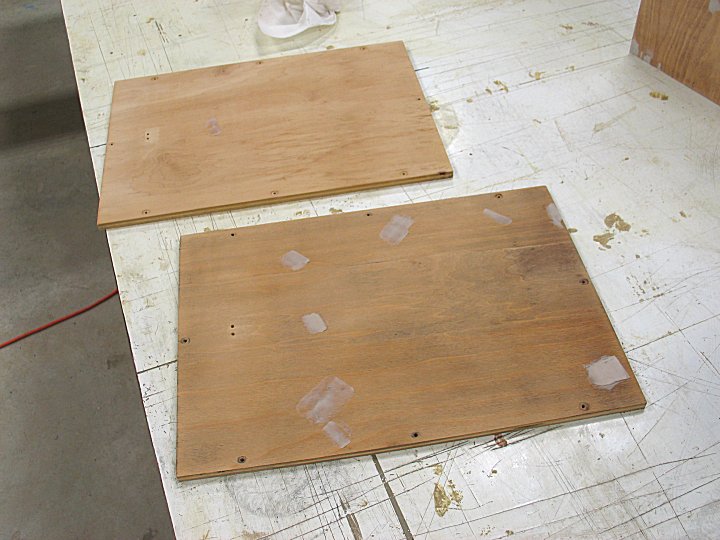
Here I’ve made the new parts for the “B” style risers.
It takes several rounds with the filler to get everything perfect.
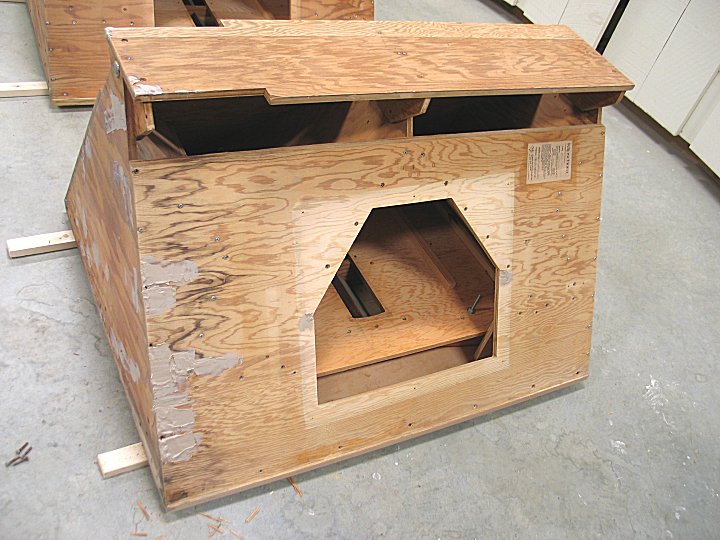
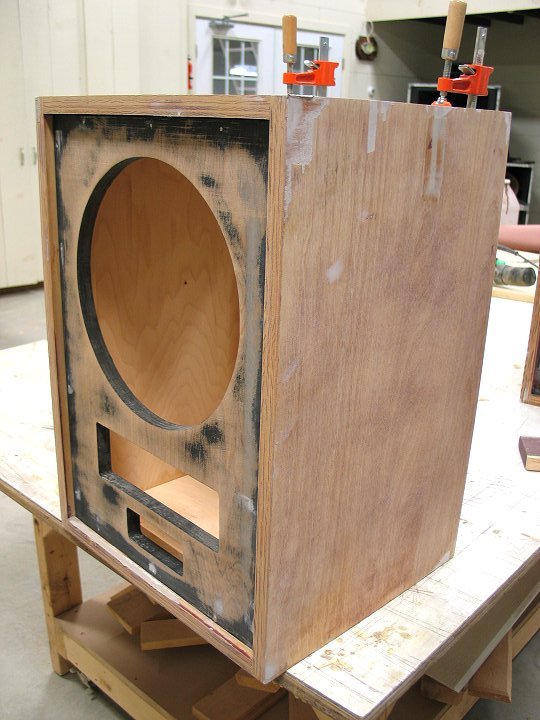
Bass bins sanded and getting the first layer of filler.
Santos Rosewood Veneer Selection
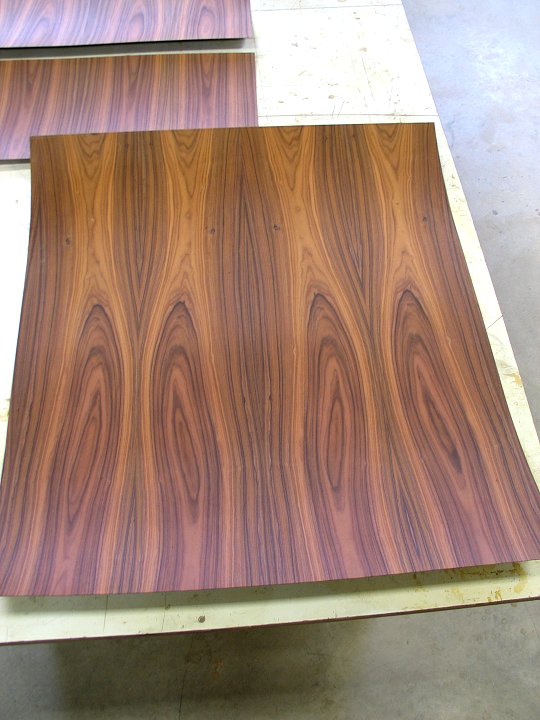
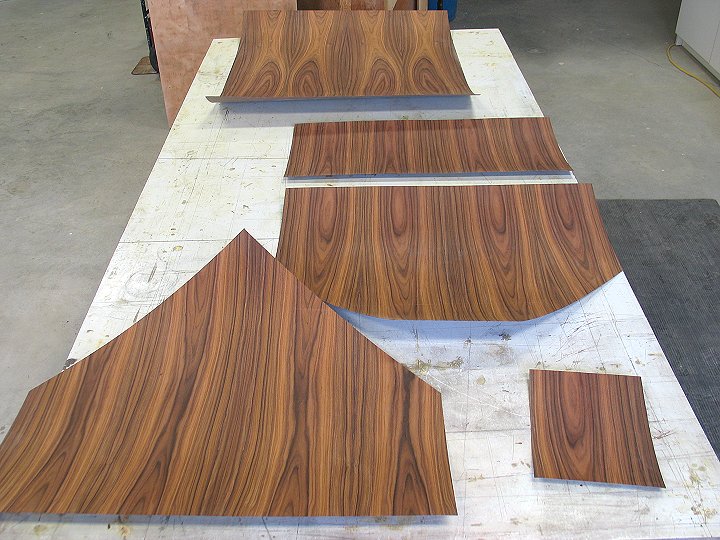
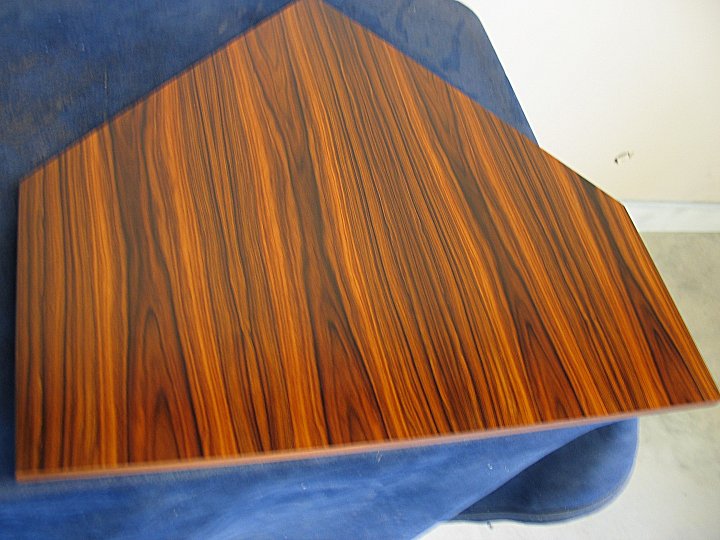
The veneer is paper-backed, Santos Rosewood from Oakwood Veneer.
I really think this 10mil paper backed veneer is going to work a lot better than the raw wood veneer I’ve been working with. I’ll have to be careful about not getting glue on the face of the veneer because I can’t do as much cleaning and sanding as I’ve been doing. The veneer is already sanded very smooth, and if I keep it clean, all I’ll have to do is a finish sanding with very fine sandpaper.
I’ve still got some filling to do on the bass bins to prep for veneer, but I’m going to start the veneer very soon, probably Monday. Right now I’m figuring on an April 6th finish date.
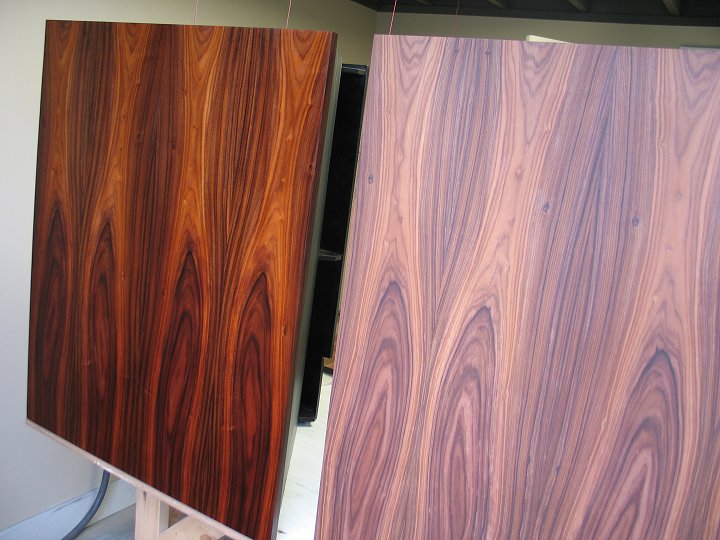
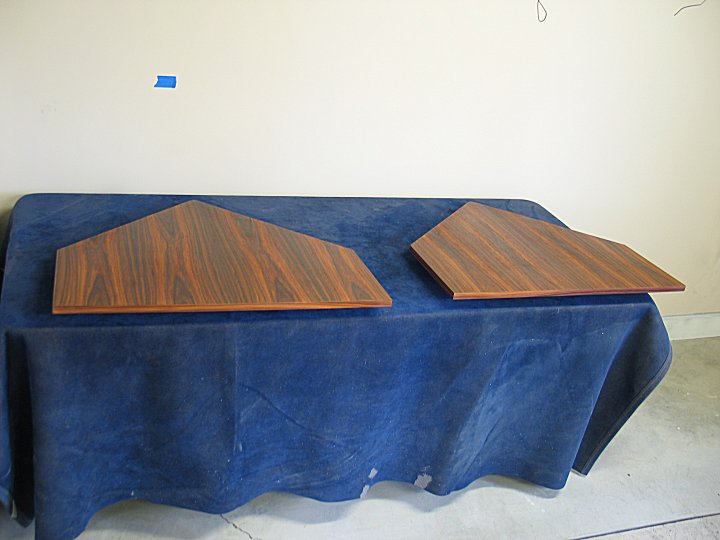
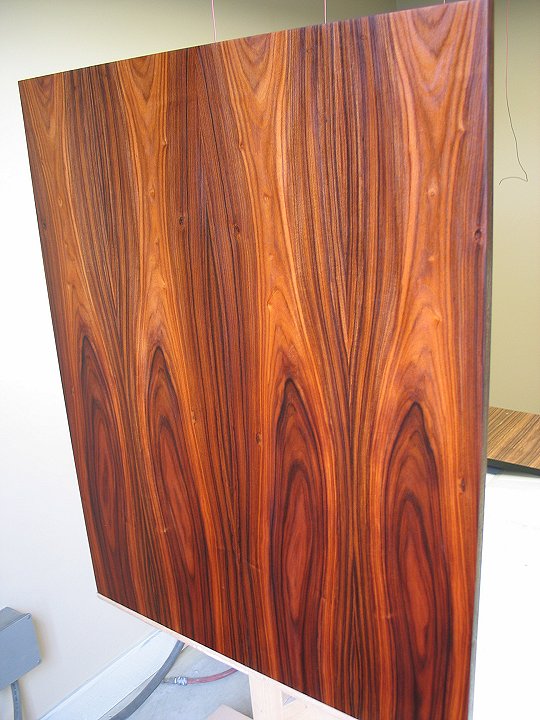
Here’s a couple of photos of the veneer. Imagine this on the front of the bass bin!
Bass Bin Prep and Paint Work
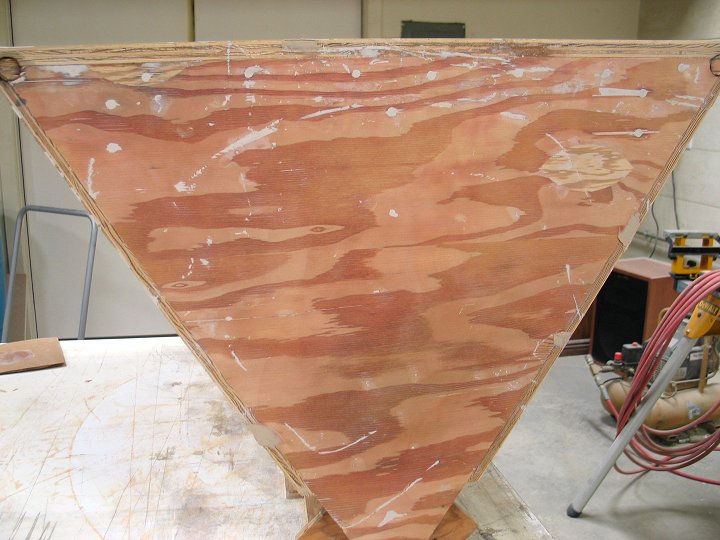
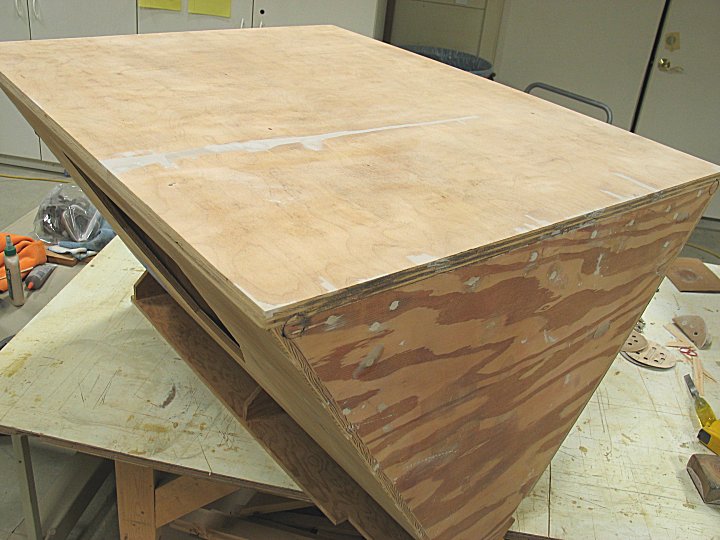
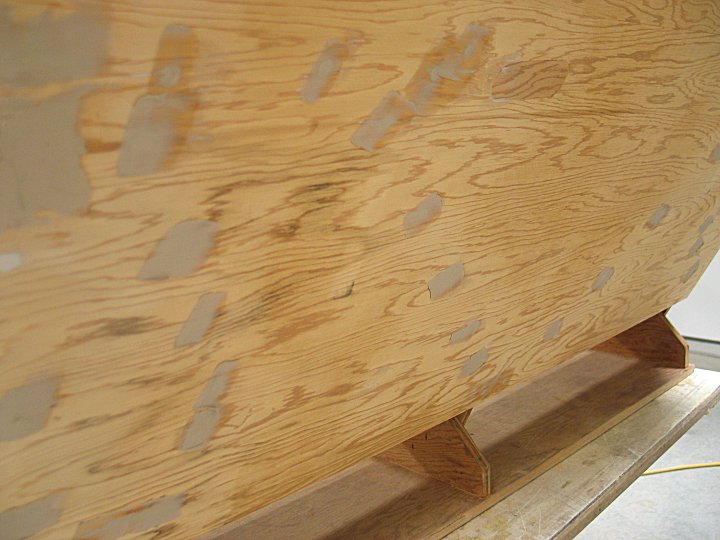
There are multiple coats of wood filler and I’ve done lots of sanding on the bass bins. I’m spending a lot of time working on the backs of the bass bins that will only be seen by the new owner before they are installed in the corners! But I think it’s going to be worth it.
Even the bottoms are being filled, sanded, and painted.
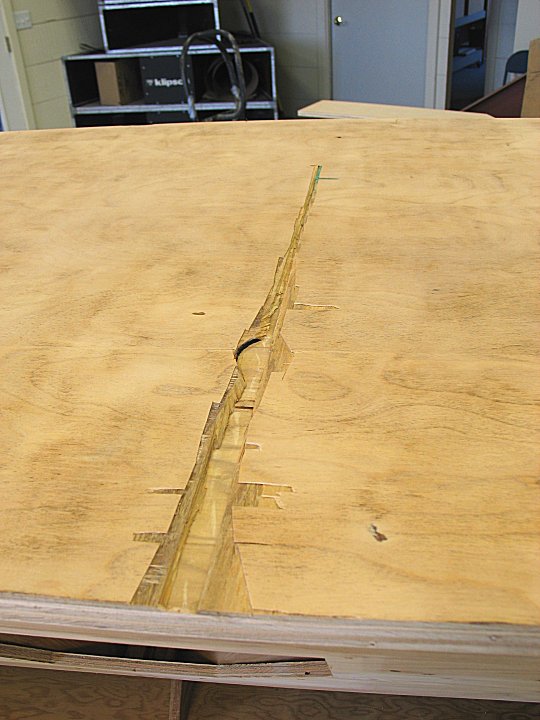
I found a couple of major voids in the plywood. I always check all the panels to find things like this. Once I start to uncover a void, I follow it until it ends and then fill it. This large void has been there since the speakers were new. I wonder what affect that had on sound quality? It was right in front of the woofer. It’s better now, and that’s my overall goal, to make these better than new.
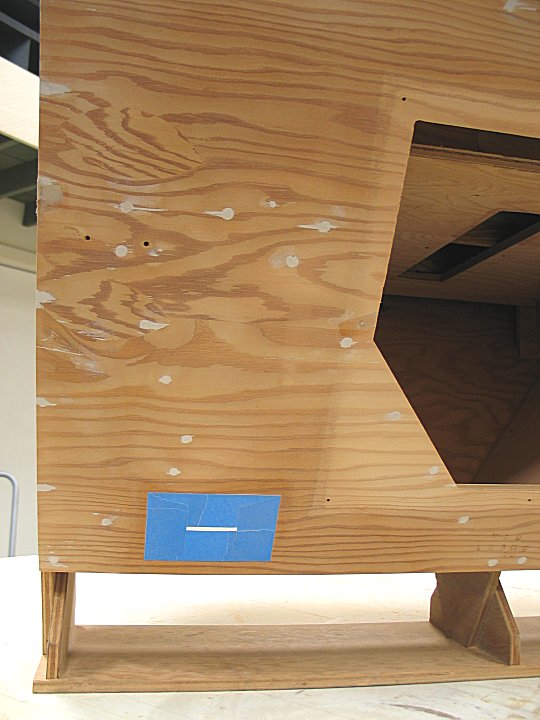
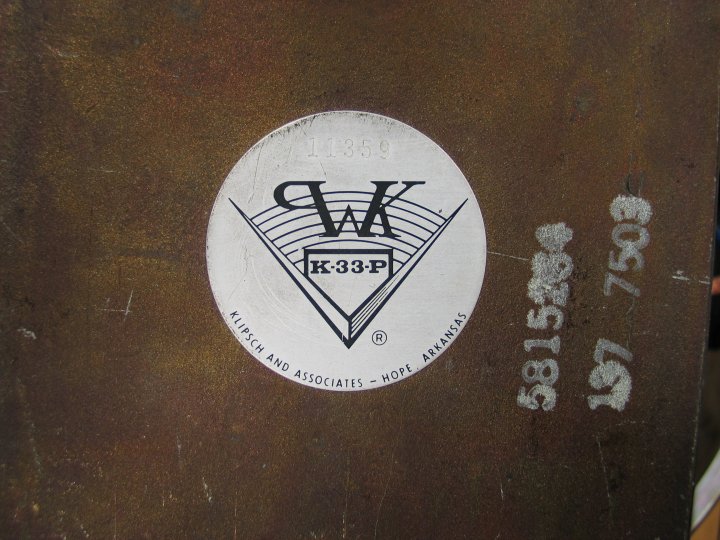
The stickers are carefully taped off so the black paint will go right up to them.
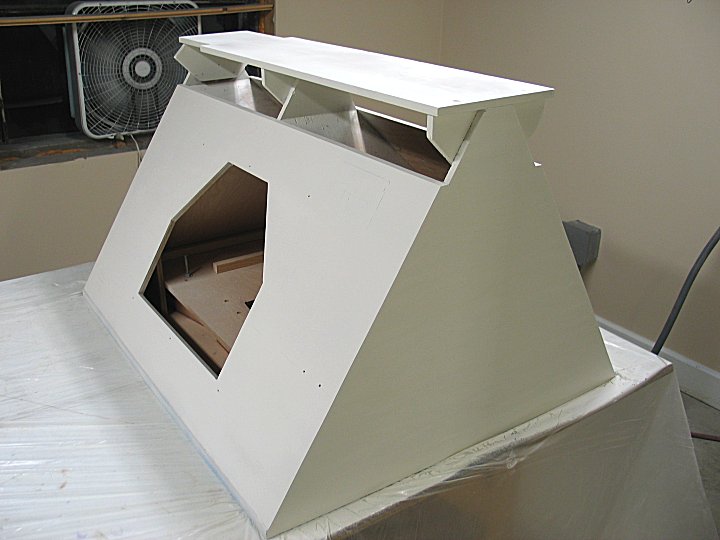
I’ve finally got the bass bins all filled, sanded, and primed. It was a lot of work doing this, and probably not worth the amount of time I put in. But the backs of these speakers will look very nice indeed.
I think I will put a coat of black paint on before I veneer them, and then a final coat after they are veneered.
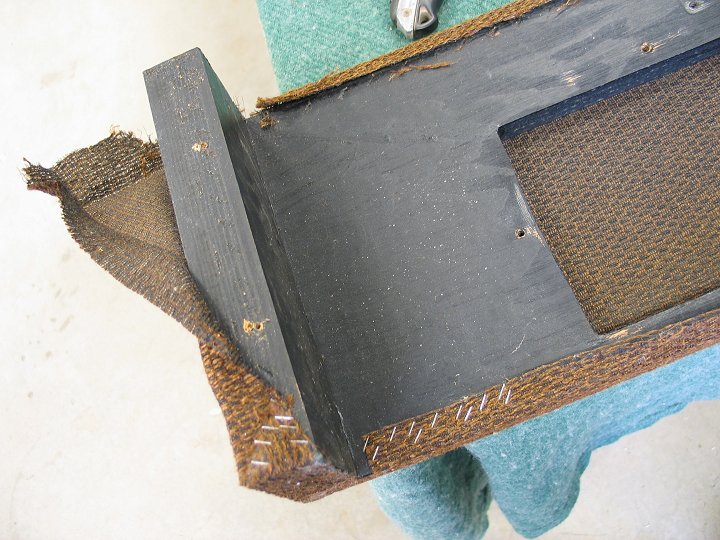
I’ve also removed all of the old cloth from the grill frames. There were at least 41,000 staples holding that cloth on!
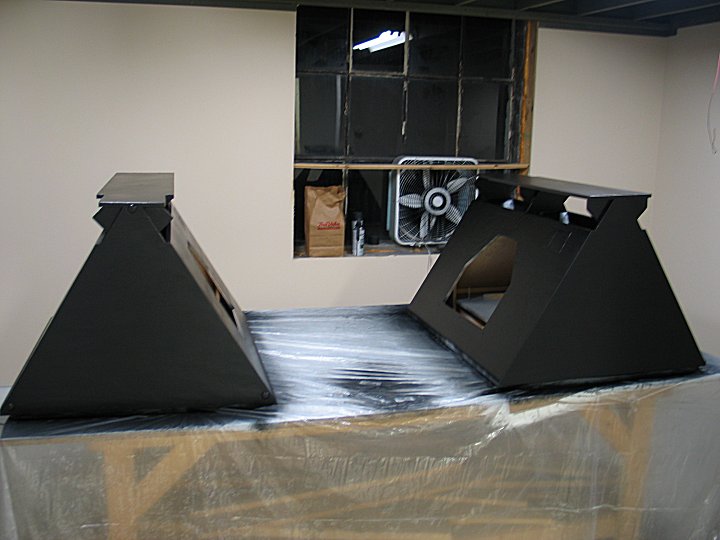
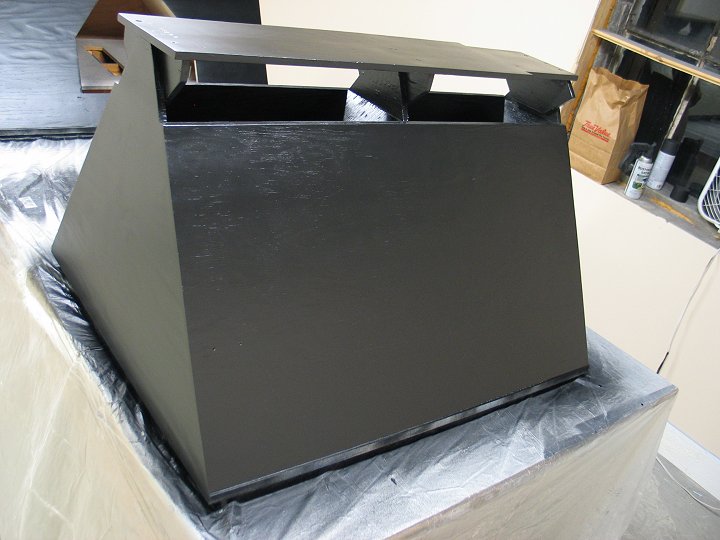
The paint is all on the bass bins now. I’ve started working on the grills too.
Grill Cloth and First Veneer Work
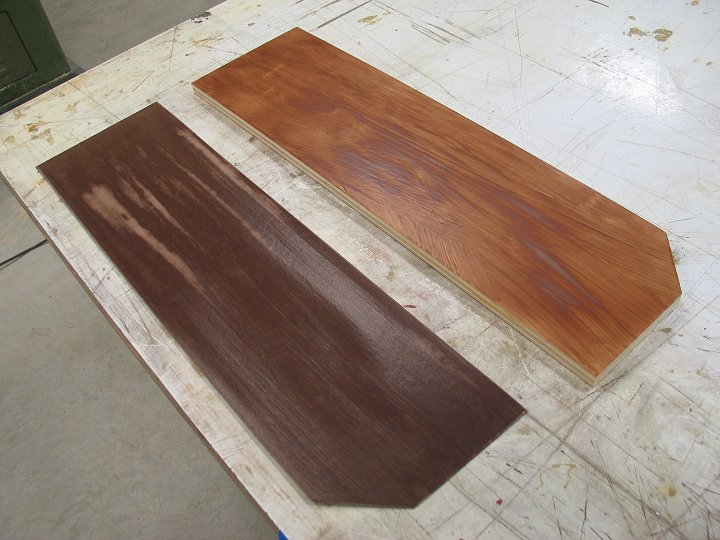
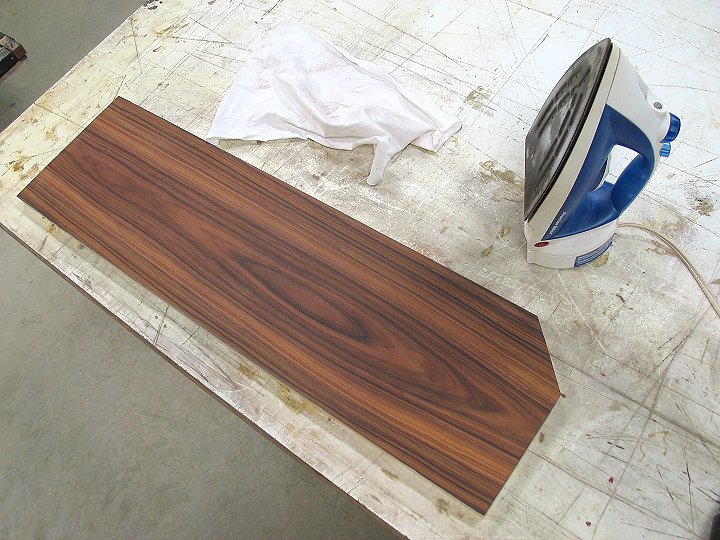
The first piece of veneer being glued up and ironed on.
Looking good! This is the piece that I’ll rip up to make the riser pieces out of.
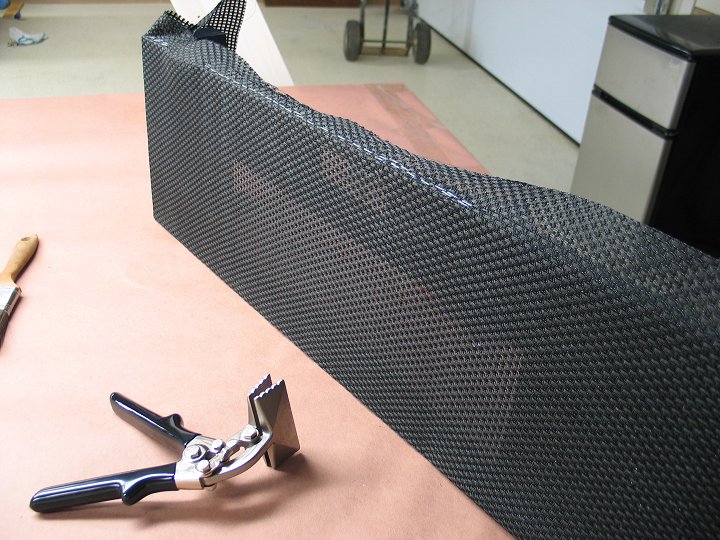
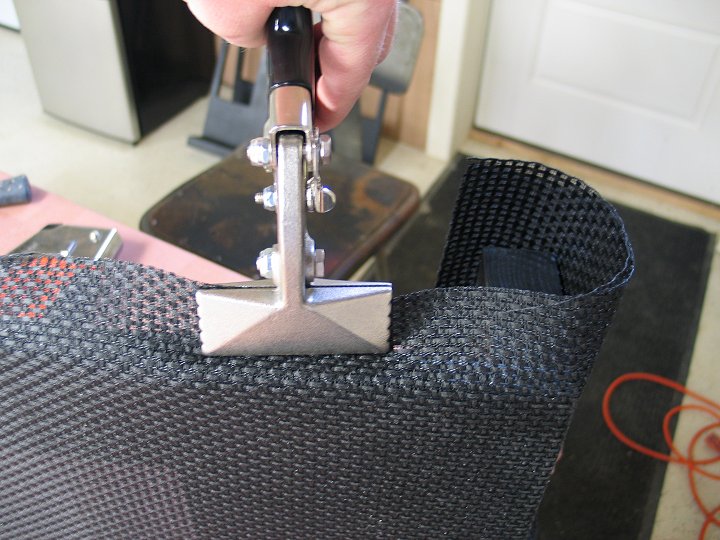
I found a nice tool for working with the grill cloth to stretch it.
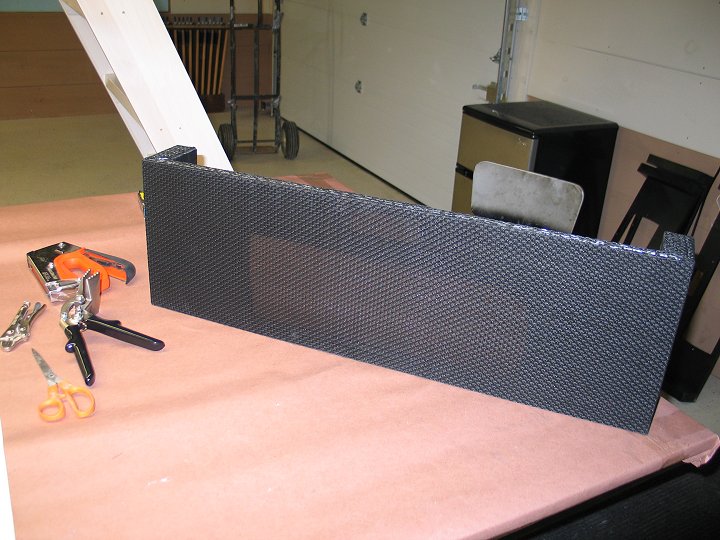
Here’s the first one done.
Veneer Glue-Up and Riser Work
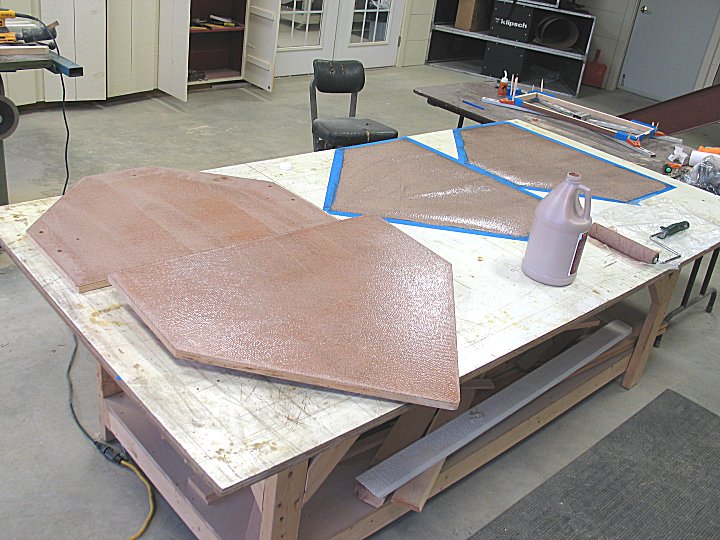
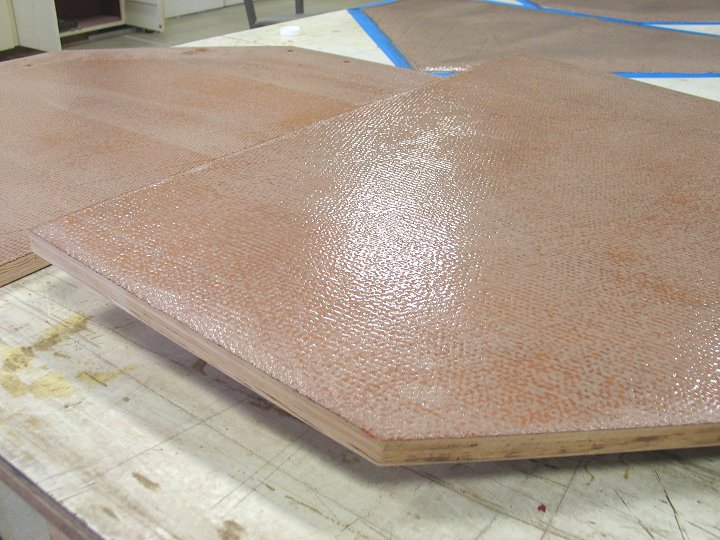
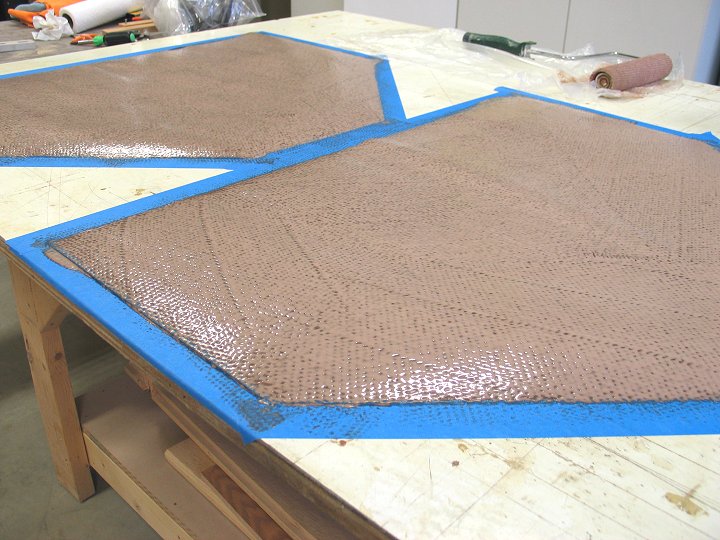
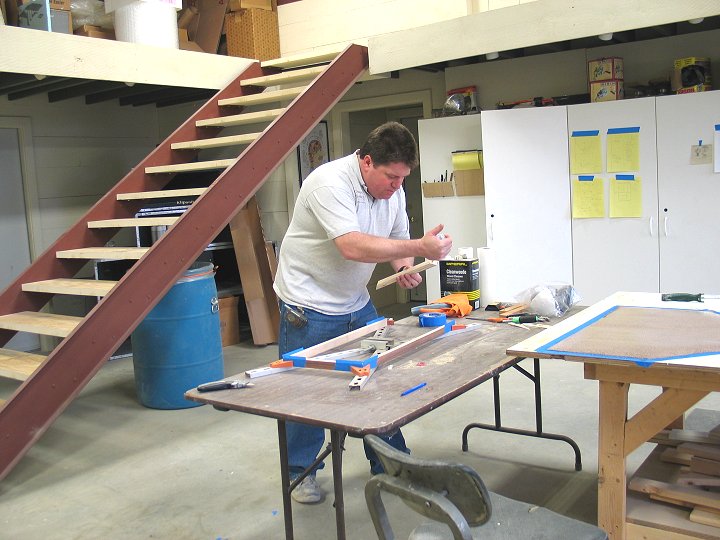
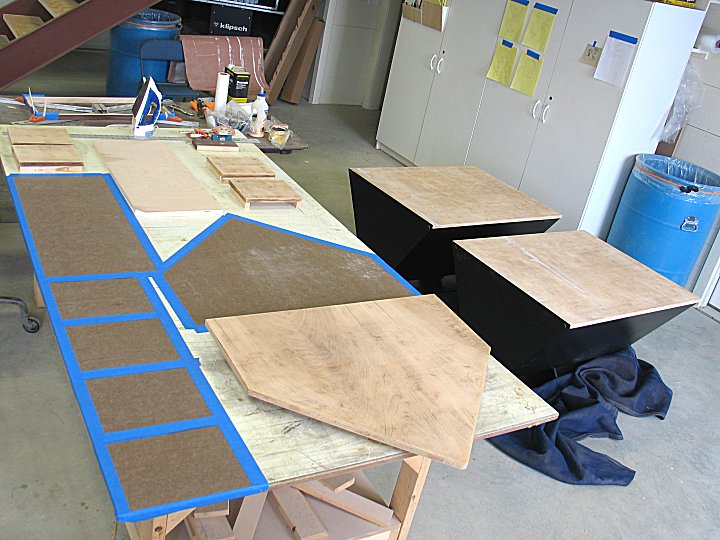
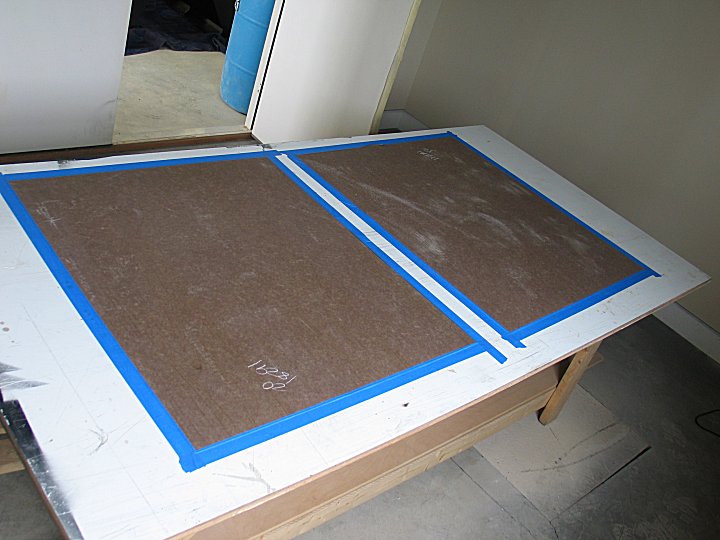
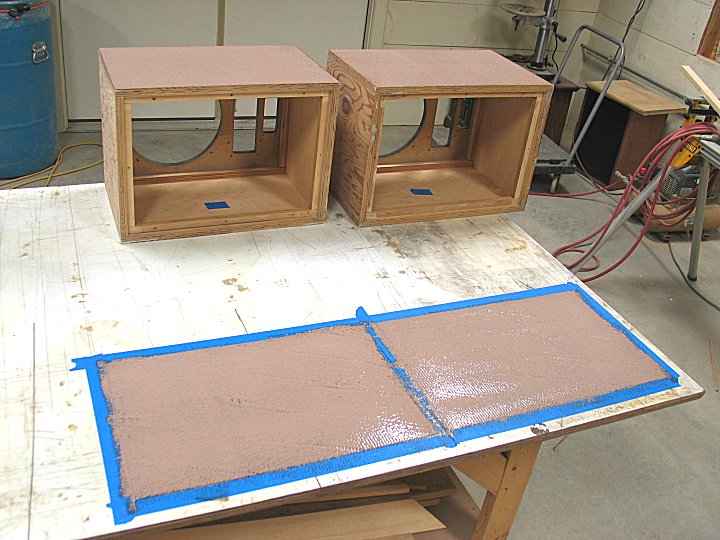
Glueing up two panels.
I tape down the veneer so the glue doesn’t get on the fronts.
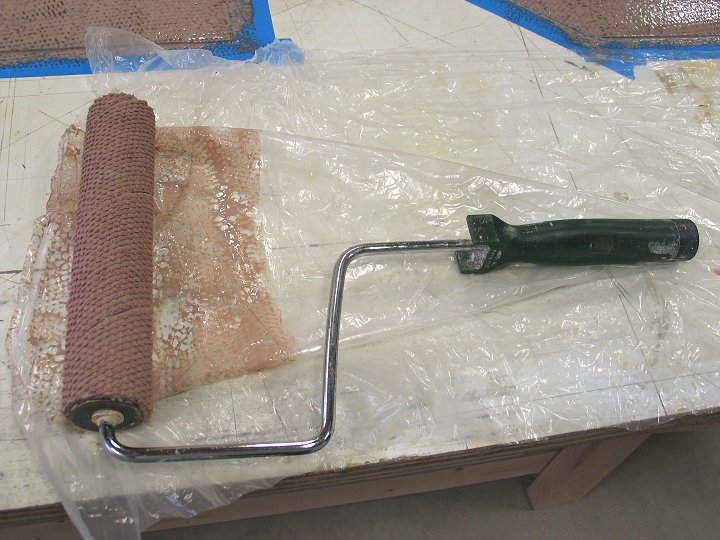
The roller is a must to keep the amount of glue even and it results in a flatter panel.
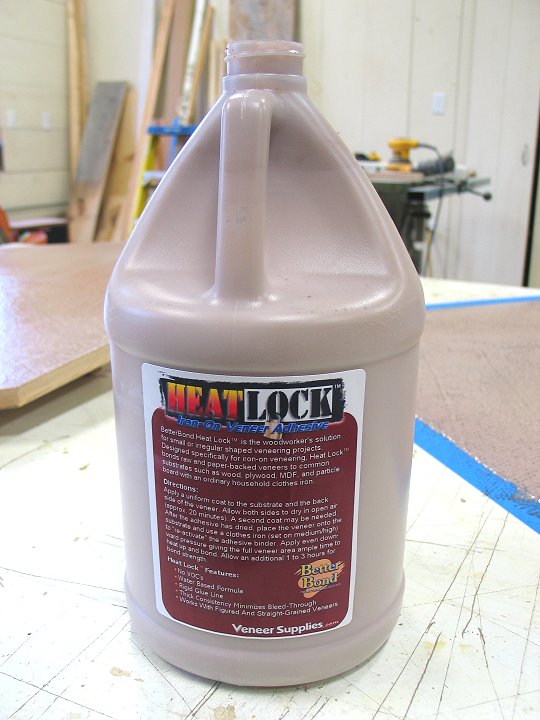
This new glue that I’m using seems to be working really well. It’s available from www.joewoodworker.com.
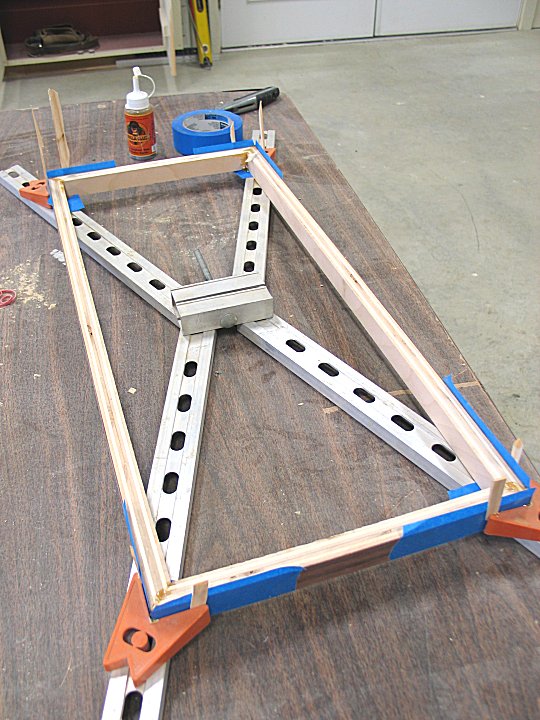
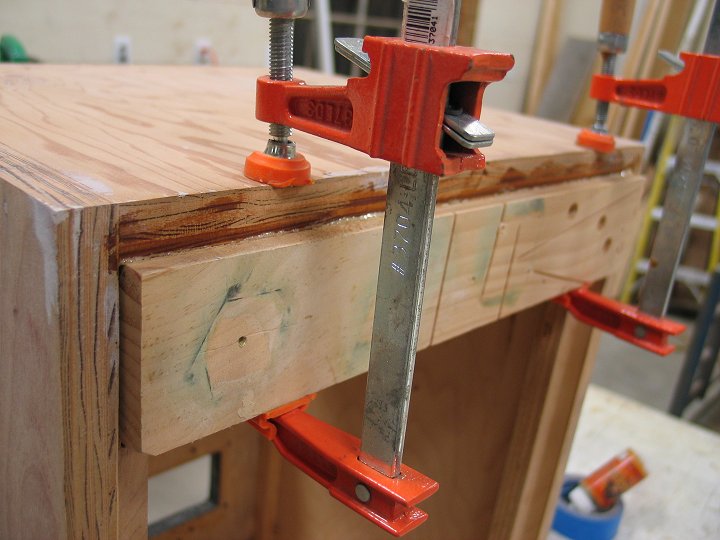
I’ve ripped down the small panel that I veneered last night into 1″ strips for the risers, and I’m glueing them together in a picture frame clamp to make the risers.
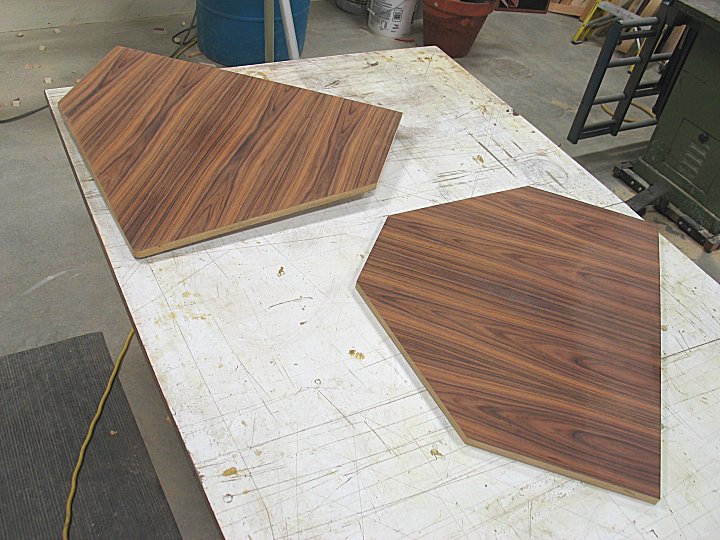
2 panels all veneered, trimmed and ready for edgebanding.
Large batch ready for glue.
Bass bin front veneer pieces.
Bass Bin Veneer and Edgebanding
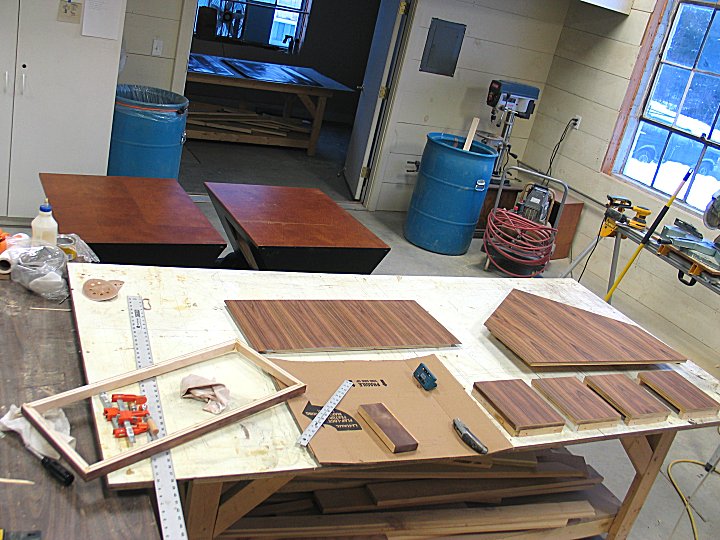
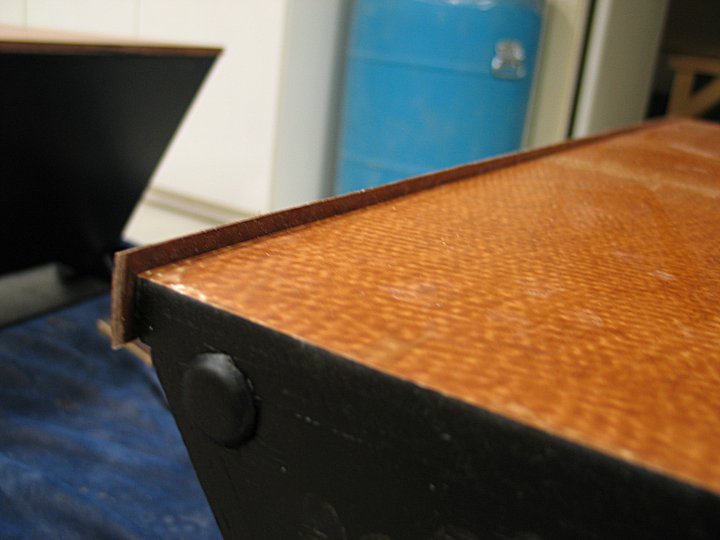
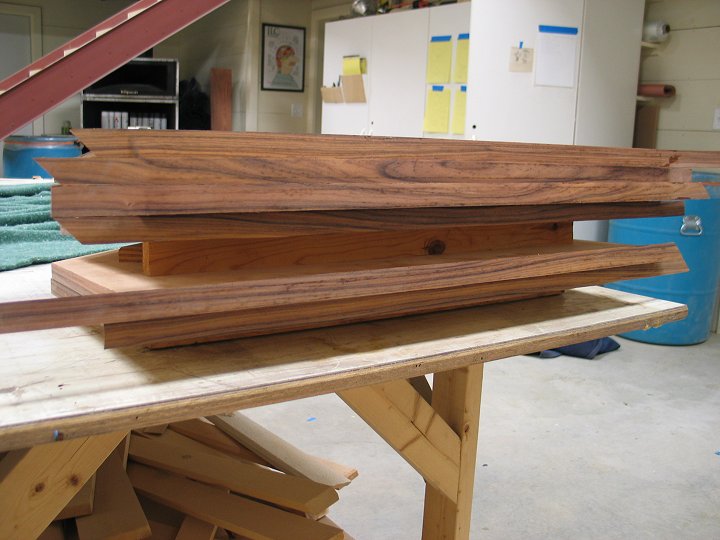
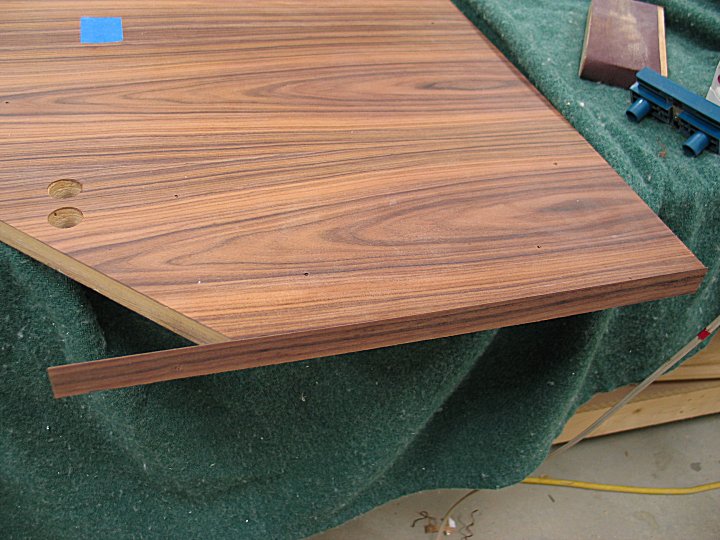
I made the front pieces of veneer for the bass bins a little wider than needed and cut the sides off to use as the edge band. This way the grain lines will be very simlar going from the front over the edge. I’ve glued the edges and ironed on the edge band in this picture.
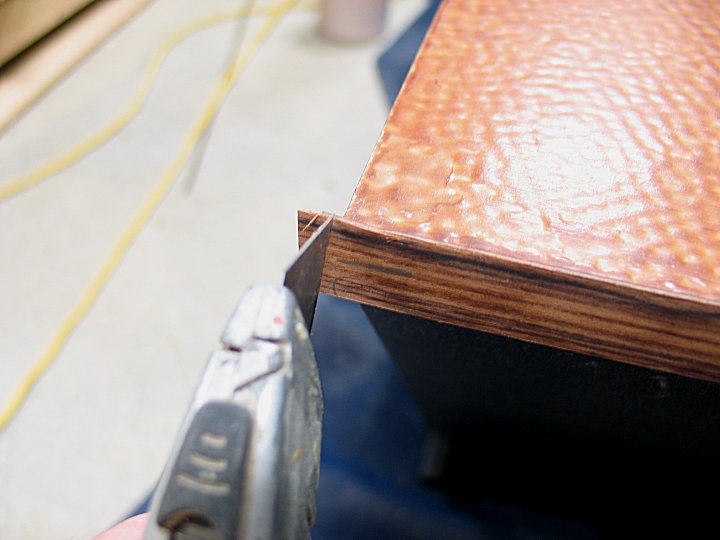
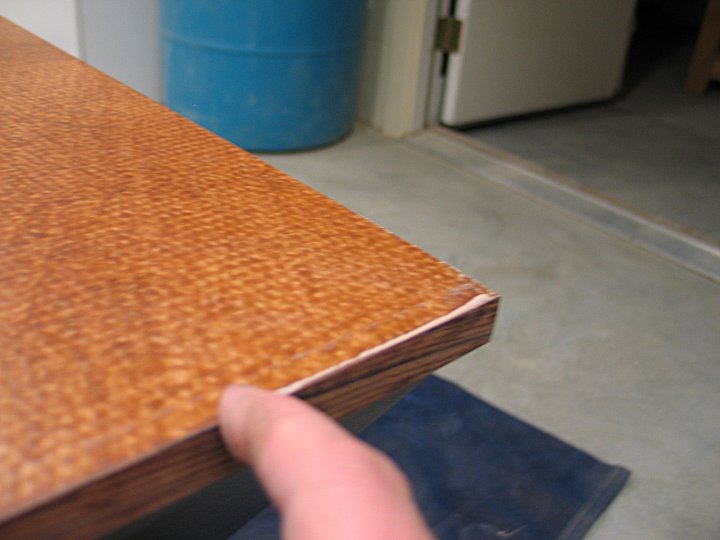
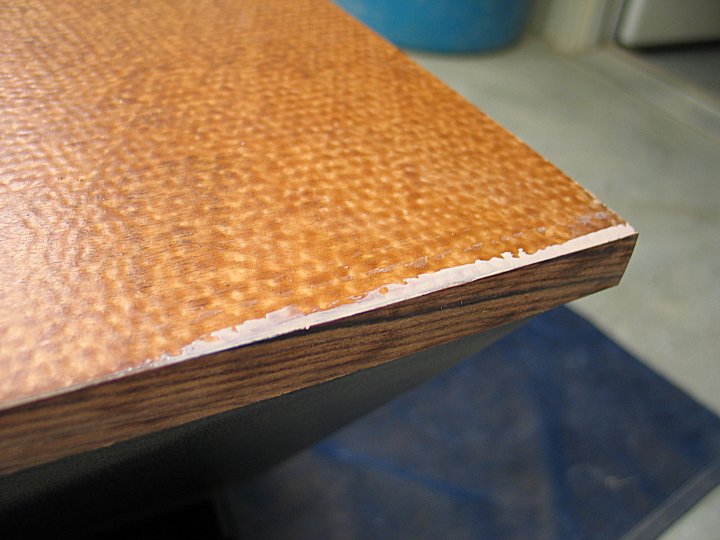
The edgeband overlaps all sides, but I actually kept it very close on the bottom edge because it’s hard to get in there to trim it back.
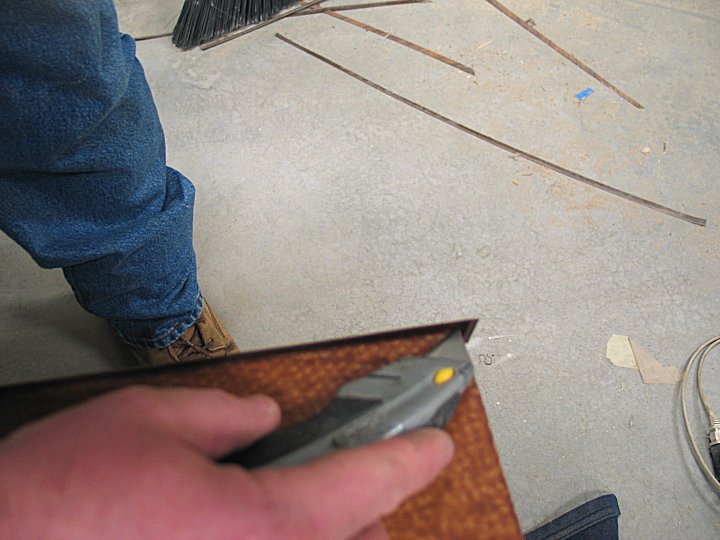
Tricky. Very carefully.
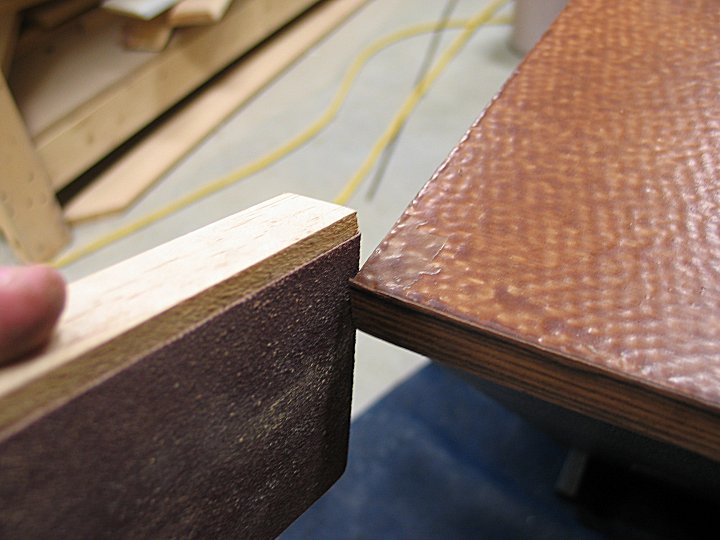
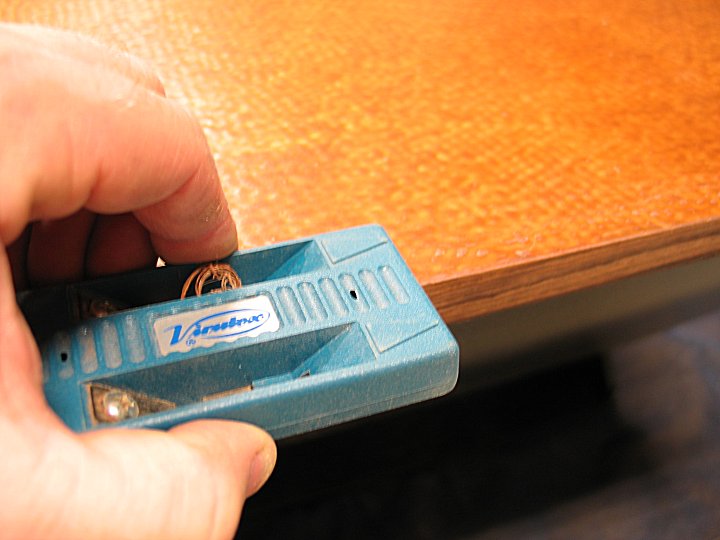
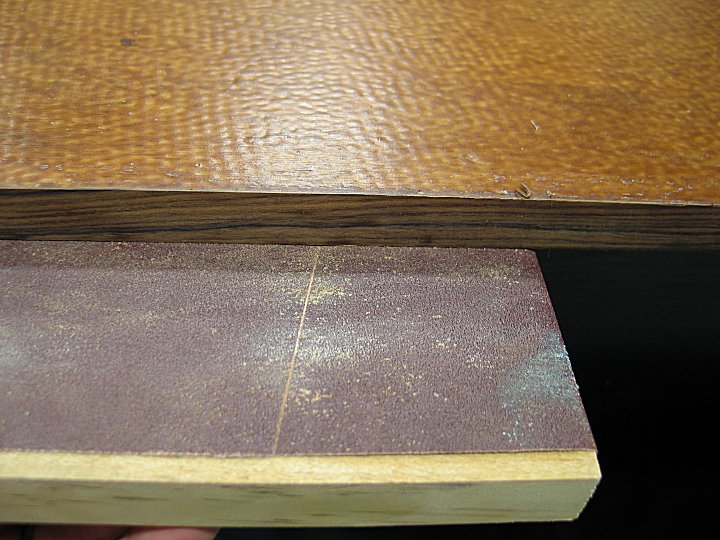
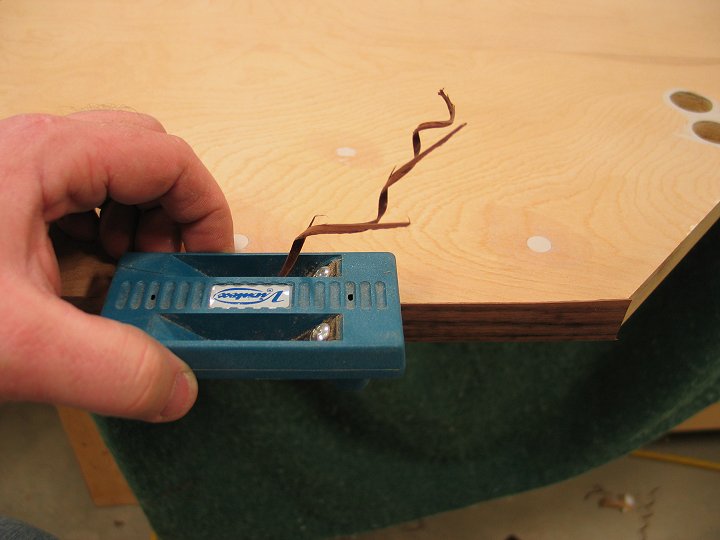
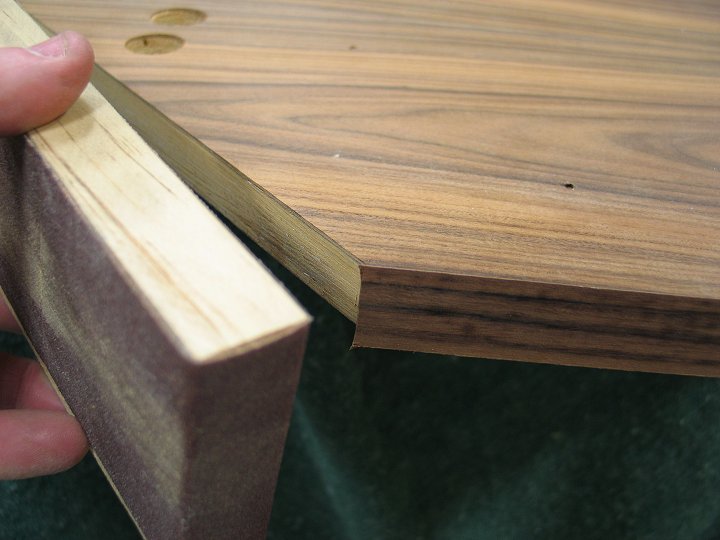
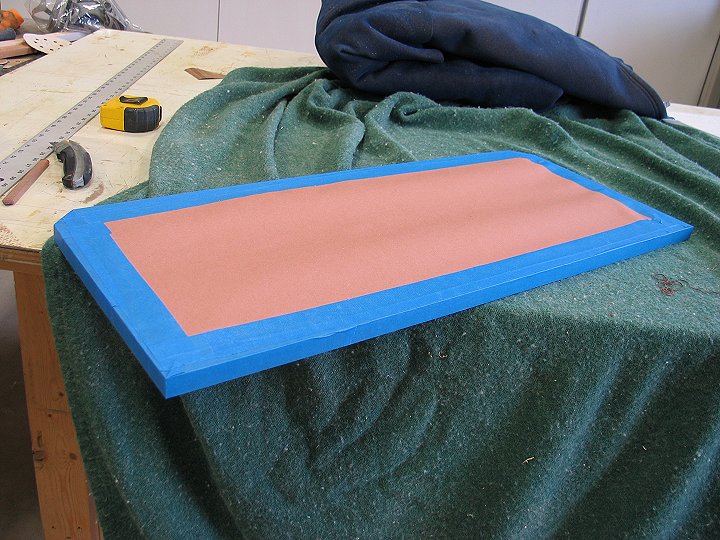
A sanding block made with a 120 grit belt makes a great tool. I only push the sanding block one way, not back and forth or it will chip the veneer.
I use this handy trimmer on the edges that go with the grain.
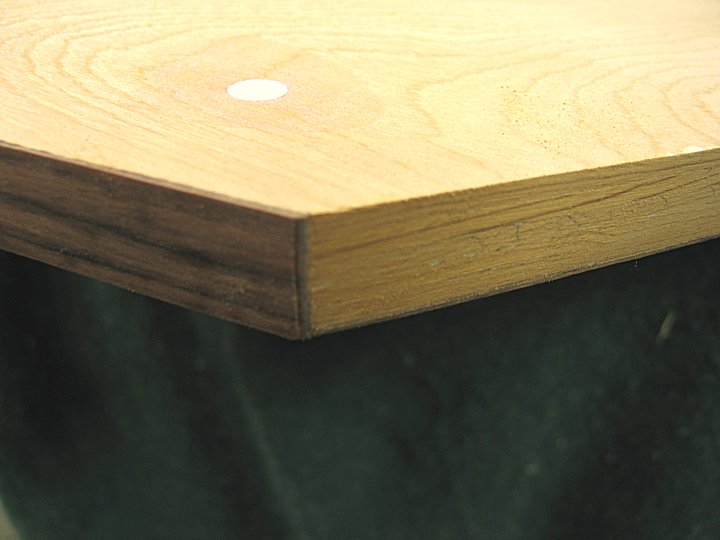
After using the sanding block on the top edge to clean it up, I put a small bit of glue down the edge with my finger.
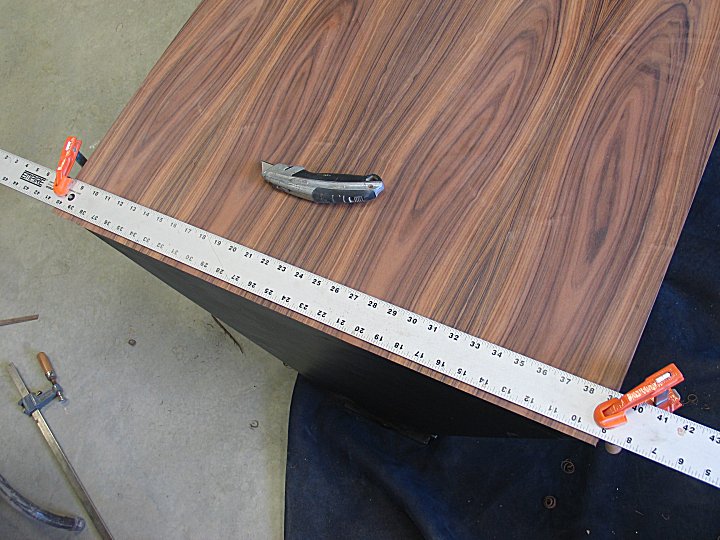
Here you can see the beautiful front bass bin pieces. Man these are going to look killer! When I trim long end cuts, I don’t take any chances on the straight edge slipping and having the knife cut into the veneer, so I clamp the straight edge in place.
Assembly Preview and Materials Note
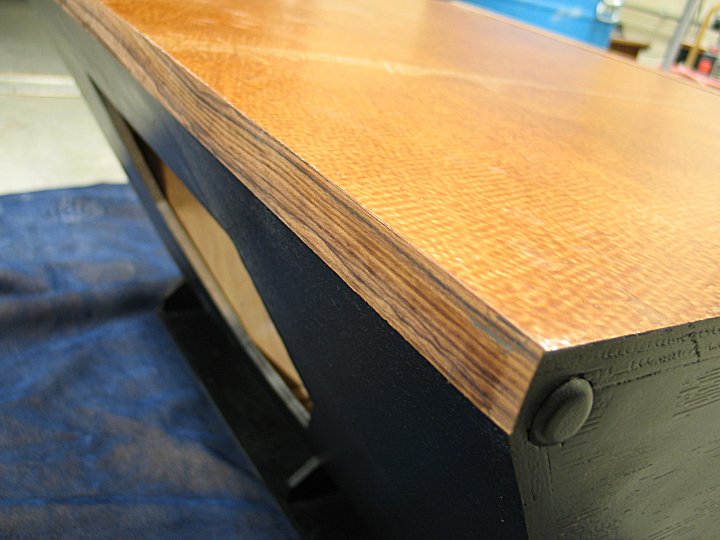
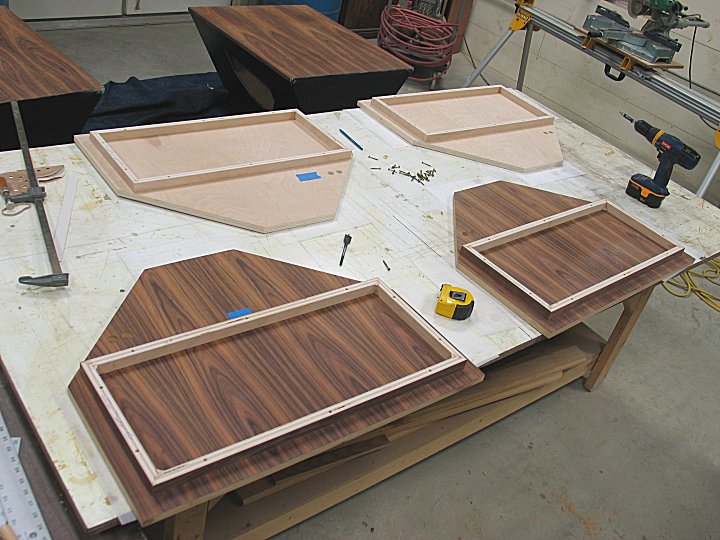
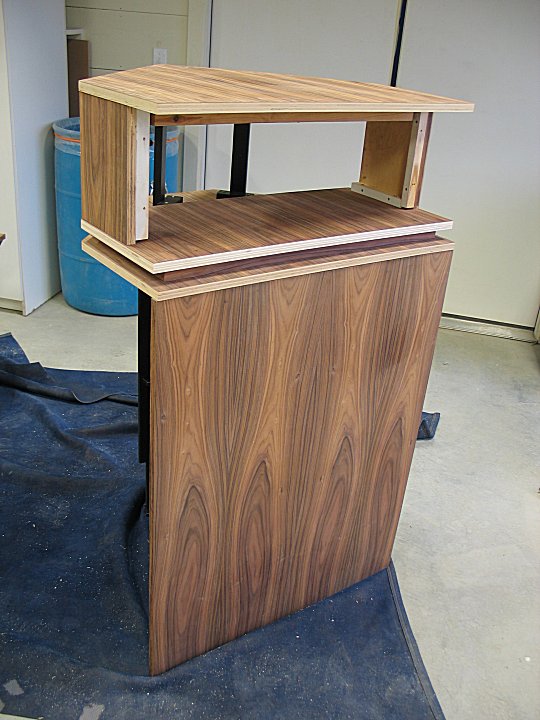
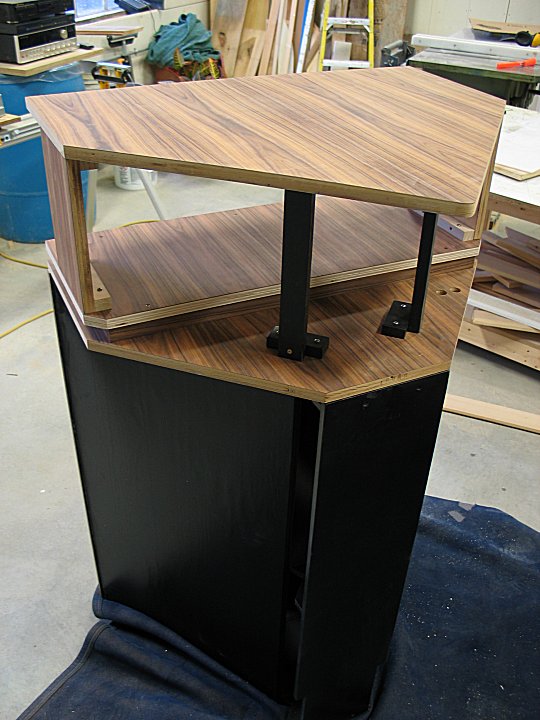
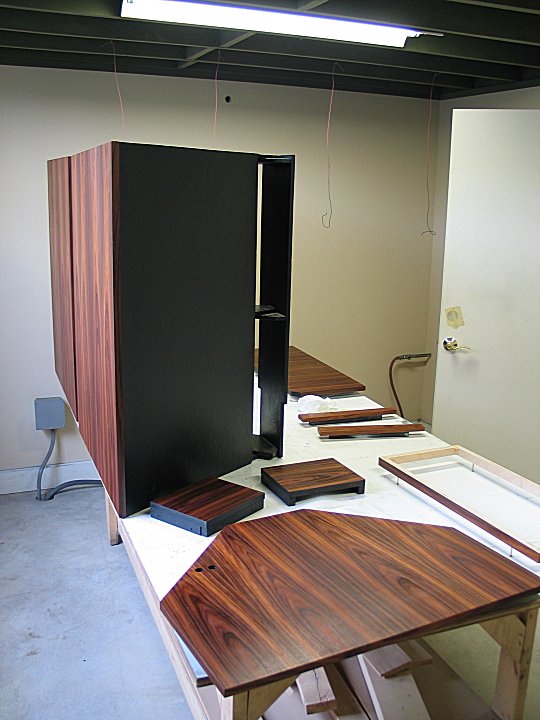
Here I’m starting the assembly. The birch colored ones are for a customer who had the “D” style Khorns with no finished top and no grills. I figured I might as well assemble them all at one time.
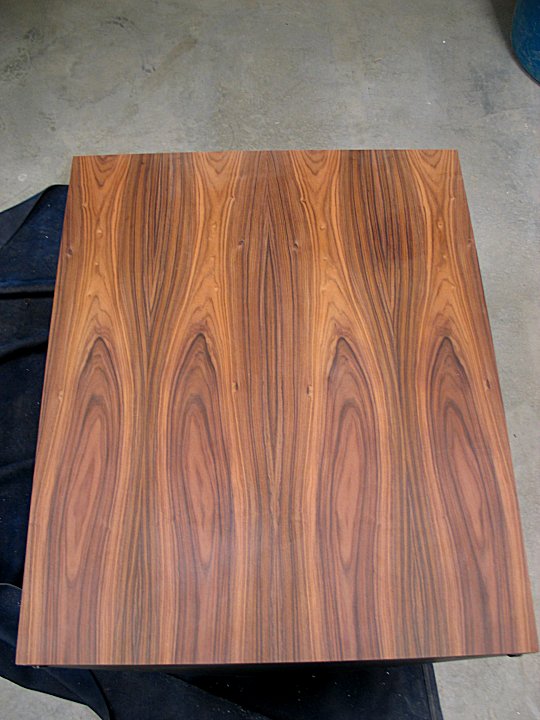
Only one word will do. WOW.
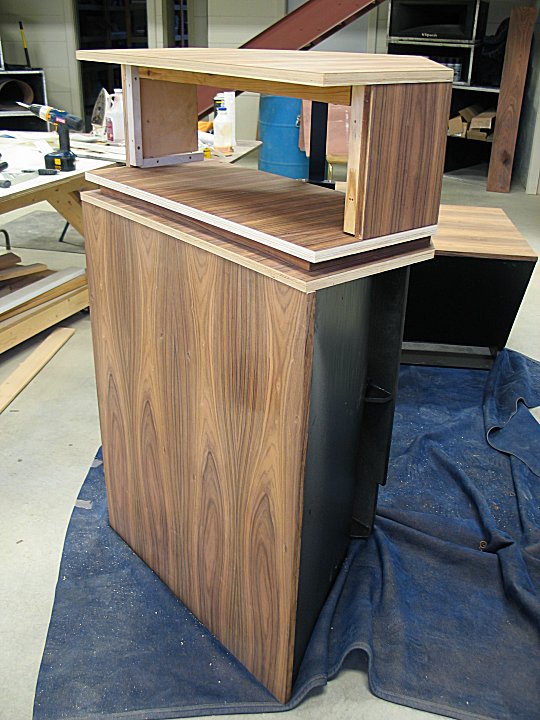
Here’s a couple teaser photos.
Right now I have about 45 hours of work into these, not including the work on the grills.
I currently have all the panels veneered and all I have left to do with the veneer is edgebanding. Oh, and the Klipsch Heresy speakers that I have enough veneer left over for! Anyone for matching rosewood Heresy rear surrounds?
Tomorrow I’m going to assemble and disassemble the tops and work on edgebanding.
Materials Used So Far
A little miscellaneous information. Someone asked for this info on the materials I’ve been using.
It took two 4 x 8 sheets of veneer to do the Khorns. I got the veneer from Oakwood Veneer. Cost was about $350. It took a gallon of glue for the veneer on this project, which was about $50 with shipping.
I’ve gone through about 20 spray cans of primer and paint at a cost of about $5 each, and I’ve got a lot more to do. 20 or so razor knife blades, lots of sanding discs, about one container of Minwax hi-performance wood filler, a couple of band-aids, about $100 for promotion so far on ebay and Audiogon, a nice Santos Rosewood board to make the trim boards out of, tape, screws, and lightweight plastic.
I was lucky and made contact with someone who wanted to trade my woofers that were in the Khorns originally, one of them blown, for a pair of beautiful original K-33’s.
Final Veneer Sanding and Paint
I made some real good progress.
All of the veneer is now installed, including all the edgebanding, and the initial sanding of the veneer is done on all ten of the top horn pieces. They are all masked off and ready for paint. The painting process takes some time because of the waiting involved between coats, so I’ll be doing the grill work that I have to do while the painting is being done.
Putting the veneer on before painting, means that the edges of the veneer will be painted too.
It takes about 20 minutes to mask off each of the six large top horn pieces.
The bass bins are in the paint room getting a touch up of black paint. Once that’s done, they’ll get a final sanding of the veneer and I’ll install the woofers. I purchased really nice wire for the internal wiring of the Khorns. I’m also using nice banana binding posts for the woofer connections.
All the pieces are painted now.
Next, I’ll do the final sanding on all the veneer.
Matching Rosewood Heresys
I’ve been working on a pair of Heresy’s for the last couple of days and I’ve got them in the paint room right now. Tomorrow I’ll be starting the finish sanding on the Khorn pieces. Wish me luck, there’s always the risk of sanding through the veneer. UGGGGGGHHHH!
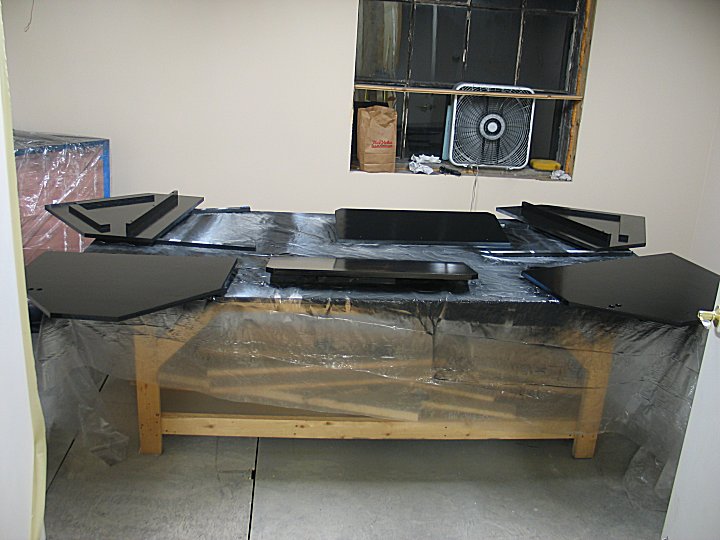
Here’s a couple of pictures of the Heresy’s. I had just enough veneer left over from the Khorns to do three sides of each of these. I don’t usually do Heresy restorations because they don’t sell for enough money to cover the hours that it takes to do the work. But I decided to do these ones because I had the veneer and this particular pair came to me in pretty rough shape, just calling to me for help!
The Heresy’s have all the veneer on now and they’re getting painted tomorrow, so they’ll be caught right up with the Khorns.
It’s getting exciting, I’ll be putting finish on the Khorns and Heresy’s next week!
Urethane Finish Work
The sanding is done, I’ve cleaned the shop thoroughly, and I’ve got all the speakers and parts set up and ready for finish. Sorry there’s no new pictures, I didn’t see the sense since they don’t look any different. I’ll take pictures after the first coat of finish goes on.
I’m going to put urethane on all the various pieces of the Mkhorns, the rosewood Heresy’s, a pair of Walnut Heresy’s that I refinished recently, and another pair of rosewood Khorns, Tkhorns, that I restored about two years ago, all at the same time.
All of these speakers and parts will get various levels of cleaning and prep for the urethane and I should be able to get the first coat on tomorrow. For the next 4 days, my shop will be very “still”, to keep the dust down while doing this finish work. I’ll sand with 400 grit between coats and put a coat of urethane on once each day.
The pictures today aren’t very good because of the lighting, but I think you’ll get the idea. The grain really POPS now with the finish. There’s just nothing like Rosewood, it’s formal, rich, tasteful, interesting, and just plain beautiful.
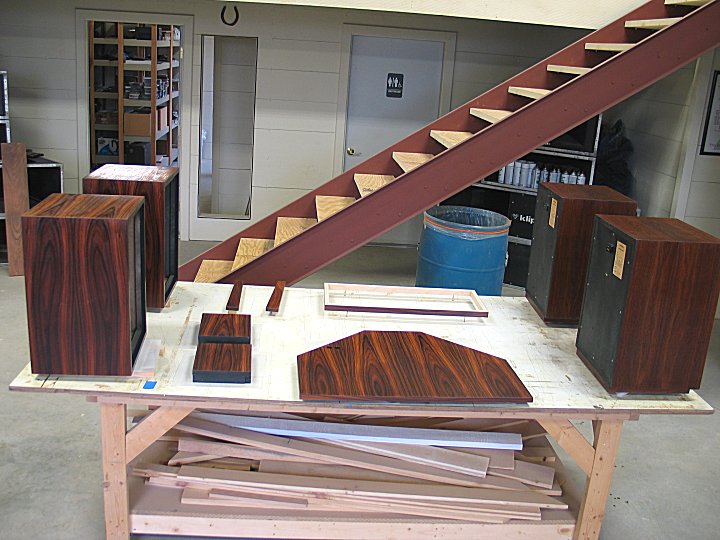
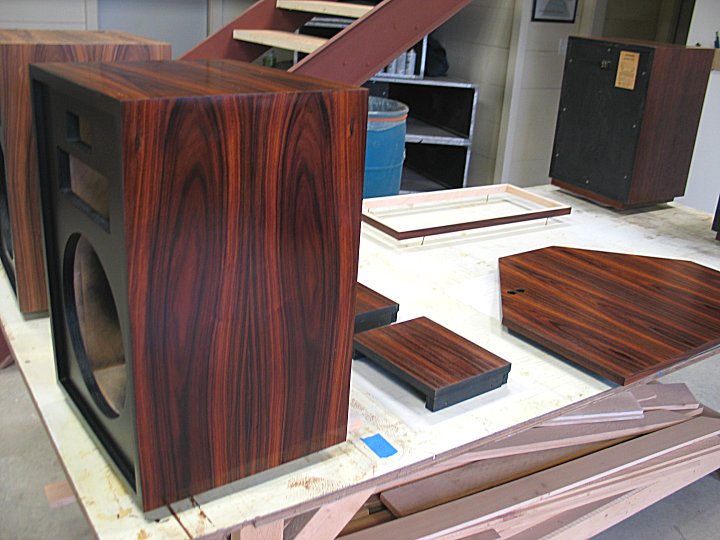
Second Coat and Hand-Rubbed Finish
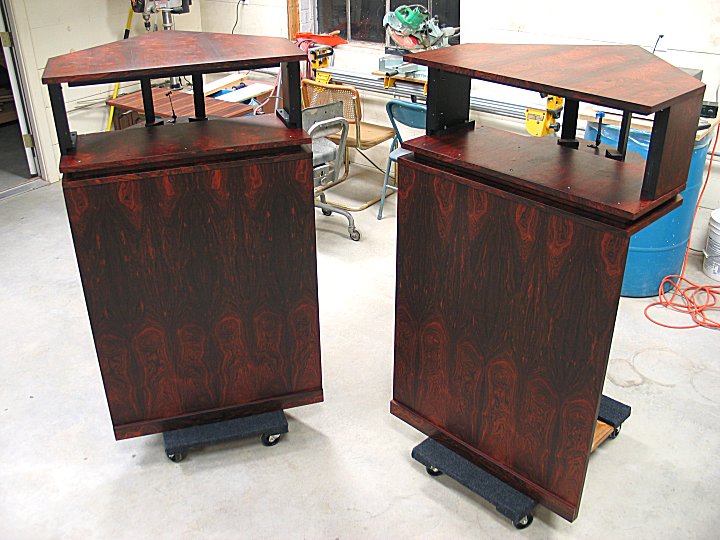
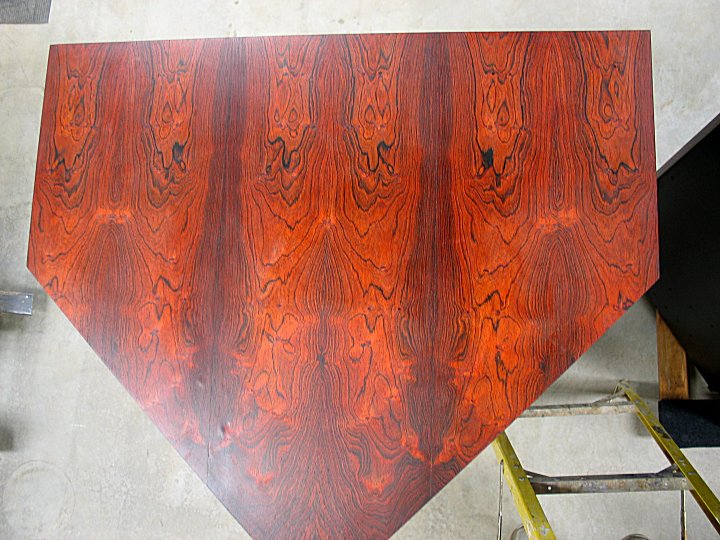
Rain the last few days and the finish wasn’t drying good. But today things dried right out and I got the second coat on. I use 400 grit sandpaper to lightly sand between coats, then use my hands to rub and clean the wood before the next coat. They really are hand-rubbed.
The “T” Khorns made it into the shop today and got their first coat. These are Khorns that I re-veneered a while ago, in raw wood veneer.
These really have some beautiful veneer. This is raw wood Brazilian rosewood, and I did have issues with bubbling veneer when I installed it. The glue and the raw wood veneer just didn’t work well together. The paper-backed veneer with the Heatlock glue that I’m using here on the “M” Khorns really does work a lot better.
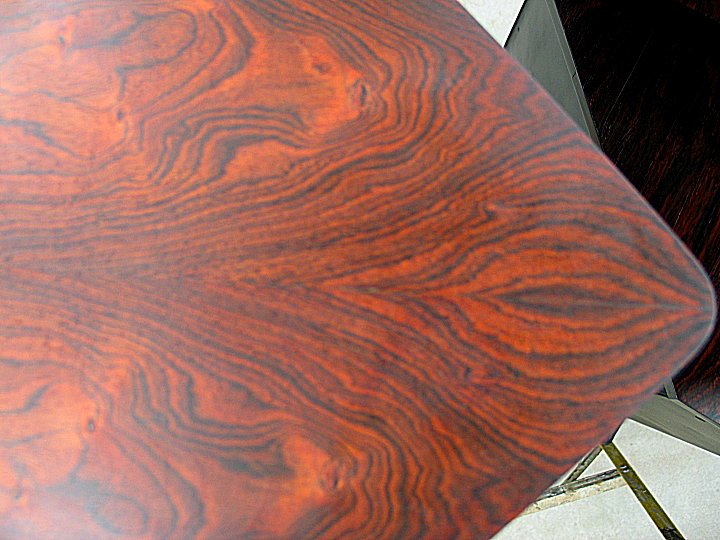
Ready for Assembly
I think the finish is done now. I’m going to make a close inspection this weekend and if they need one more coat I’ll wrap it up this weekend. Next is the assembly of parts. We’re waiting for the new mid horns, new tweeters, and new crossovers to be delivered, which could take a few weeks.
5/5/07 update: I did put one more coat of finish on everything and it’s taking quite a bit of time to dry. I’ve started making cane grills for the Tkhorns and I’m telling ya, it’s a smash hit, the contrast between the light colored cane and the dark rosewood. Wait till you see it! I can’t take my eyes off them.
Cabinet Assembly and Trim Options
5/13/07 update
I did the cabinet assembly yesterday. New felts on top of the bass bins.
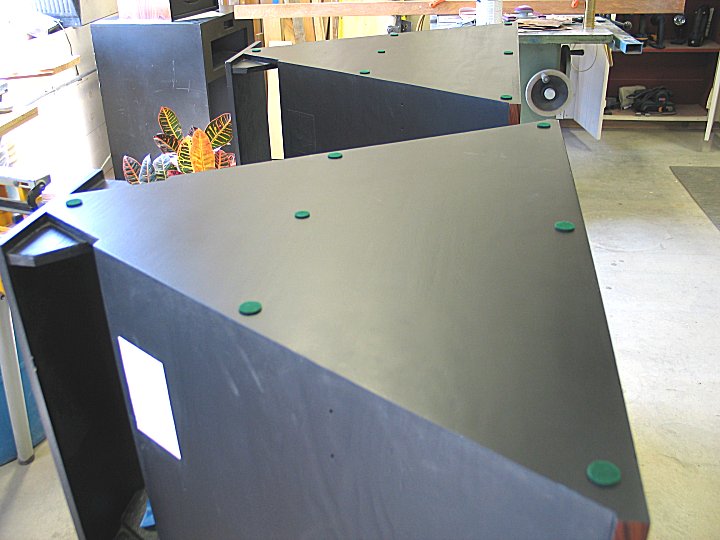
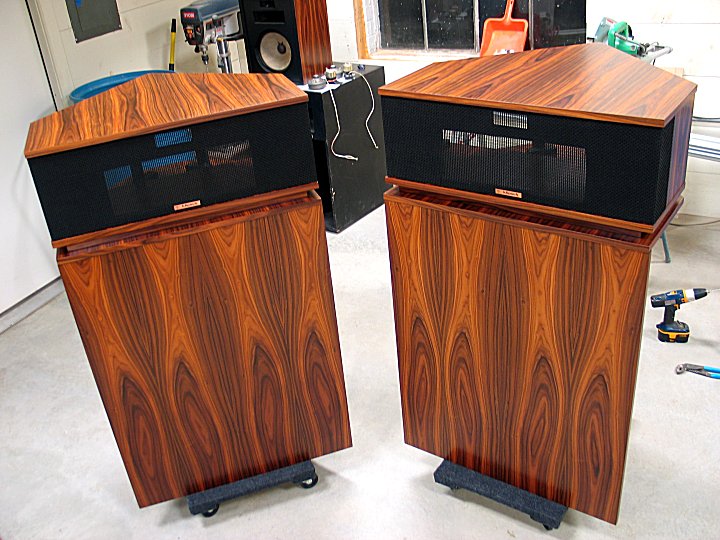
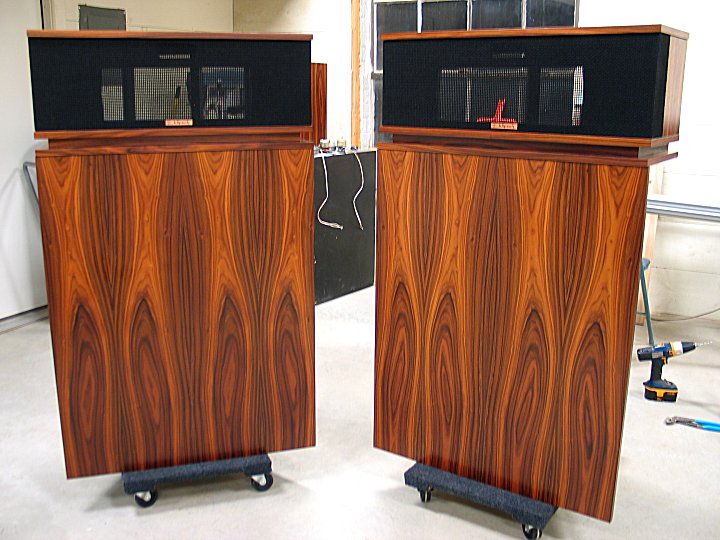
Three Bottom Trim Options
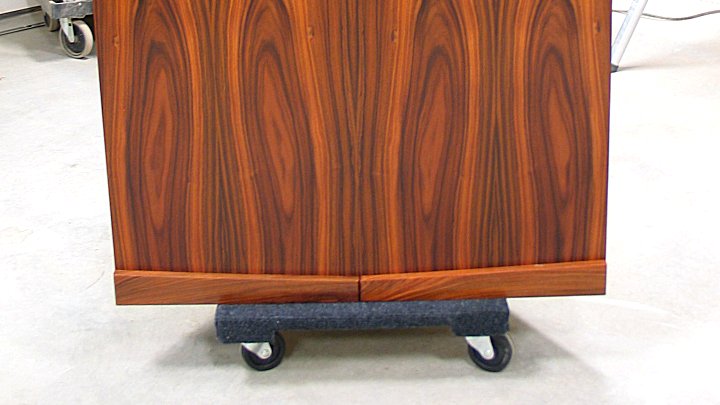
There are three different options on these for the front bottom trim. Klipsch originally had a straight piece of solid hardwood trim at the bottom of the bass bins, about 1/2″ thick and 2-1/4″ tall. I’ve done something a little different, but it will be up to the new owner as to which he would prefer.
Option #1 — No Trim
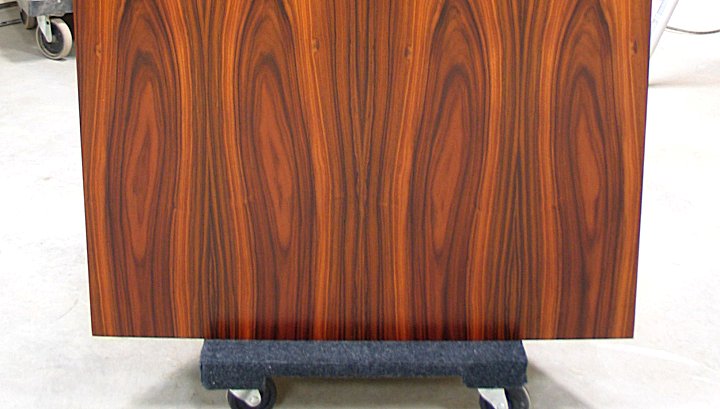
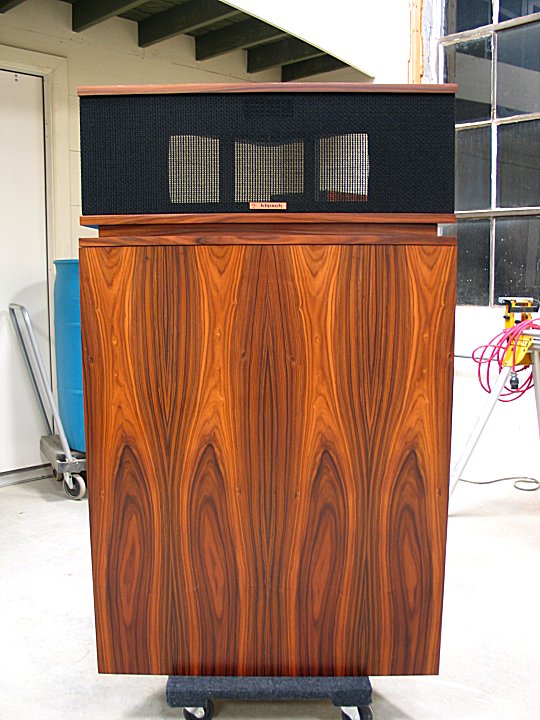
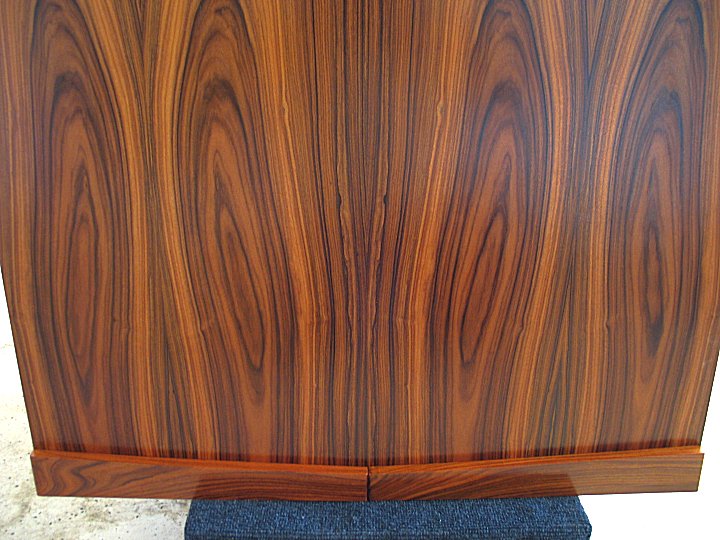
Option #2 — Angled Solid Rosewood Trim
These are solid rosewood trim pieces, ripped at a slight angle to represent the horn-loading of the speakers. The edges have a very slight bevel applied that create a tiny “V” where they butt together.
Ready for Assembly
I think the finish is done now. I’m going to make a close inspection this weekend and if they need one more coat I’ll wrap it up this weekend. Next is the assembly of parts. We’re waiting for the new mid horns, new tweeters, and new crossovers to be delivered, which could take a few weeks.
5/5/07 update: I did put one more coat of finish on everything and it’s taking quite a bit of time to dry. I’ve started making cane grills for the Tkhorns and I’m telling ya, it’s a smash hit, the contrast between the light colored cane and the dark rosewood. Wait till you see it! I can’t take my eyes off them.
Drivers, Wiring, and Original Testing
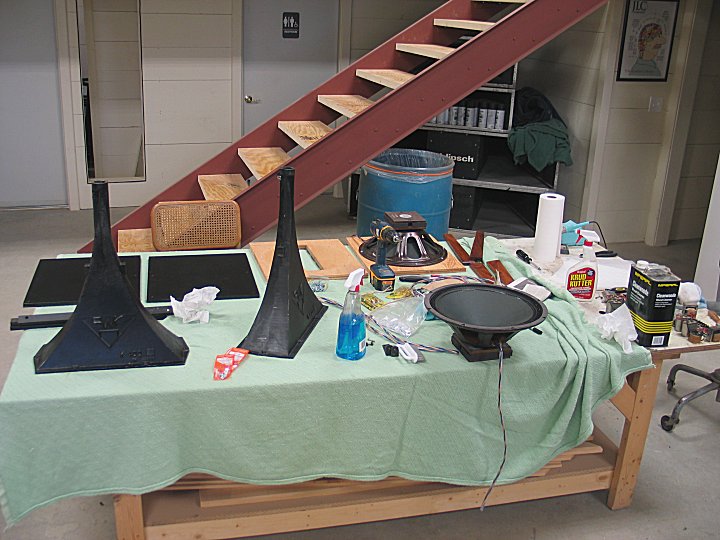
I’ve been cleaning and assembling parts.
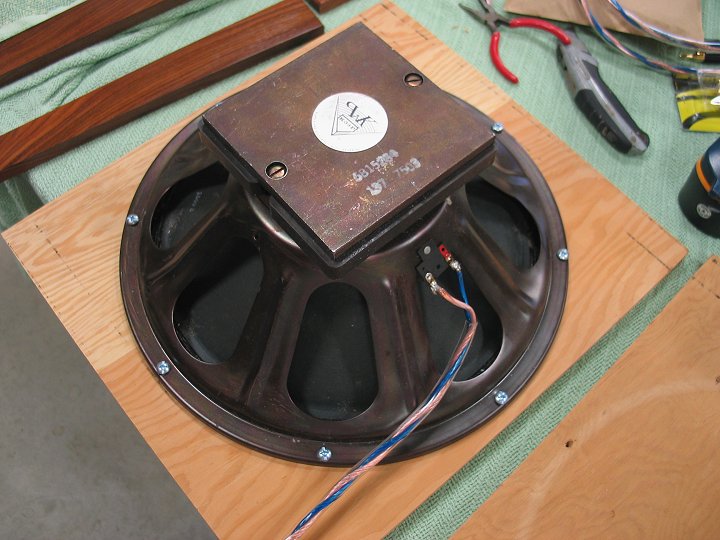
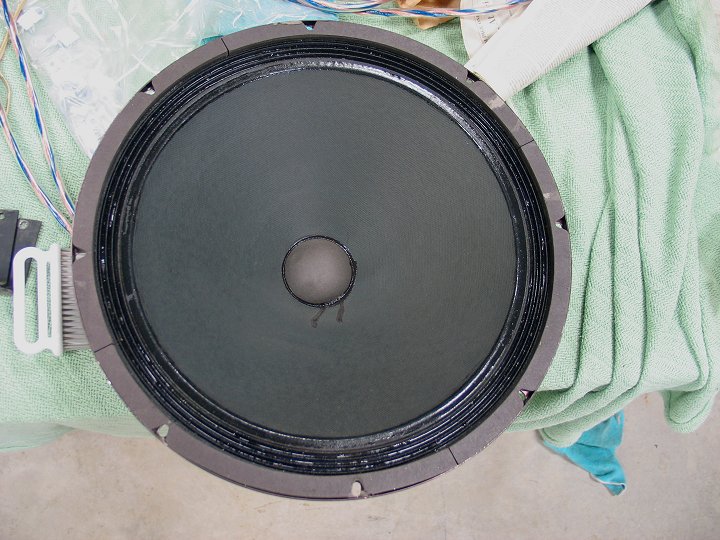
Here’s a few pictures of what the woofers look like. This was a lucky find, a great old pair of K33’s. Thanks “speakerfritz”.
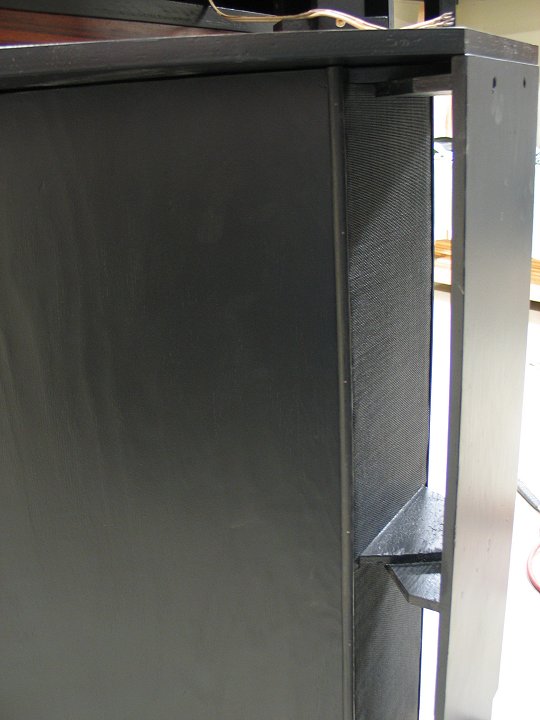
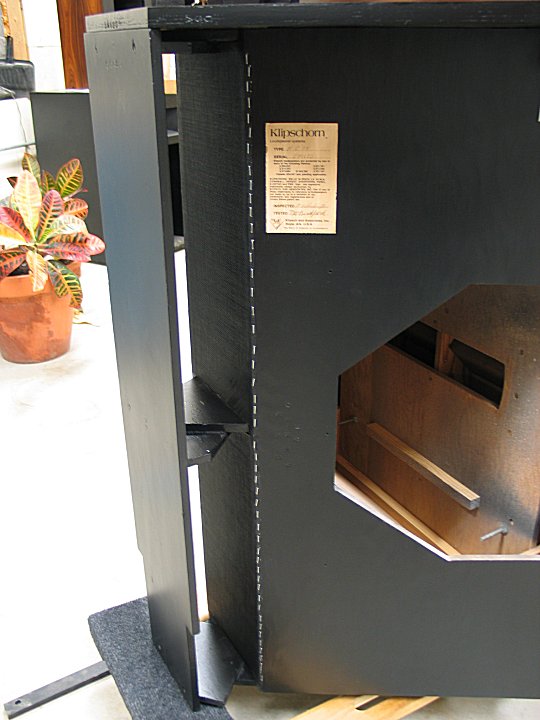
I installed screen on the backs of the bass bins.
Installed a small wood trim piece to cover the staples.
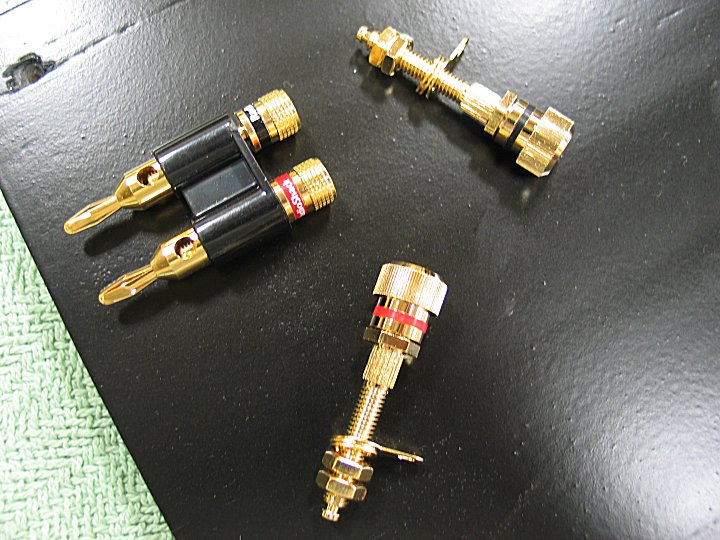
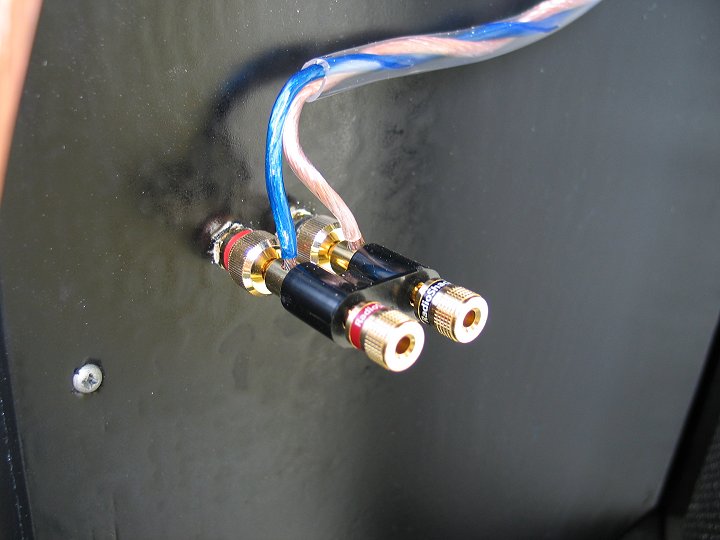
Gold plated connectors all around, and new 12ga twisted-pair wiring.
First Assembled Test
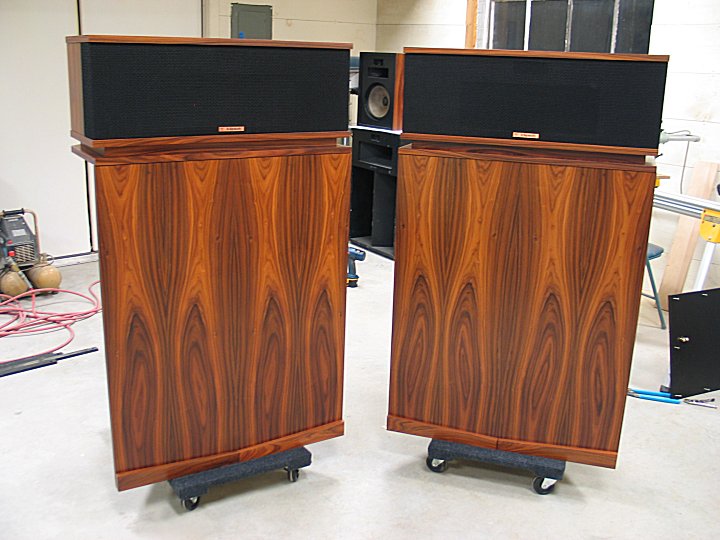
Finally got everything assembled today and got the speakers up and running.
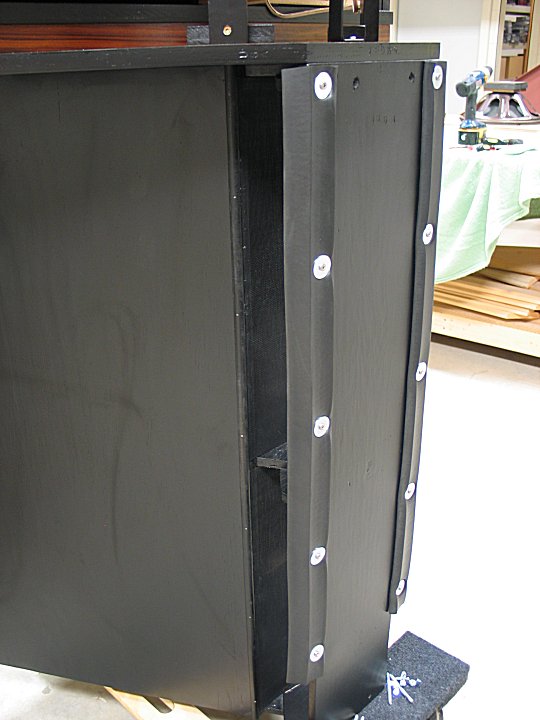
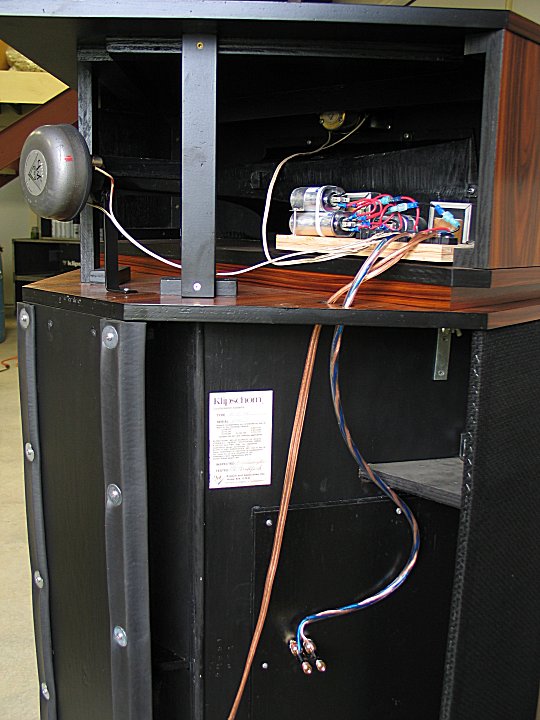
I found some great material to seal the backs of the bass bins into the corner walls. This is a garage door weatherstrip made of very soft rubber.
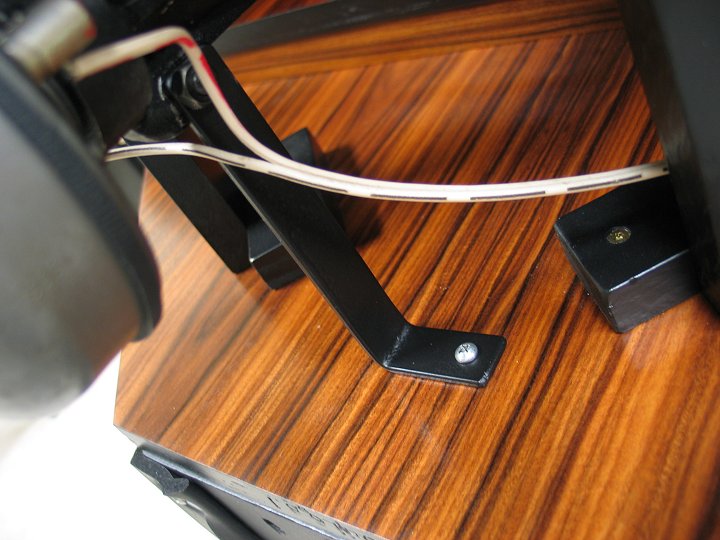
I made new brackets to hold the midrange horns.
I’m using a pair of Bob Crites “A” crossovers for testing.
Internal woofer wiring is soldered. External wiring is 12 guage twisted pair and gold plated connectors.
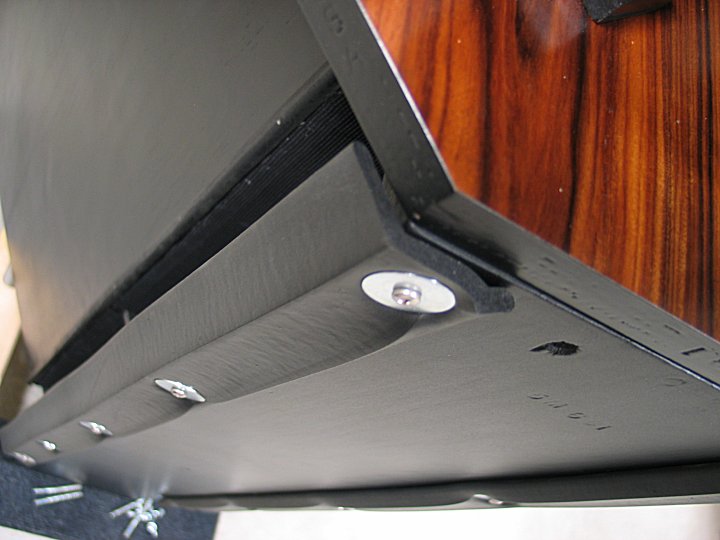
The front bottom trim is permanently attached now.
Not quite in the corner tightly, but they fill my 24 x 32 room very nicely just the same. I got about 60 or 70 watts into them with the HK930.
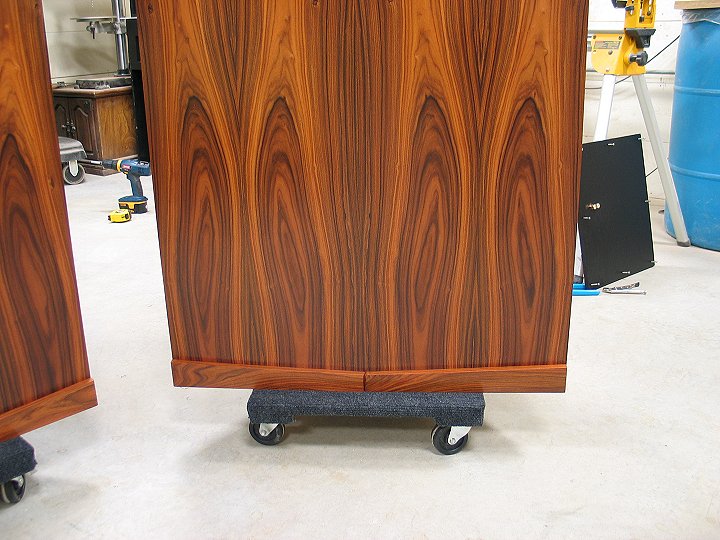
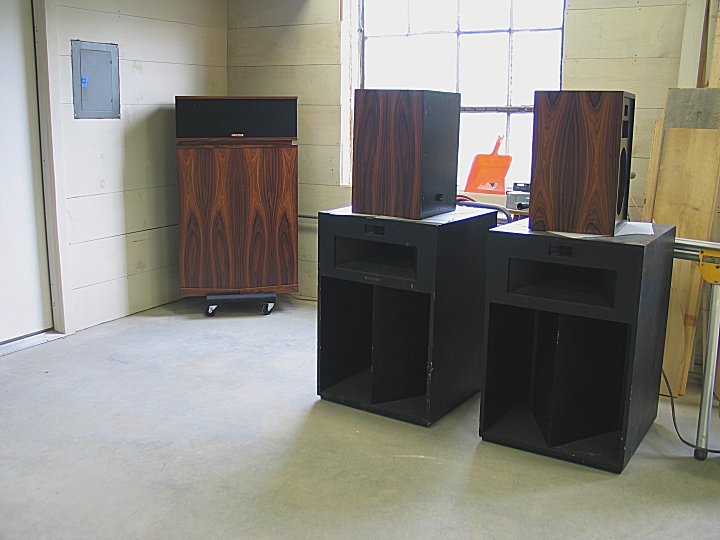
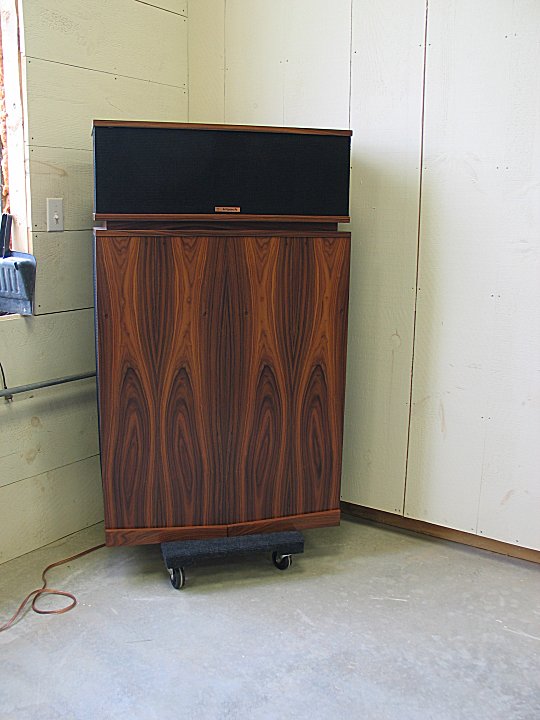
Trachorns, Tweeters, and Upgrade Parts
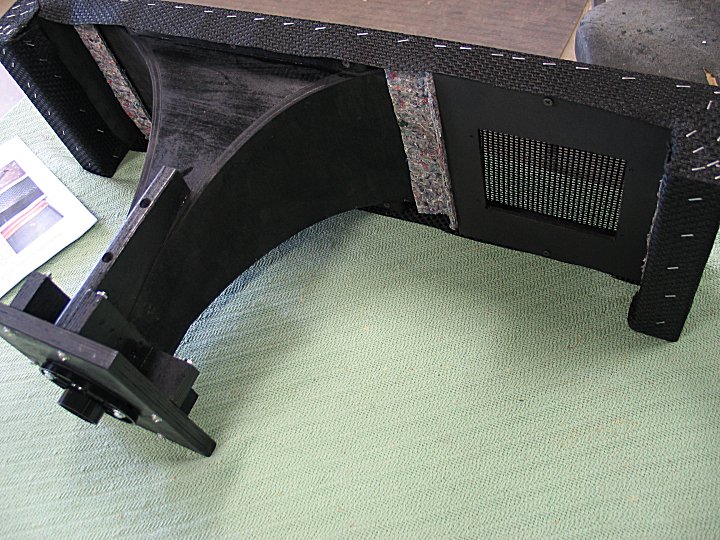
I got the Trachorns unpacked today. These are from ALK Engineering, and they are very nicely made. The workmanship is first rate. My only critique would be that I think there should be more staples holding the grill cloth on.
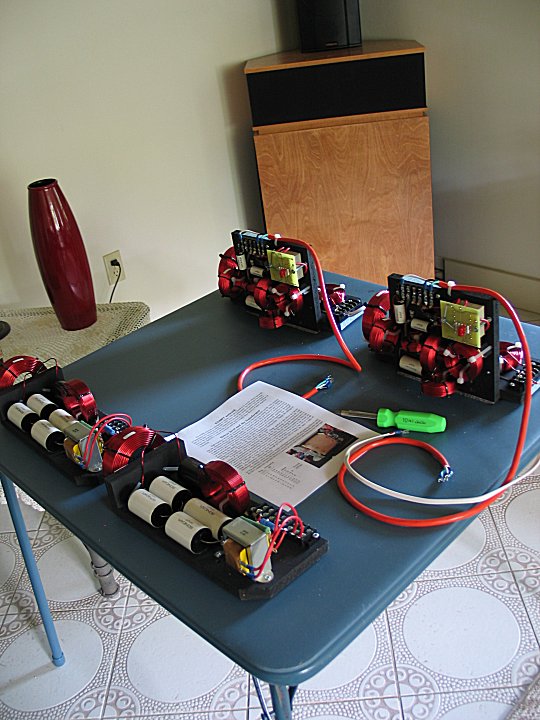
I just got word that the ES networks will be shipped next week. Still waiting on the Beyma tweeters from Italy.
With the new owners permission, I’m going to be able to move the Khorns to my house for testing with the various components. Thanks Sergei for letting me do this. What a great opportunity to try out the ES networks, the Trachorns, and Beyma tweeters, all in various configurations with different power amps.
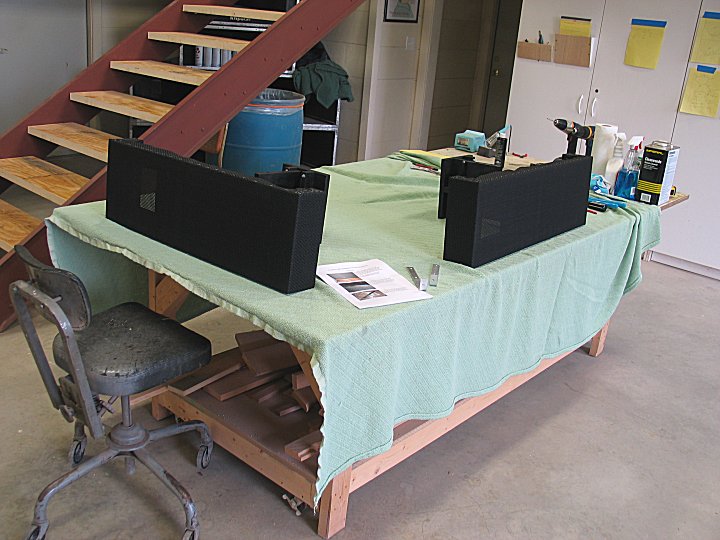
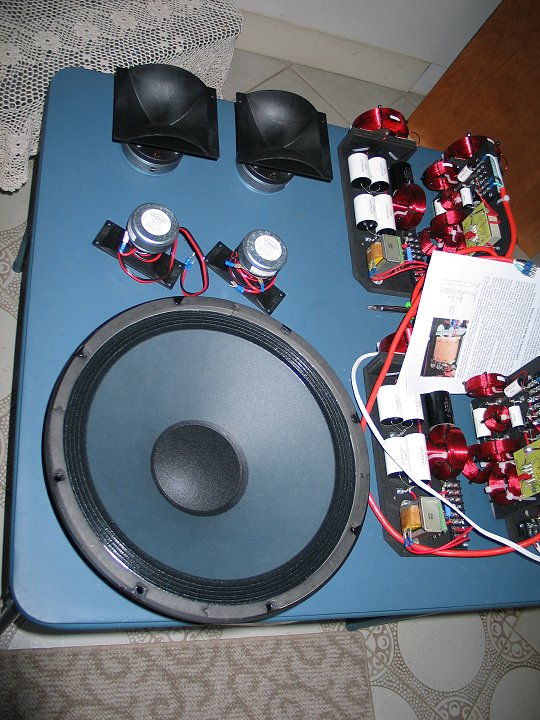
Beyma Tweeters and Crites Parts
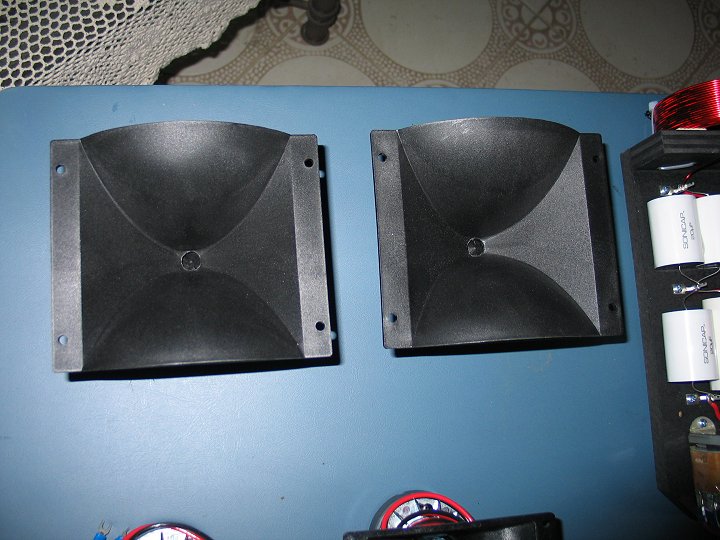
The Beyma tweeters finally showed up. I was surprised by how big and heavy they are. They seem nicely made.
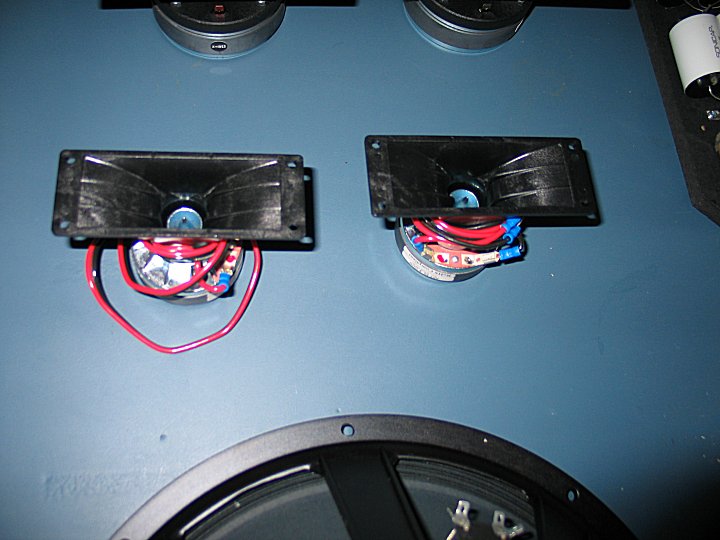
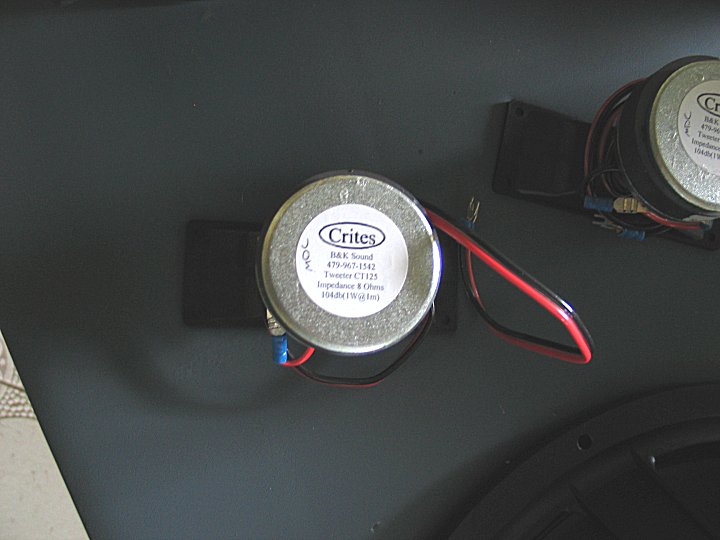
Bob Crites was nice enough to send me a pair of his CT-125 replacement tweeters for the Klipsch K-77 to try out during my testing. These are highly regarded by the Klipsch Forum members who have purchased them. It will be interesting to compare to the Beyma’s.
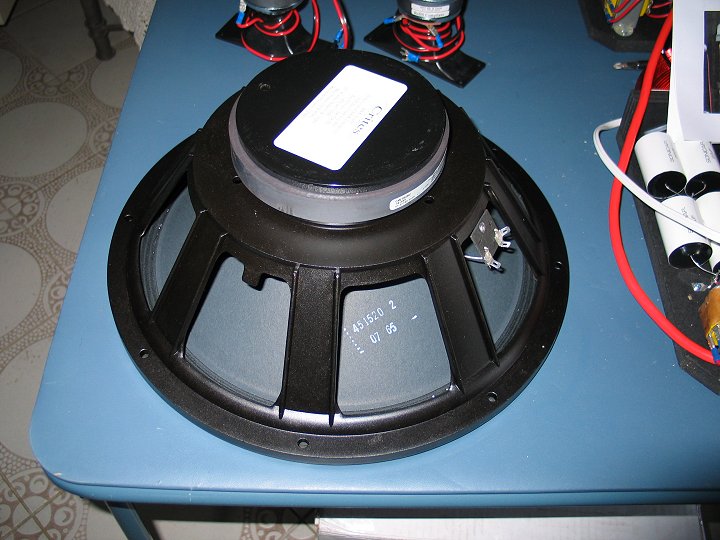
I also decided to get a pair of Bob Crites cast-frame woofers that are made to replace the K-33’s.
Home Listening Test
Finally, I got to do some testing today. My brother-in-law helped me move the Khorns to my home, and it took most of the day to move things and get everything set up. I gave my wife some money and arranged to have the house to myself all day and early evening.
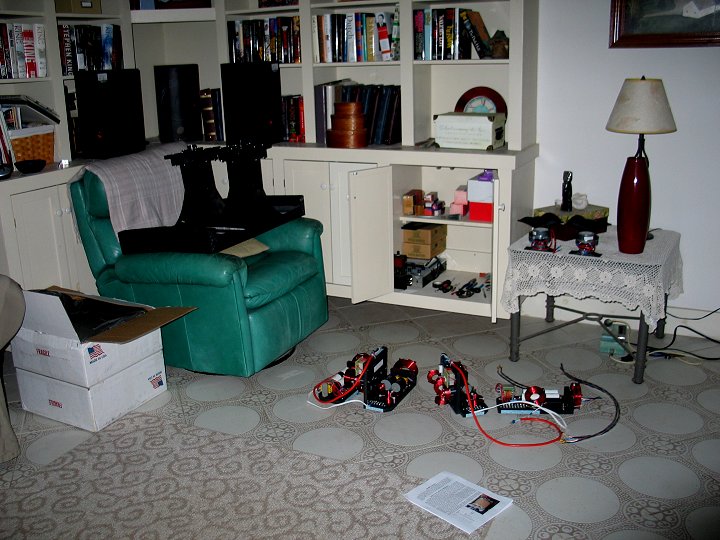
Here’s a picture of the living room full of speaker parts and furniture moved all around to give me an unobstructed audition of the speakers.
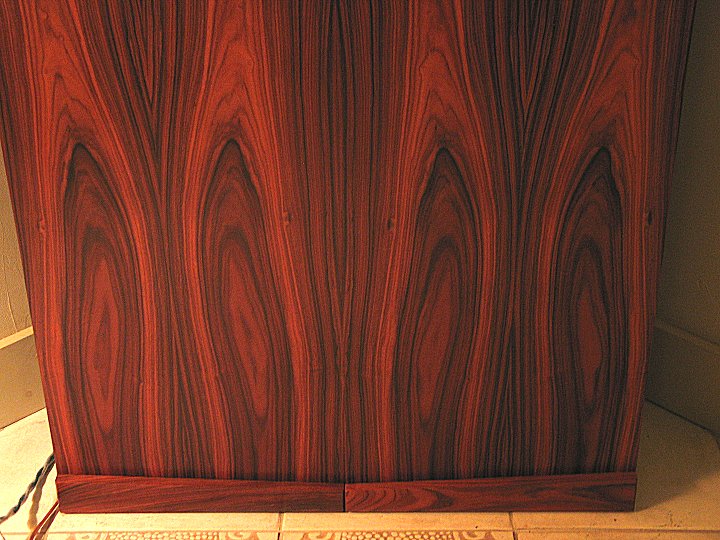
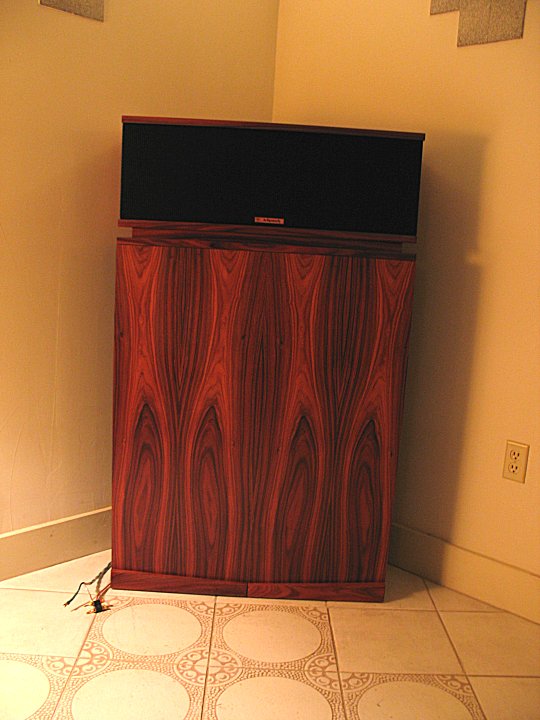
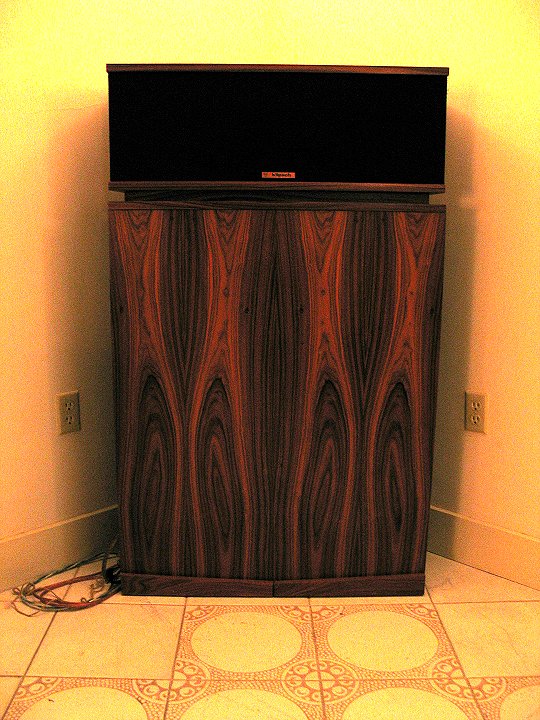
First of all, I have to say that these speakers look spectacular in my living room. It’s different having them in a home environment than it is to have them at my shop. I’ve had Khorns in this room for over 15 years, so I’ve gotten used to seeing them in the corners, but none have looked as beautiful as these. I’m referring to the wood grain of the veneer more so than the workmanship. Sorry for the horrible pictures, but the lighting in my living room is not good for photography.
Listening Setup
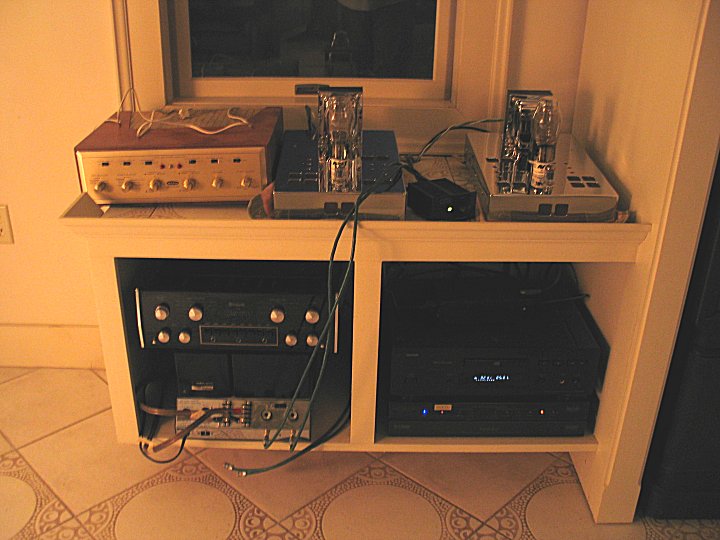
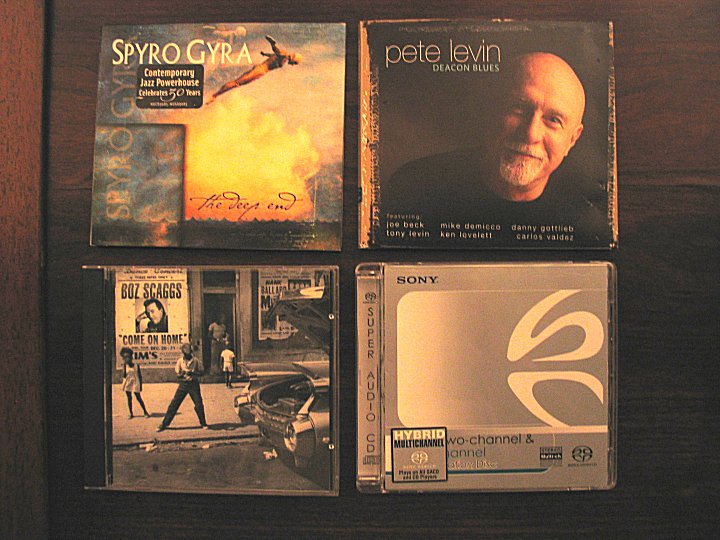
I squeezed a few more components in with the regulars to do the testing. I’ll be using the same source for all my testing. It’s a combination of a Denon 1650AR used as a transport, a MSB Link DAC III with Full Nelson upgrade, HDCD card, 24 bit/96khz upsampling, a separate P-1000 power supply, and a Monarchy anti-jitter box.
I’ll be using a Creek Audio OBH-10 passive remote controlled attenuated volume control for all testing.
K-33 Woofer Comparison
I decided to do the bass listening tests first and change out the K-33 woofers for the new Bob Crites replacements. I wanted more power for this, so I used a McIntosh MC2100. I played 4 different songs, switched the woofers over in about an hour, and listened to the same 4 songs again.
Right away I noticed an improvement in bass response as compared to my last Khorns I had in this room. Perhaps sealing the backs of the bass bins against the walls does help.
I did not notice much of a difference between the old K-33’s and the new Bob Crites replacement woofers in the amount of bass or the extension of low frequencies. But there was one noticeable difference, and that is with the upper bass and mid-bass frequencies. The Crites woofers blended better with the mid horns. Instruments like horns, organ, and guitar playing in the lower registers all sounded warmer.
Nice sounding woofers, but don’t expect big improvements by changing woofers unless yours are damaged to begin with.
Upgrade Listening Impressions
I just spent the last four hours comparing new “A” crossovers with the ALK ES Networks.
I used two different amplifiers for this test. I started with my custom JFL Horus 2A3 Single Ended Triode Tube Monoblocs. These put out about 2 watts per channel and they have the best midrange sound I’ve ever heard.
After listening with the “A” crossovers, I switched the crossovers out for the ALK ES networks. The sound was different right away. The midrange seemed softer and smoother, the highs were very smooth, and the bass seemed more laid back.
At first I wasn’t sure if this was an improvement. After switching back and forth, I realized the ALK networks seemed to extend the bass deeper, but the sound also became softer and less punchy.
“A” Crossovers vs. ALK ES Networks
With the “A” crossovers, the music seemed to have more impact and more punch, but also a little more harshness.
With the ALK ES networks, the overall voicing of the speaker became lower, deeper, smoother, and more laid back. The midrange was less harsh, but Greg also wondered if some of the dynamic impact was reduced.
After switching to the SET amps, the ALK ES networks sounded better to him. The sound seemed smoother, and there was just a little more bass than with the “A” crossovers.
At this point, Greg was thinking there may be an improvement, but he was also wondering what the ALK Universal networks would sound like.
Crites Tweeters, Trachorns, and Beyma CP25s
Next up were the Bob Crites replacement tweeters with the ALK ES networks. The tweeters went in very easily using the same holes as the K-77’s. Greg was not able to detect much difference between these replacements and the K-77’s, saying that both sounded very good to his ears.
The last thing he changed that day was the midrange horns to the ALK Trachorns, and the tweeters to the Beyma CP25’s.
The switchover went fairly well, but he had to carefully fit the wood horn into the Khorn top and move one of the rear braces so the midrange horn could fit.
After playing with the midrange and tweeter output on the ES networks, he did not notice a huge difference in sound quality at that point, so he planned to do more listening and tweaking during the week.
Different, But Not Necessarily Better
Greg’s main impression from this first round of testing was honest and careful: every combination of music, amplifiers, and speaker components sounded terrific.
He felt that the Khorn is an amazing speaker, capable of reproducing sound in a very dynamic and moving way, whether with stock components or with upgraded components.
At the end of this first listening day, his summary was that after all the upgrades were installed, the sound was different, not necessarily better than the stock Khorn he started with that morning. If better, not by much.
He was tempted to do another listening session with all the upgrades and then change everything back to stock and listen again.
Final Thoughts on the Upgrades
Over the last couple of weeks I’ve been able to listen to the Khorns about ten times with all the upgrades installed. Just before writing this, I read through my notes above, and I don’t know that I have much to add.
The Khorns certainly sound wonderful. Every time I sit down to listen, I’m impressed with how solid the bass is and how loud and clear they play. They have such a lively, dynamic sound that really brings all the detail and impact of the music right in your face.
But this description is consistent with how I would describe stock Khorns too. I’m still not convinced that all these upgrades are actually making much of an improvement in the sound quality. I’m noticing differences that could be interpreted to be improvements for sure.
Nice, Pleasant, Soft — Or Dynamic and Real?
There is a difference between speakers that sound nice and speakers that are accurately reproducing the input.
Greg explains that some listeners prefer a softer, more pleasant speaker sound, while horn-loaded Klipsch speakers can sound more real, dynamic, live, and in-your-face.
His feeling was that the upgrades, especially the ES networks, changed the voicing of the speaker a little toward nice, pleasant, and soft, and a little away from harsh, dynamic, and in-your-face.
Whether that is good or bad depends on the listener.
Are Any of These Must-Have Upgrades?
Greg was asked if any of these upgrades were a “must have” for Khorn owners. His answer was no.
He explains that it depends on how much money someone is willing to spend, and that no matter what anyone says about upgrades, it is still an experiment because everyone hears sound differently and has their own idea of what sounds best.
However, his experience with each upgrade was positive. The parts were well engineered, well built, and easy to replace.
Woofers, Tweeters, Trachorns, and ES Networks
Greg felt the Bob Crites replacement woofers were a nice upgrade, especially because original K-33 woofers could be sold, making the net cost fairly low.
He liked the Beyma tweeters and described them as lush.
The Trachorns were very well built wooden horns, although Greg felt the grill cloth could have been installed straighter and with more staples.
He had mixed feelings about the ES networks. They were incredibly well built and clearly worth the money in engineering, parts, and labor, but to his ears the sound was different, not necessarily better.
So Will Greg Use These Upgrades Again?
Greg says he is convinced the woofers are a nice upgrade, and he loved the Beyma tweeters, so he would probably try to incorporate those into the next set of Khorns.
For crossovers and midranges, he was not sure yet. He thought he might start with a pair of ALK Universal networks and experiment with adjustable midrange output.
He also mentioned future ideas, including damping metal horns, trying plastic replacement horns, experimenting with a larger 2″ throat horn and driver, adjusting horn and tweeter output independently from the bass bins, and enclosing the bass bins like the Klipsch 60th Anniversary Khorns.
Final Cleaning and Crating
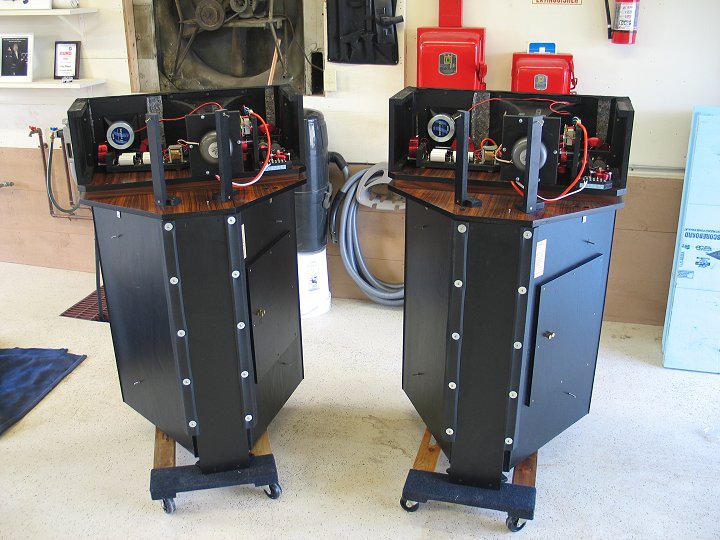
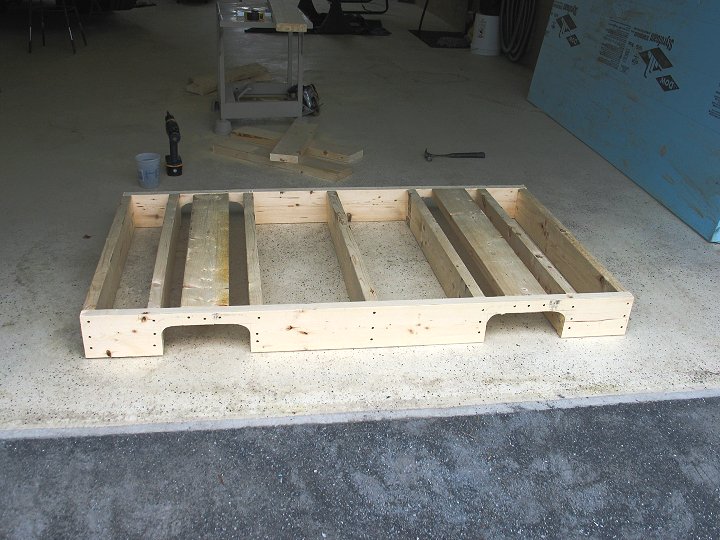
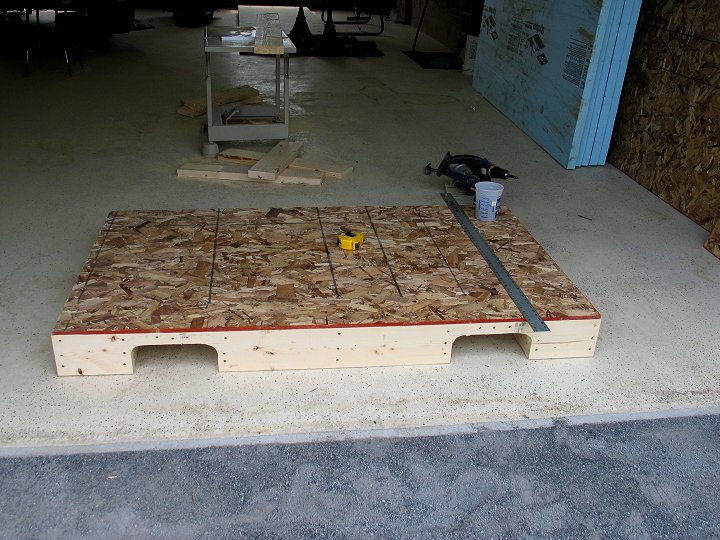
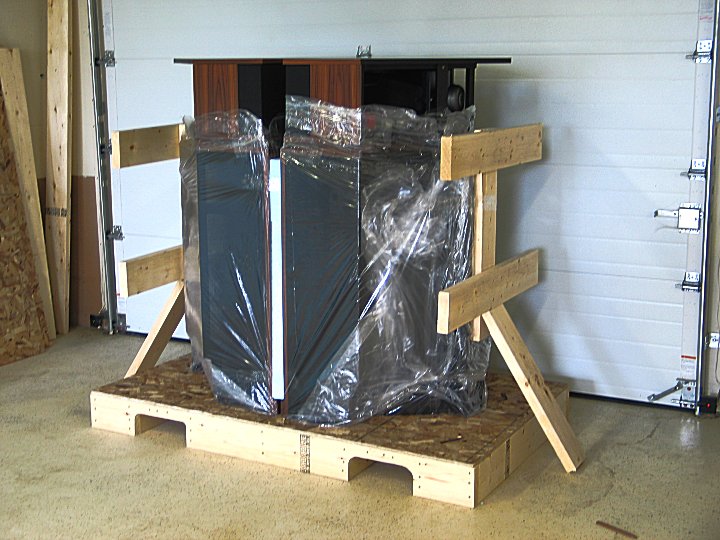
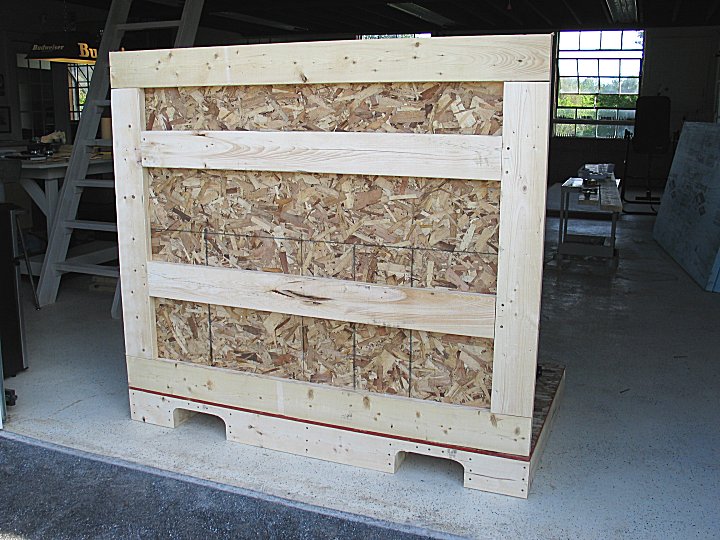
The speakers are back at the shop now. I’m securing the crossovers in the tops, cleaning and installing the grills, and a final cleaning on everything before crating them up.
Crating Process
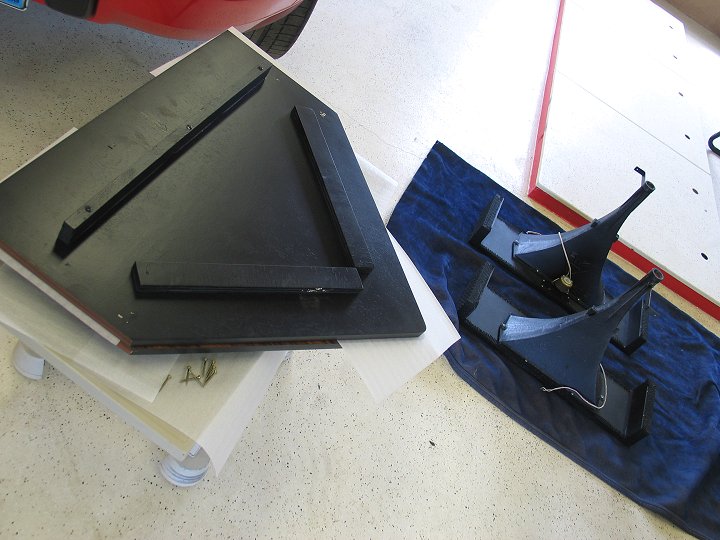
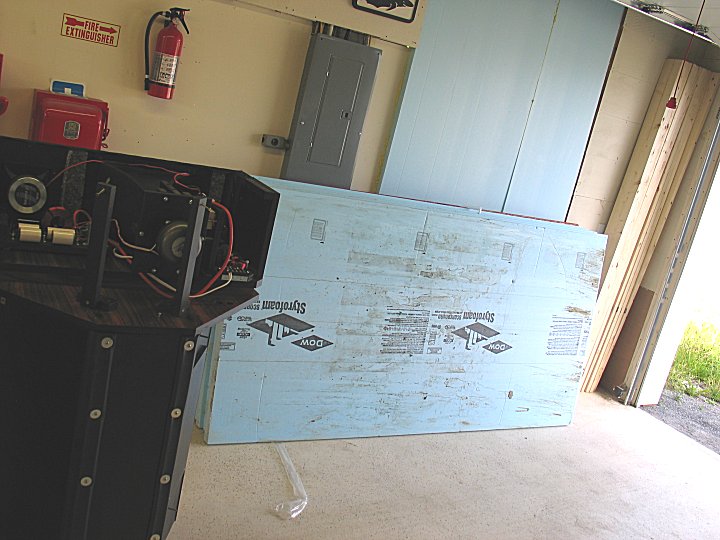
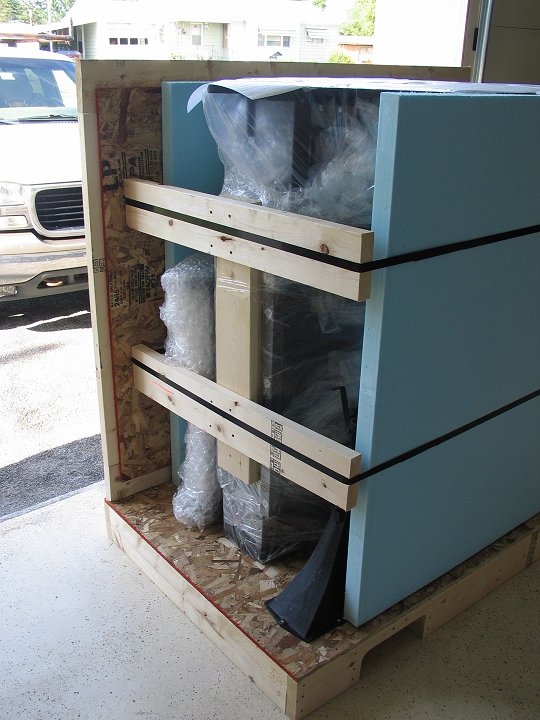
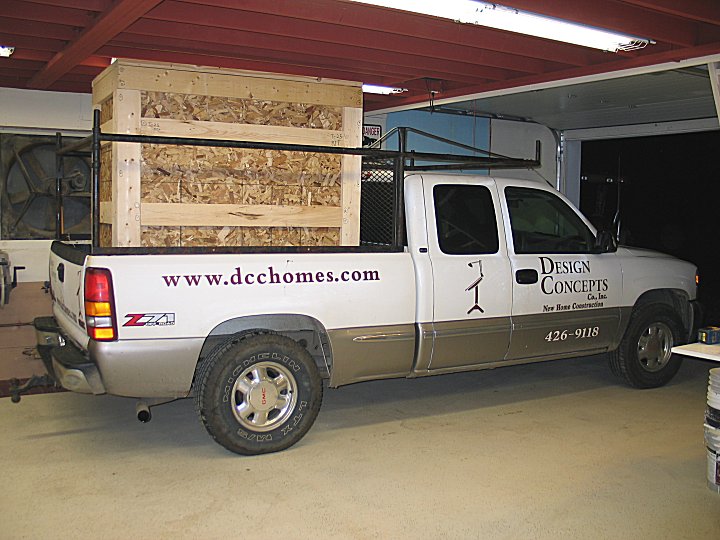
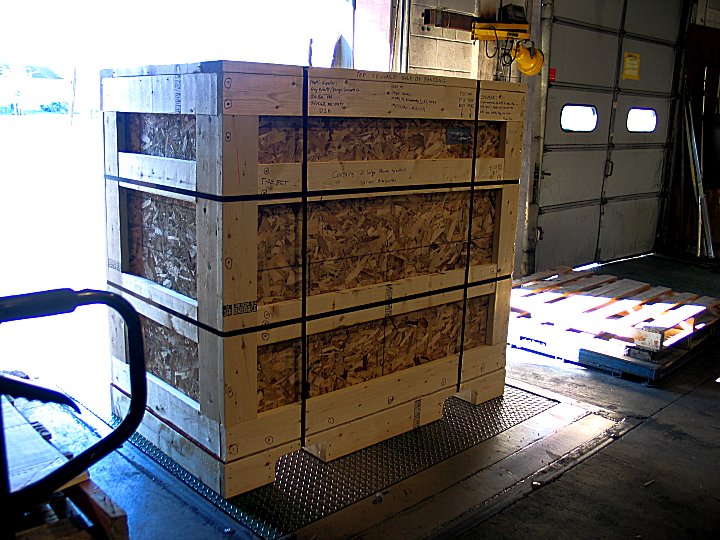
Here’s some photos of the crating process.
The crate weighed in at 835 pounds!
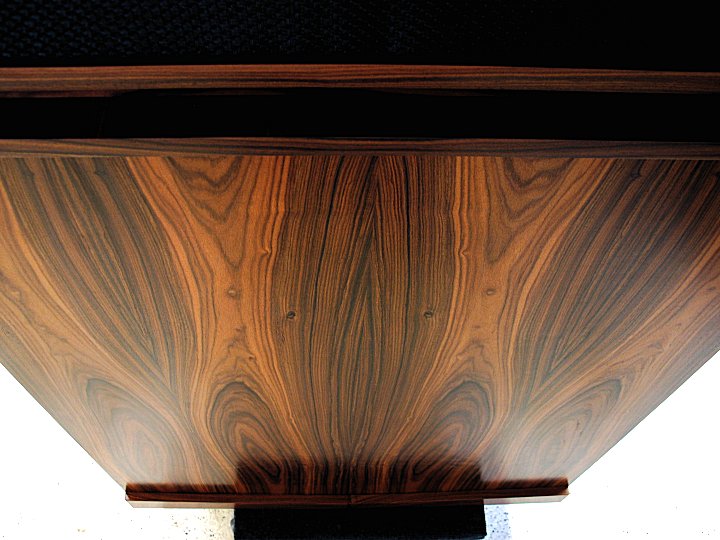
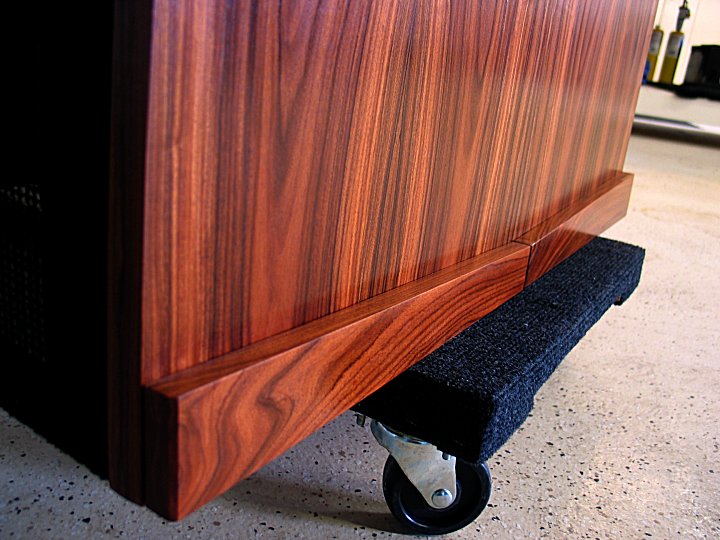
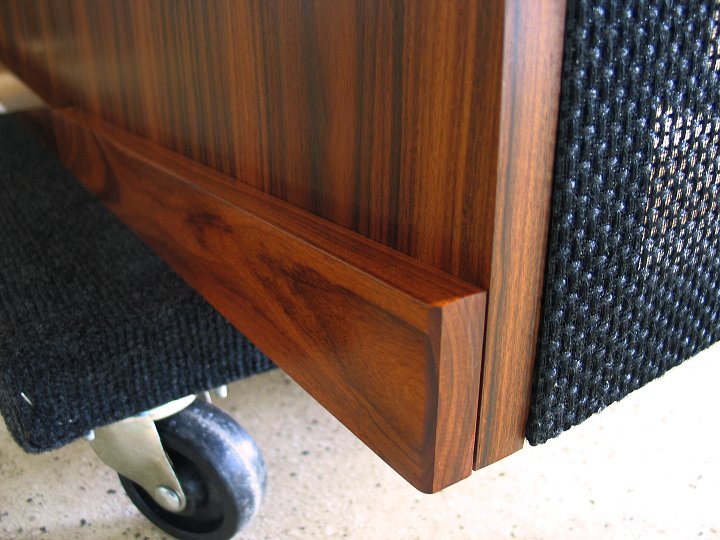
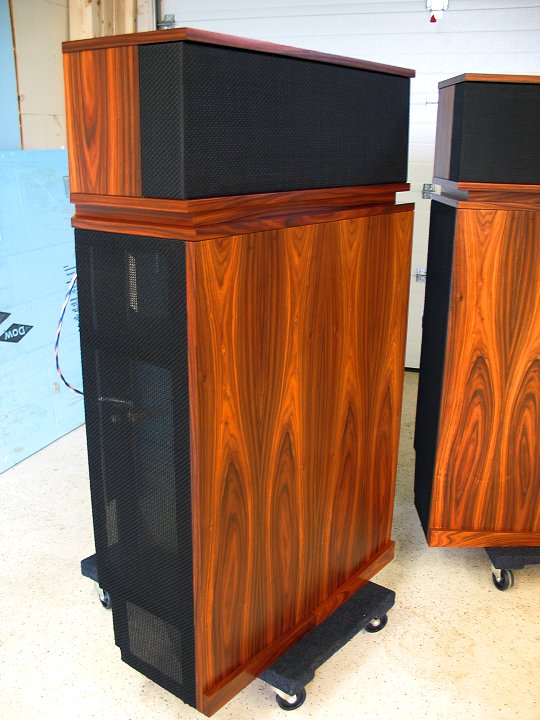
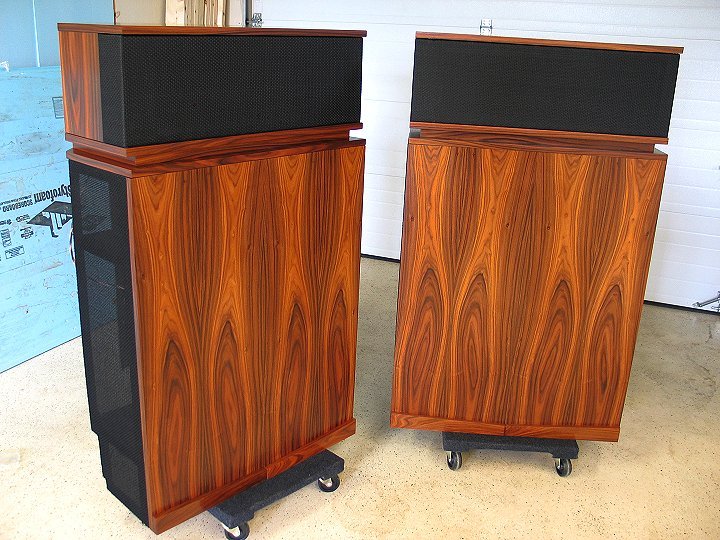
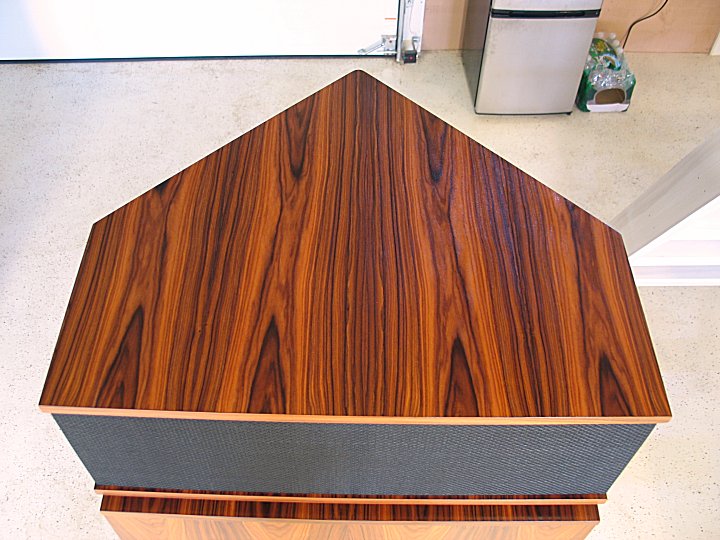
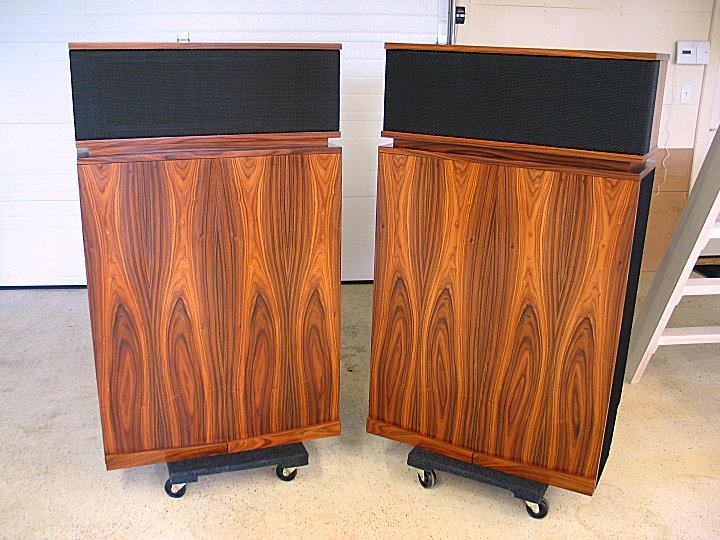
Glamour Shots Gallery
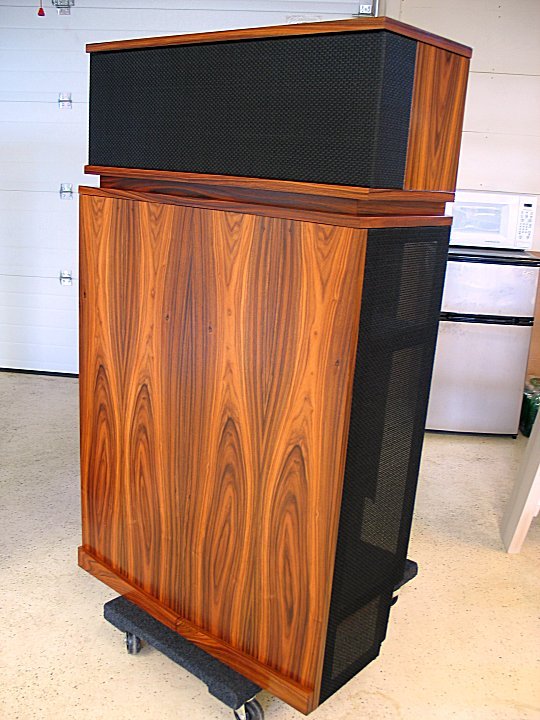
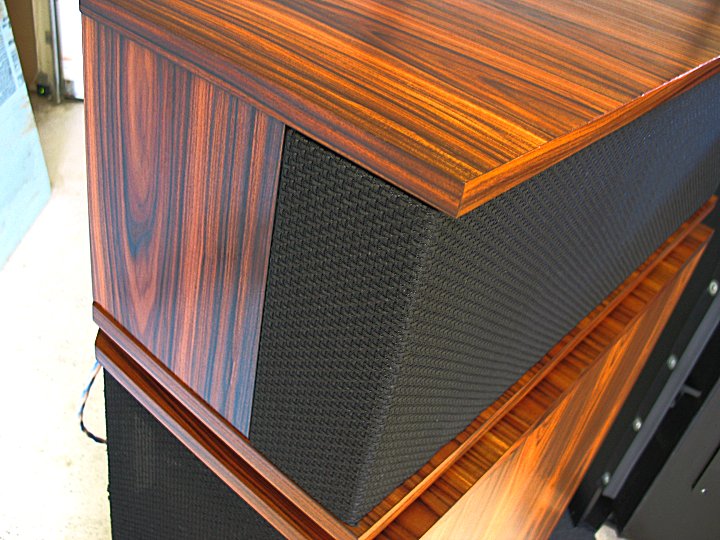
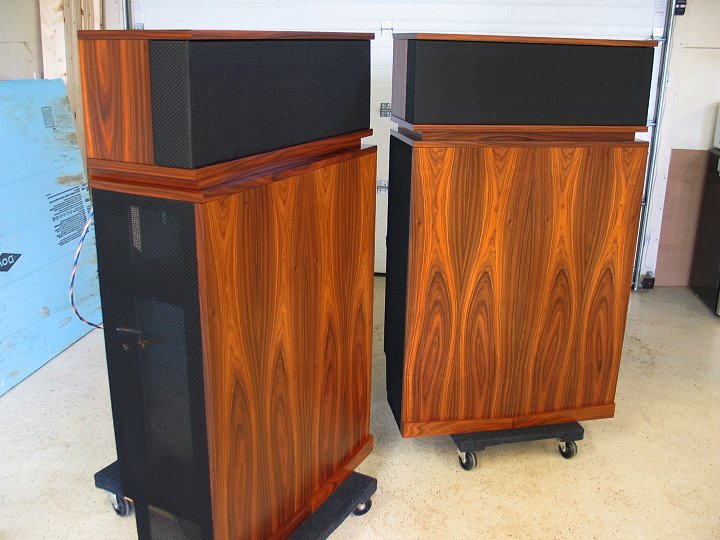
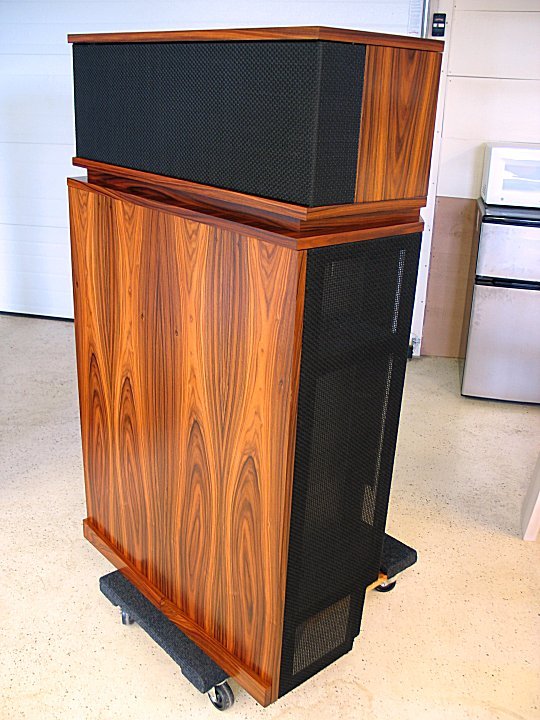
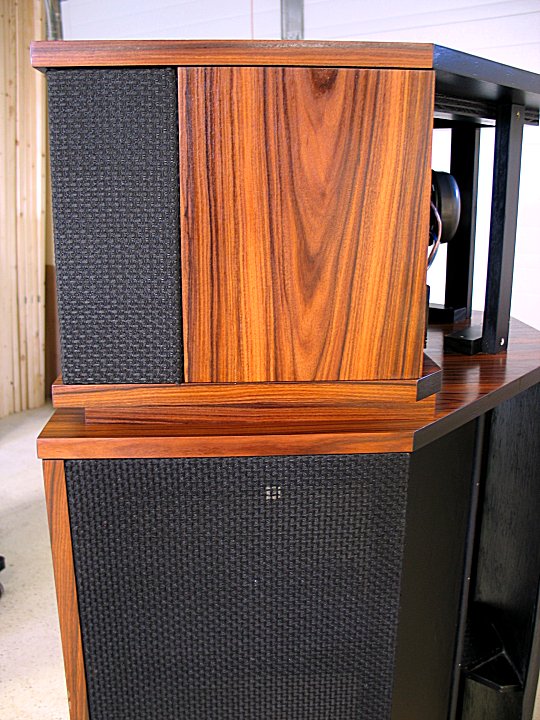
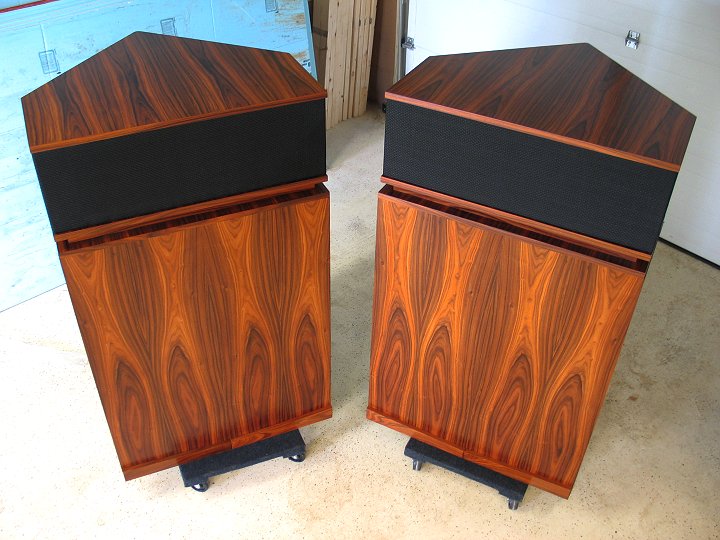
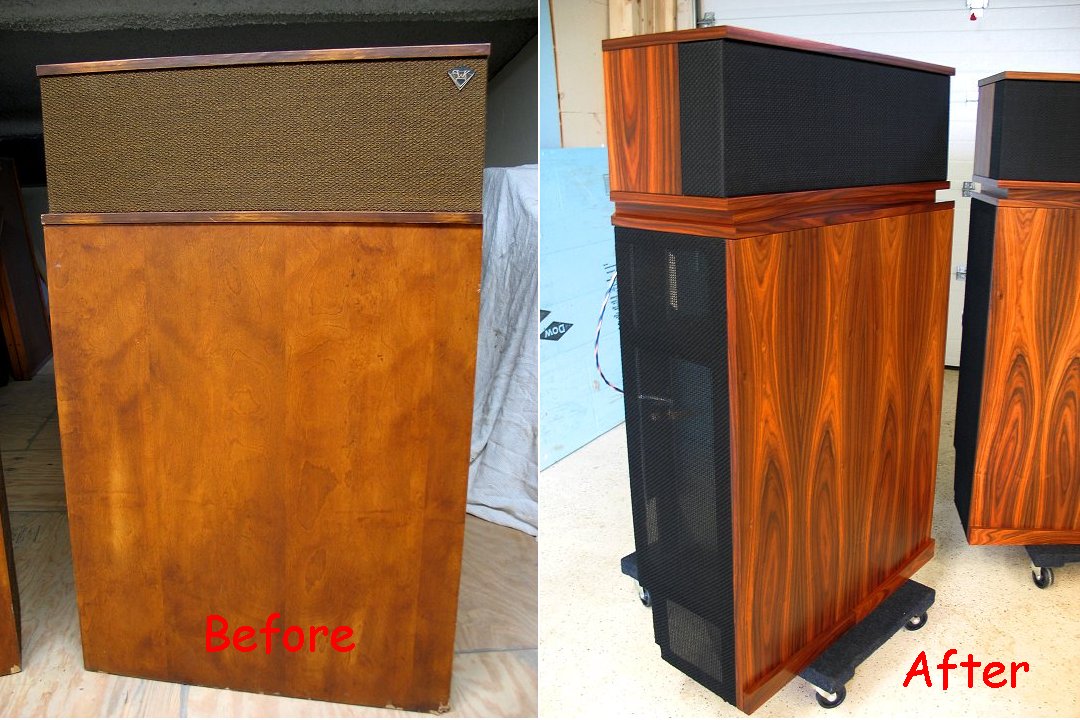
Here’s the “Glamour Shots”.
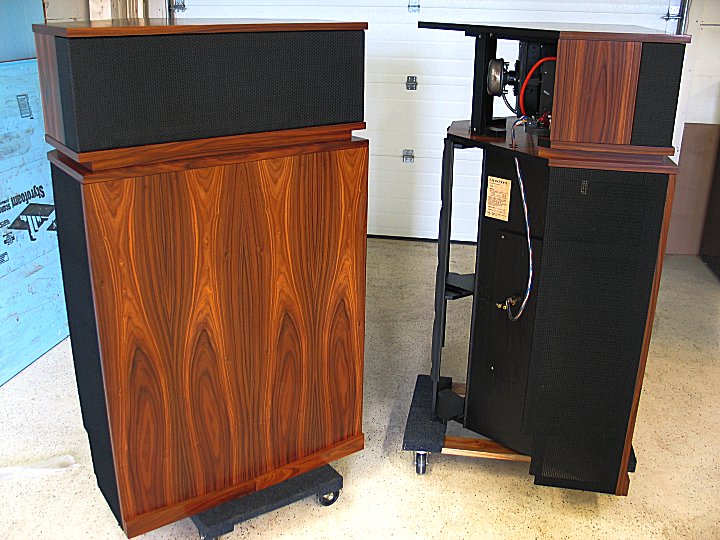
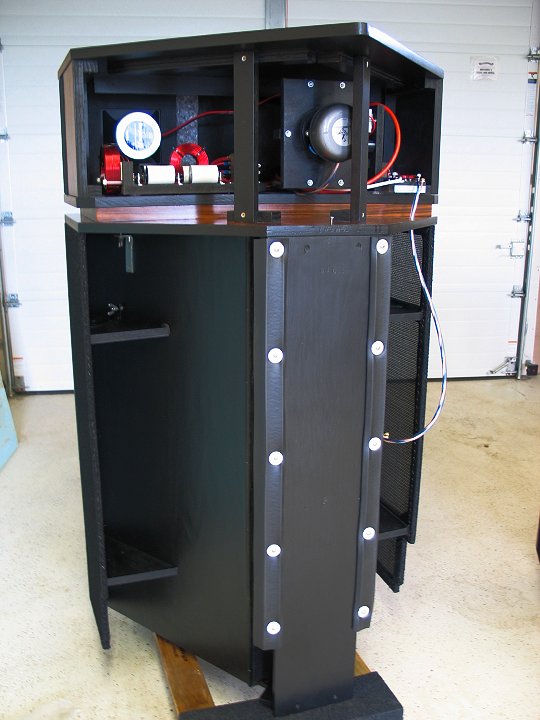
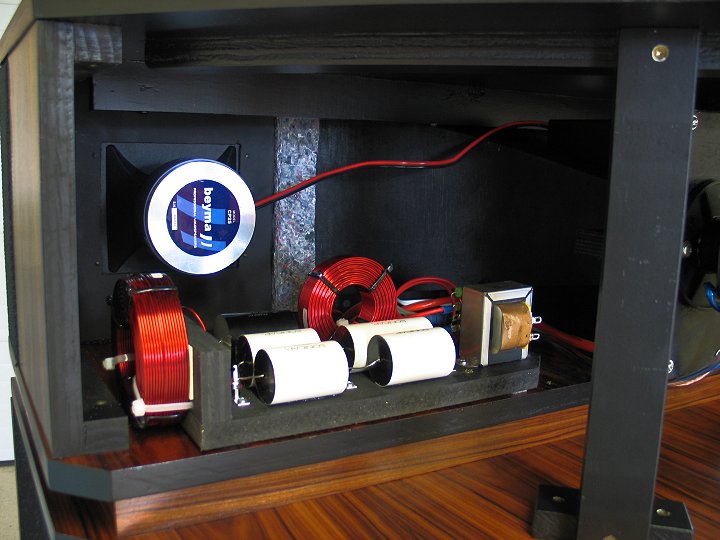
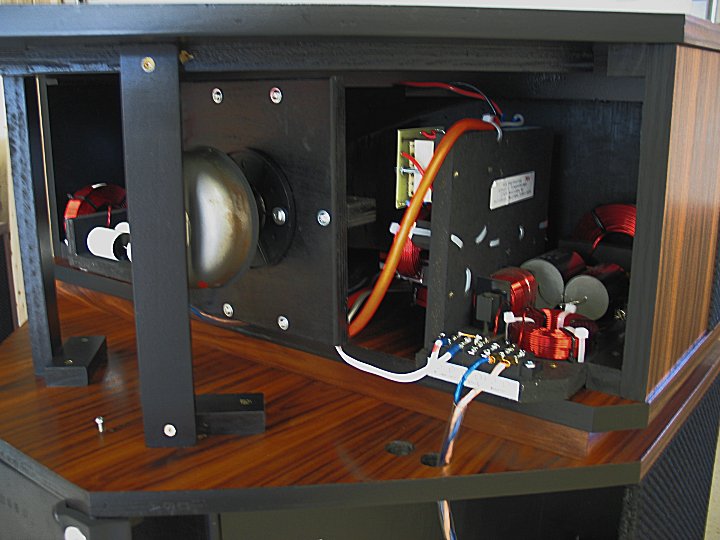
Moscow Delivery Photos
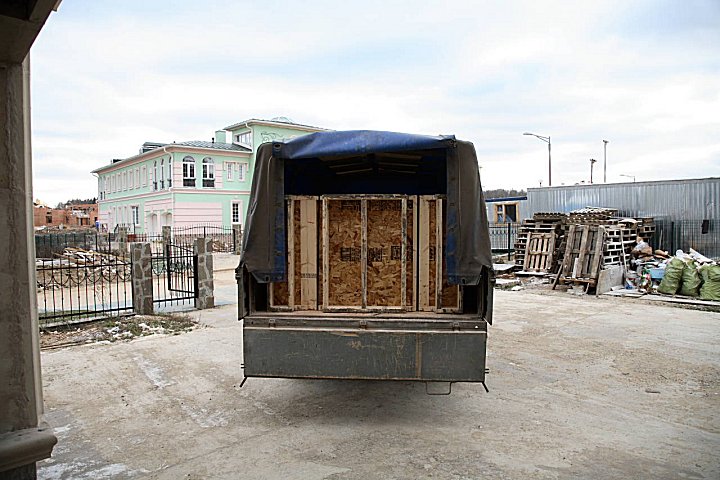
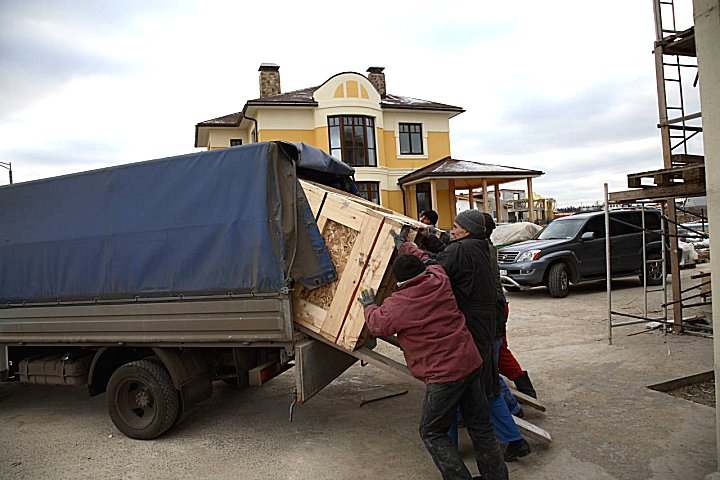
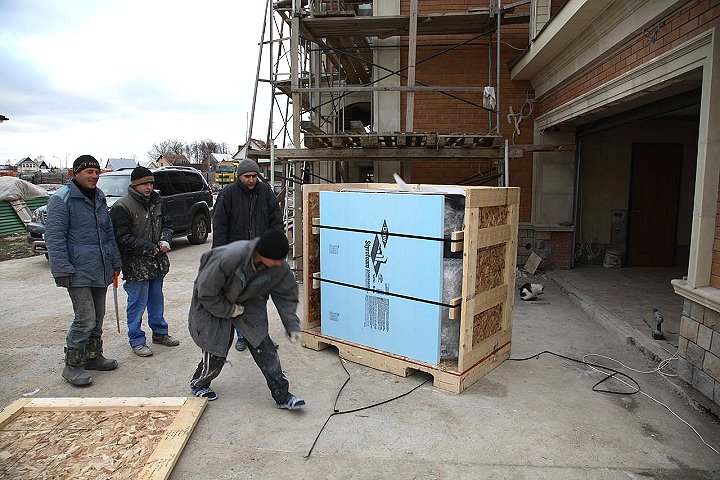
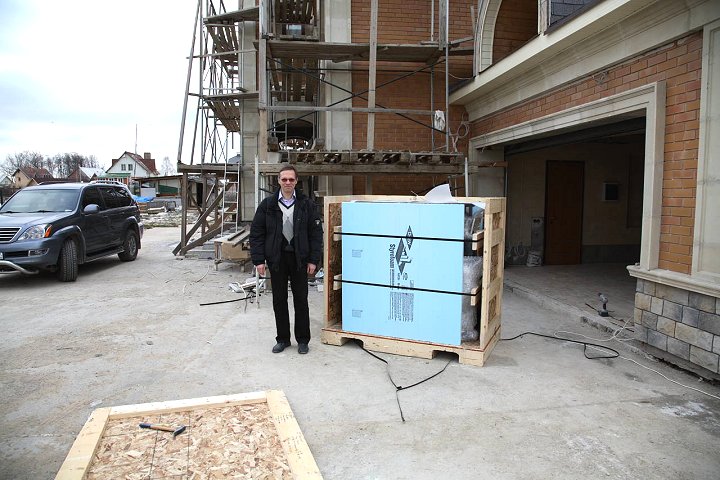
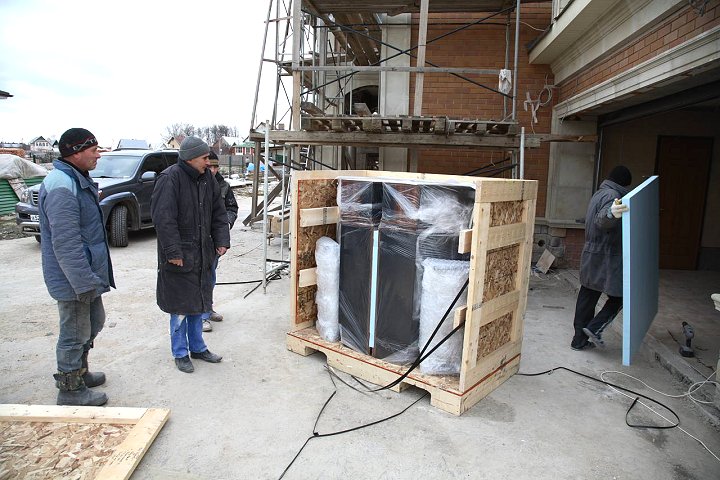
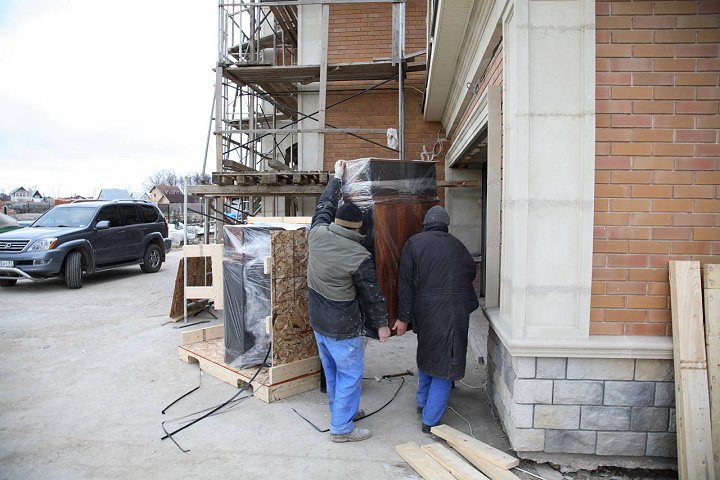
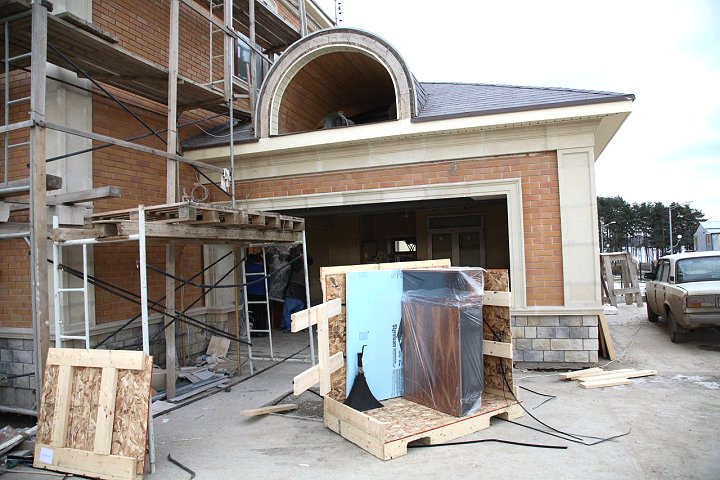
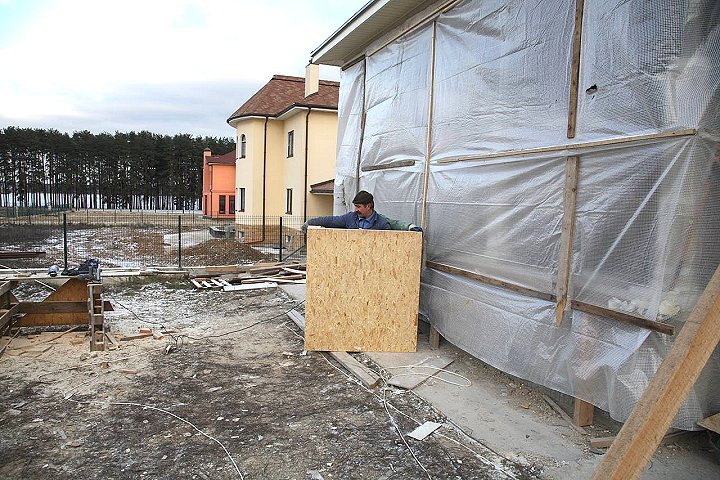
These speakers were sold to a gentleman in Moscow, Russia. This next series of photos had me smiling from ear to ear! It was very exciting to see my crate being opened up half a world away. I could sense the anticipation on the other end as they were opening it up.
The crate wasn’t designed to be on it’s side, but I guess it worked fine.
The speakers arrived in perfect condition. The crate was NOT opened during it’s journey, which took about 2-1/2 months.
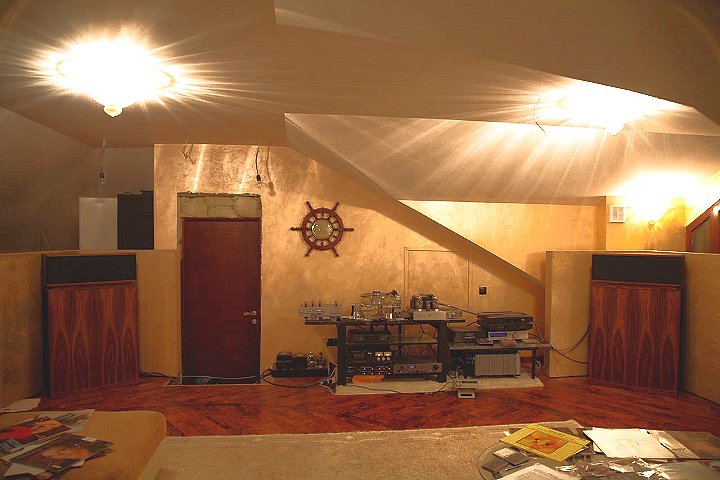
The Buyer’s First Email
The buyer’s first email to me after receiving the speakers:
Dear Greg,
At last today I received the Khorns!!!! everything went fine, it was easy to pick them up, then unload and bring them to the top floor. Now I’m listening to them – the sound is FANTASTIC!!! It is much better, than I expected.
My cables are not very good, some adjustments are neccessary, but all the same, the Khorns are SUPER!!! and BEAUTIFUL!!!! Special thanks for so perfect package, and!!! the book!!! and assessories.
I had no time to read the newspaper yet, first thing tomorrow(or today, since it is 3AM now). I cannot stop listening to my music which sounds absolutely different- much, much better!!!! As live music.
The crate surprised everybody, so perfectly speakers were packed. And the book!!! I’ll send photos tomorrow and thank You again!!!
Best regards,
Sergei
CLOSING NOTE
A Wonderful Project
The newspaper Sergei is referring to is the Rolling Stone magazine that has “THE” Klipsch article in it. The book is an autographed copy of the PWK Biography.
Overall this was a wonderful project to work on. I can’t thank Sergei enough, he was such a pleasure to deal with. The results are what matter most to me. I have a happy customer who’s enjoying a pair of great sounding and great looking speakers. I got to save another pair of Khorns and I made a few bucks doing it.
LET GREG KNOW YOU VISITED
Thanks for Viewing This Page
I appreciate that so many of you have clicked the email link below to let me know that you’ve viewed this webpage.
If you’ve viewed this page and would like to let me know, please send me an email. No need to say anything, just click and send it. Thanks.