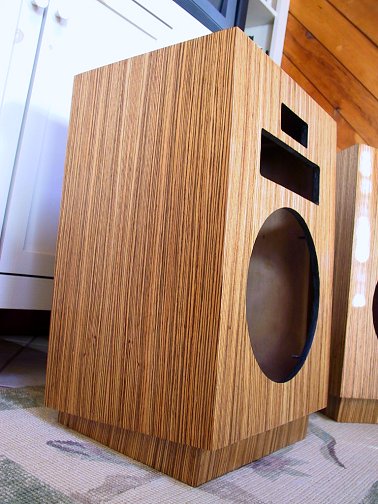
EARLY HERESY RESTORATION
Zebrawood Heresy Speakers
1972 Klipsch Heresy Restoration
An early restoration project using unbacked zebrawood veneer.
Early Restoration Project
This is an early restoration project. For more up to date information about veneering, please reference the “M” Khorn webpage.
1972 Klipsch Heresy Speakers
1972 Klipsch Heresy speakers.
I’m using unbacked zebrawood veneer purchased from “Certainly Wood”.
Disassembly and Motorboard Work
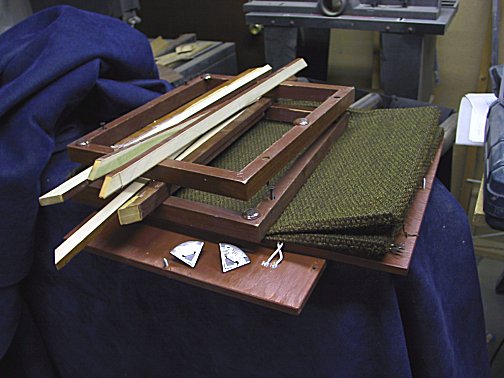
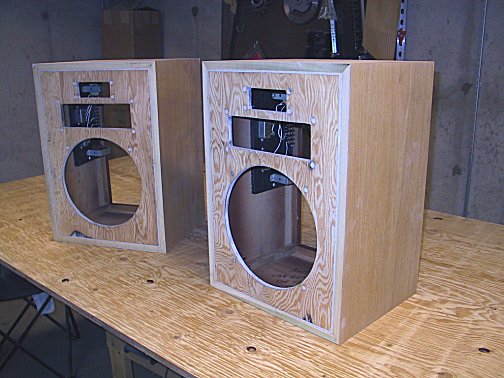
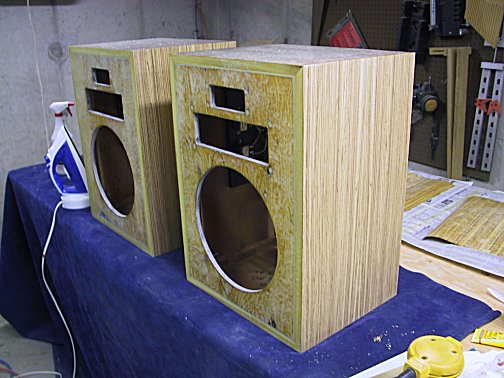
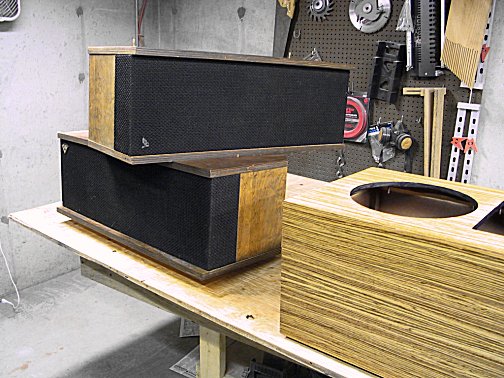
The back of the speaker has been removed and the components have all been removed from the motorboard.
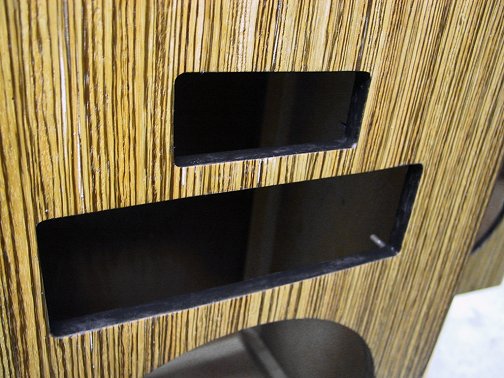
We decided to install veneer on the front of the speakers so that the beauty of the wood could be seen while listening to them, so I took the motorboard out and removed the grill cloth and logo.
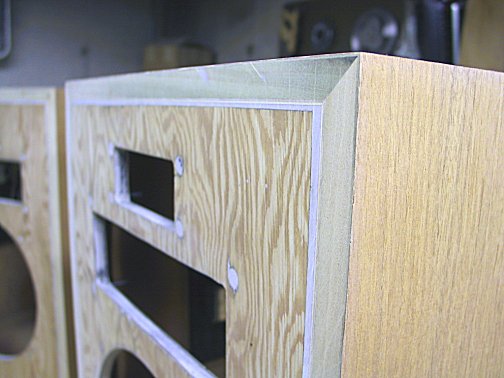
Then I used polyurethane construction adhesive to glue and screw it back in place. I removed the wood stands from the bottom and cut the front edges of the speaker box back flush with the motorboard. I used a setting-type resin to fill all the gaps.
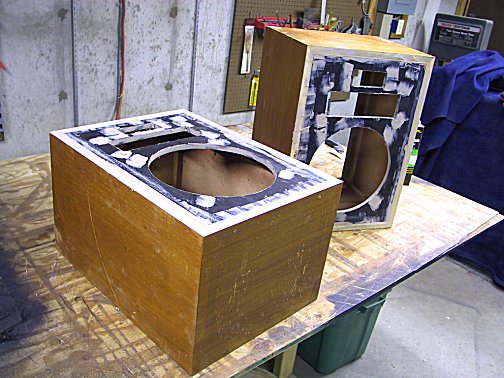
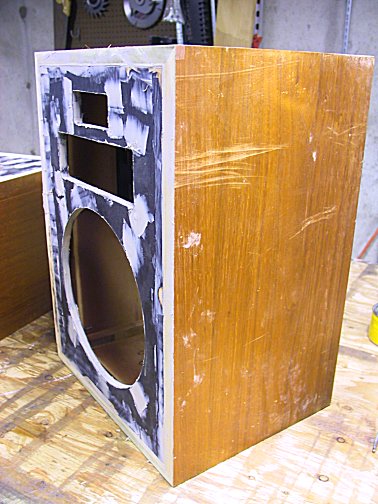
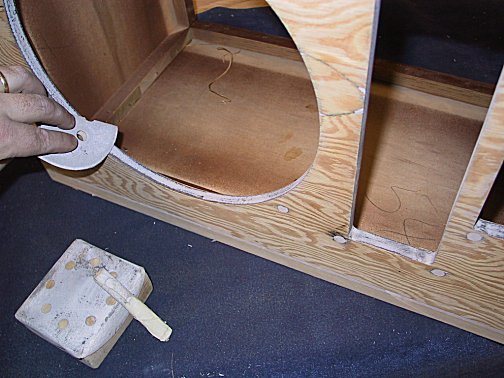
Sanding and Resin Repairs
After the resin completely set overnight, I sanded the front of the speaker with a belt sander and 50 grit belt. The idea is to end up with a smooth and completely flat front face to attach the veneer.
I also sanded the whole speaker with a random-orbit sander and 120 grit discs.
The speakers were in rough cosmetic shape, so they were perfect candidates for a re-veneering project.
Bookmatched Zebrawood Veneer
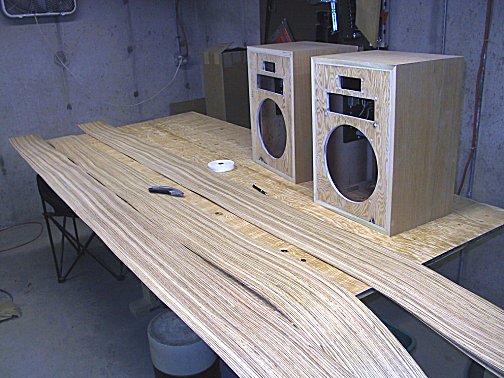
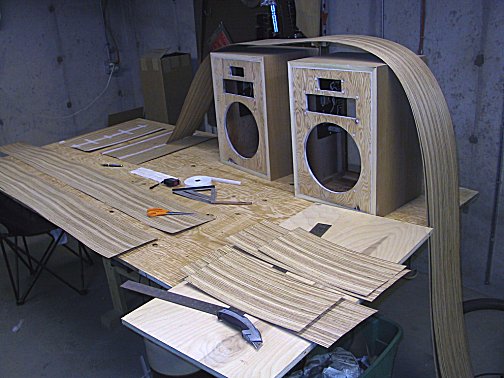
Laying out the veneer. It came in strips about 7″ wide and 10′ long, consecutively matched.
I used the first two to make the fronts, the next two to make the sides, top, and bottom of one speaker, and the next two to make the sides, top, and bottom of the other speaker.
As I paired them up, I flipped one over so the grains were bookmatched with one another.
Two strips attached together are wide enough for the sides, top, and bottom of the speakers, so I worked with the pairs and cut the pieces needed in series. This way the grains will match up from the sides to the top, if everything goes as planned.
Glue, Heat, and Pressure
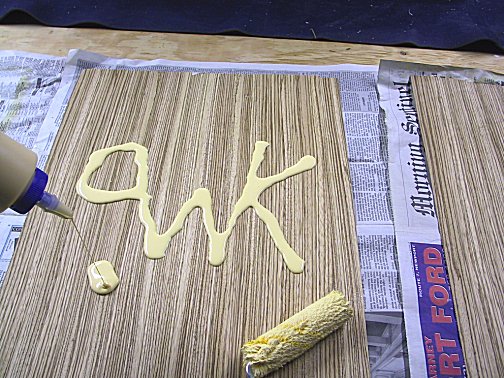
In this process, you apply Titebond II waterproof wood glue to both the substrate and the back of the veneer and let the glue completely dry.
The heat from the iron melts the glue and forms the bond. It’s important to apply a thick and even layer of glue, and wait until it’s completely dry before ironing it on.
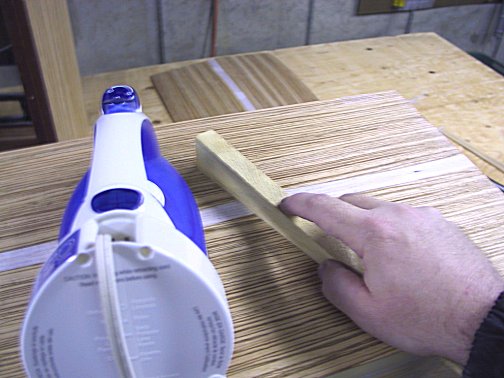
Before ironing the veneer in place, I trimmed the piece down so that only a 1/4″ or less was sticking out on all sides. I carefully centered the veneer on the speaker and started ironing in the center of the piece to initially set it in place.
Once I got the piece set in place, I started ironing at one side, moving the iron slowly across the speaker to the other side, while using a piece of wood to press the veneer into the melted glue as it cooled down.
Trimming and Setting the Veneer Edges
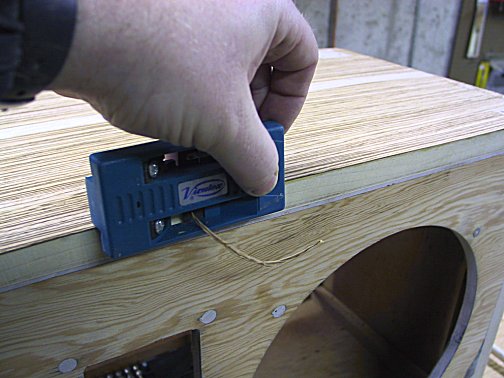
The edges that are going with the grain can be trimmed back using a hand-held veneer trimmer, but it can be tricky. If the trimmer catches the grain the wrong way, it will pull pieces of veneer off the speaker.
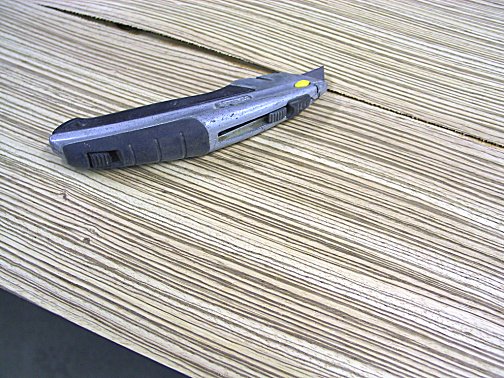
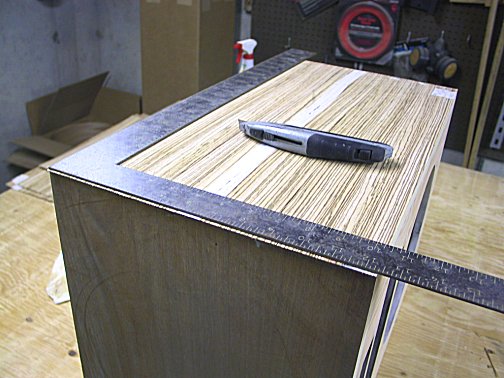
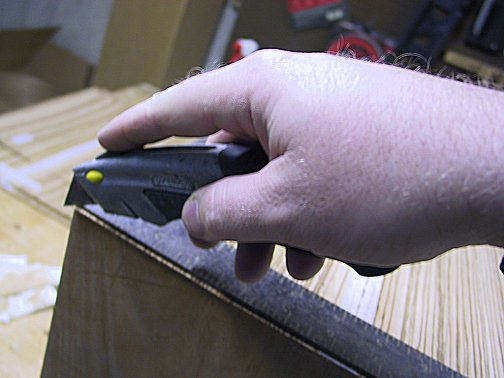
The veneer trimmer will not do the end grain of the veneer, so I used a metal straight edge and a utility knife with a new blade.
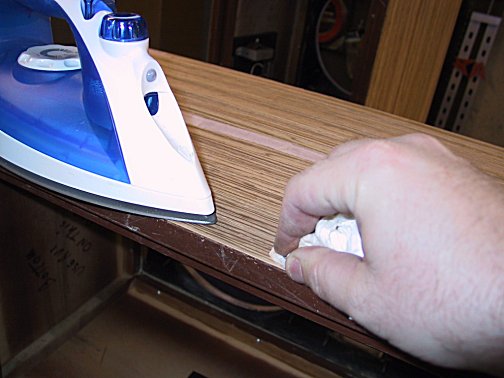
Once I get the edges trimmed back flush, I go back and make sure the edges are glued down tight. I use the iron and heat an area, then use a damp wad of paper towel to press down the area that was just heated.
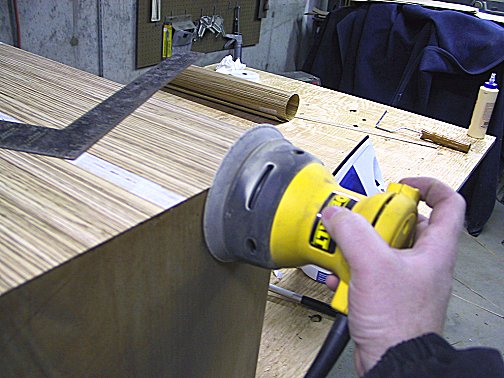
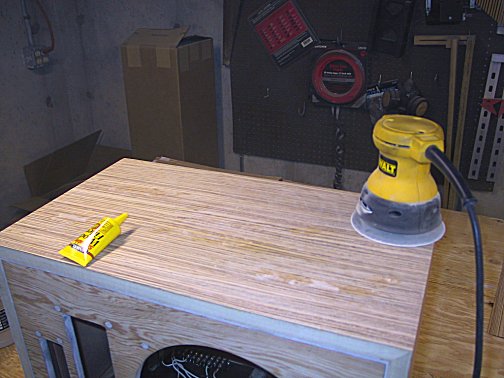
Once the edges were trimmed and I knew everything was set good, I sanded the whole top with a random-orbit sander and 180 grit discs.
Small Problems During Veneering
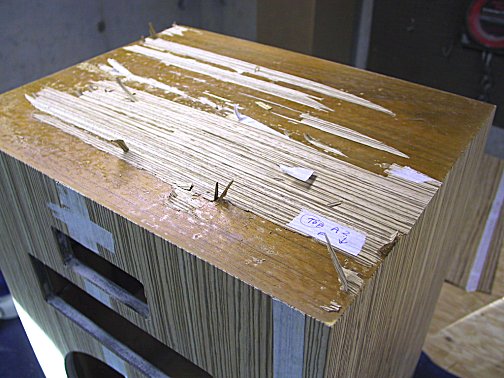
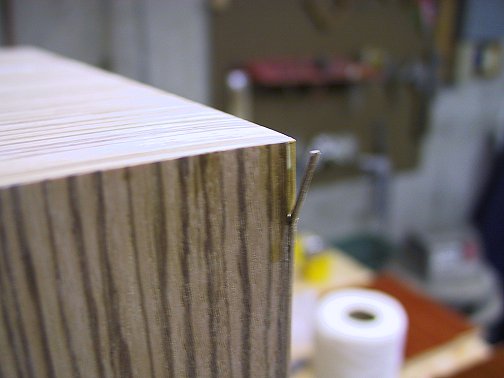
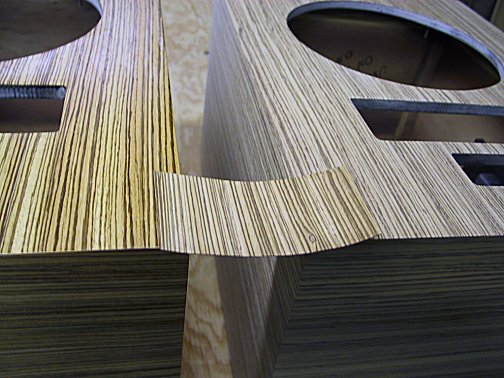
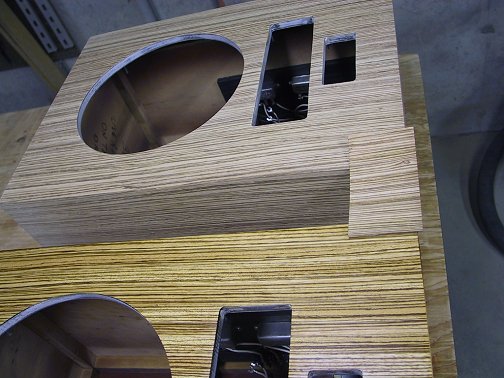
DO NOT DO THIS!!! I was paying so much attention to lining up the grain lines from the top to the sides, that I didn’t notice that there wasn’t enough veneer to overhang one corner.
Little things like this will happen. Easy to repair though, just put a little glue on it, let it set for a few minutes, and then put the iron on it and press it into place.
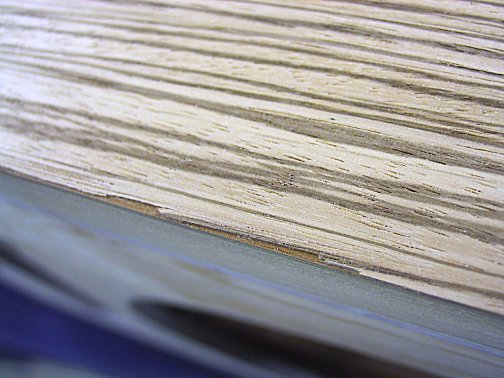
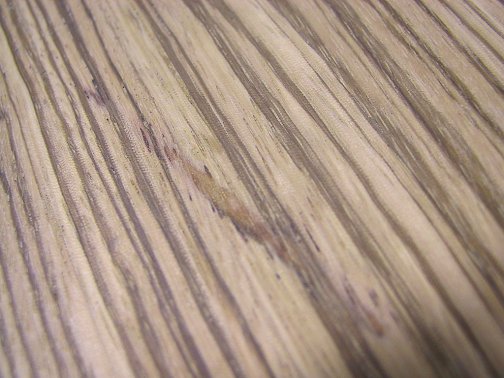
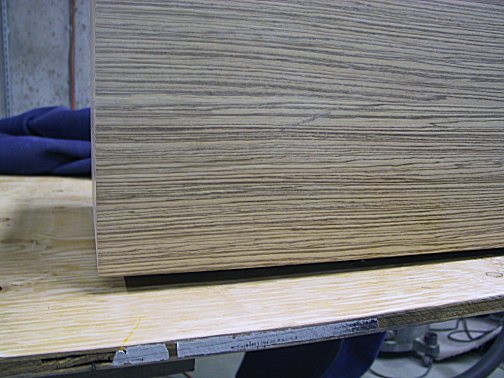
I’m not exactly sure how this happened. It’s hard to tell if I’ve sanded through the veneer, or if it’s in the veneer. This photo makes it look much worse than it is, thank goodness.
New Zebrawood Bases
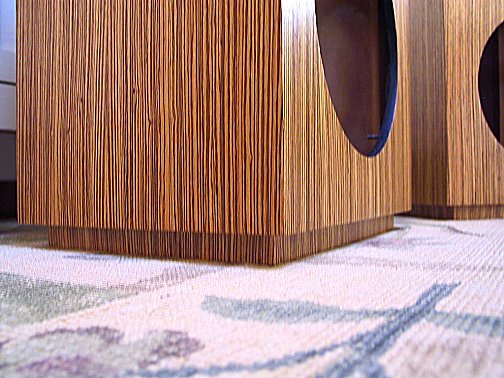
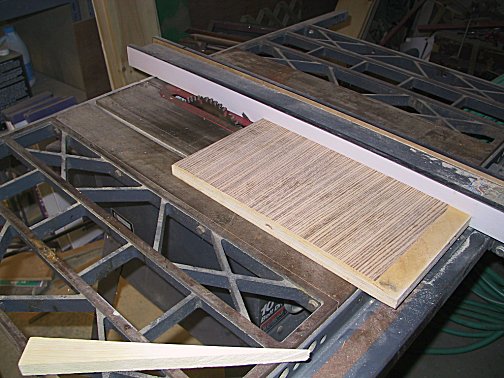
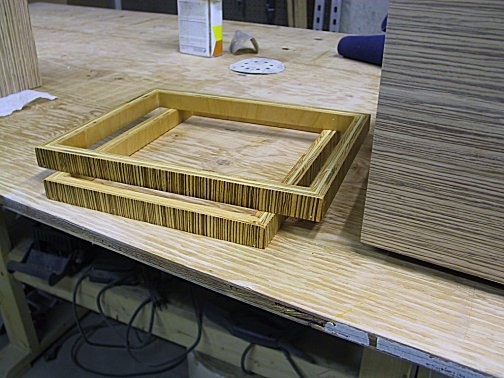
I decided it was easier to make new bases instead of re-veneering the old bases. I also decided to turn the grain vertical instead of how the factory did it, horizontal.
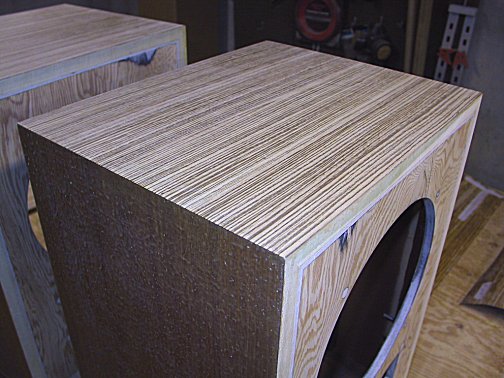
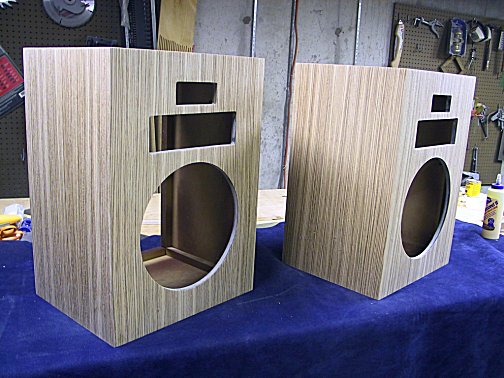
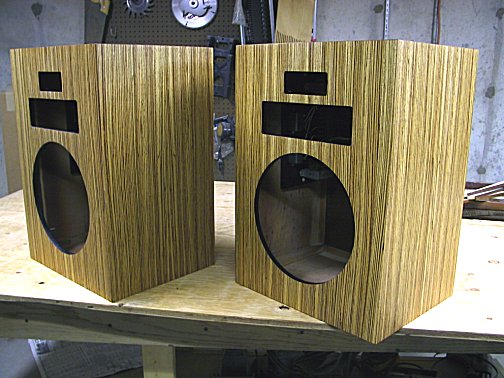
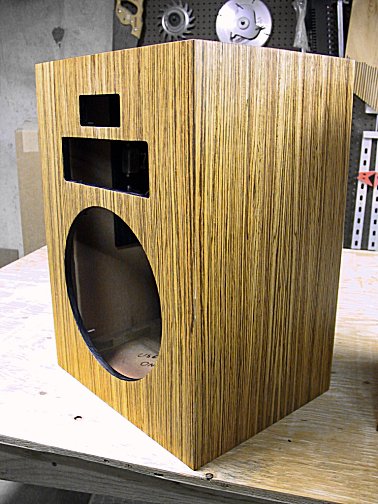
Here are the cabinets, all newly veneered, finish sanded, and ready for polyurethane. I have 15.5 hours into the project at this point.
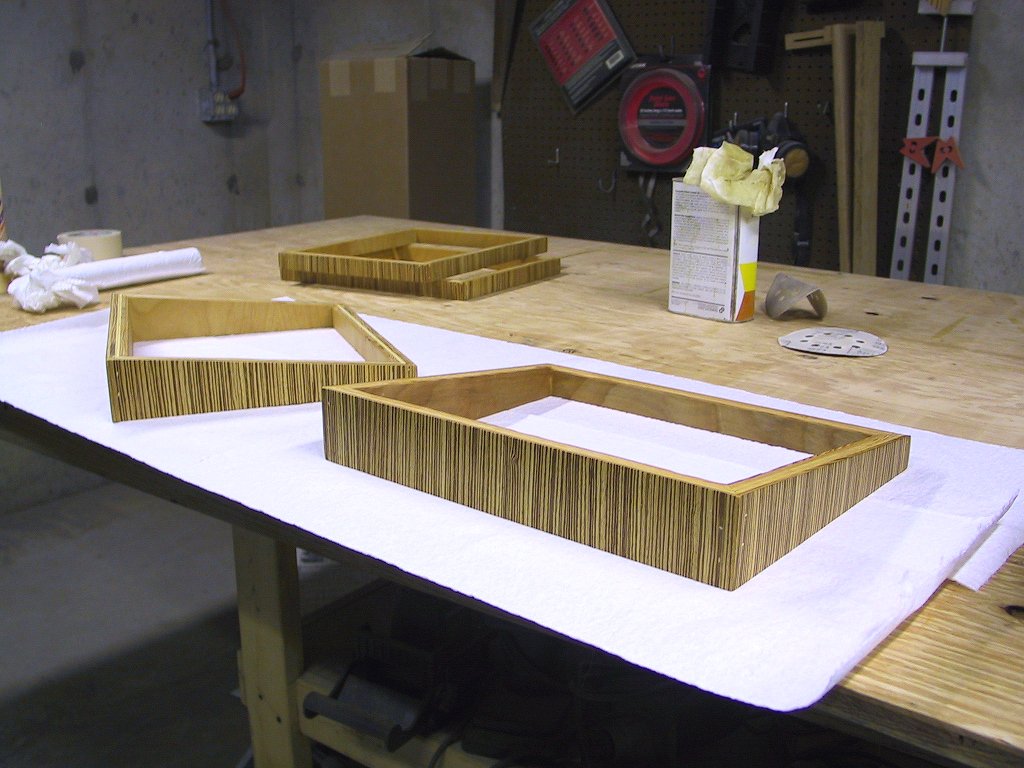
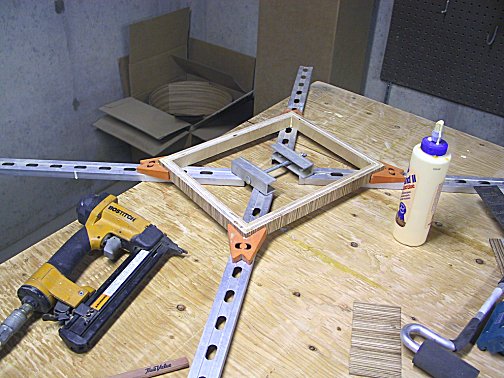
Assembling the bases was easy with one of these rigs. Titebond and 1-1/4″ brad nails should hold them secure.
Linseed Oil, Bases, and Hardware
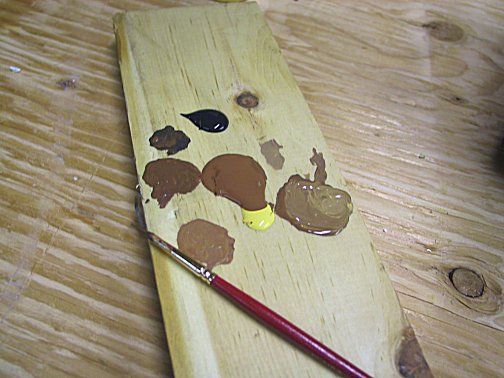
I had to make an executive decision. The clear poly just didn’t look like it was adding any color at all, so I went ahead and put a coat of linseed oil on the speakers to bring out a little more golden color.
The oil certainly makes the grain pop right out. It adds a lot of depth and I’m very happy with the way they look already, even without any polyurethane.
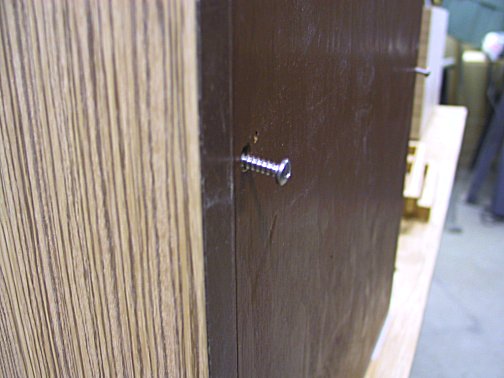
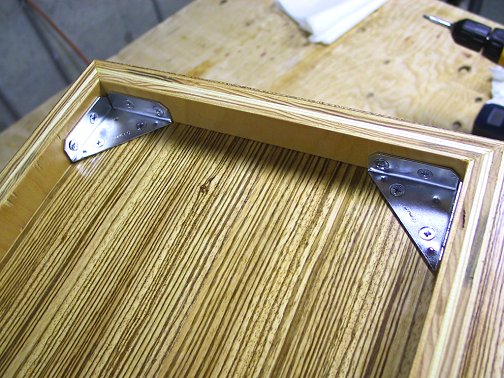
I found these great brackets made by Stanley to hold the bases onto the speakers.
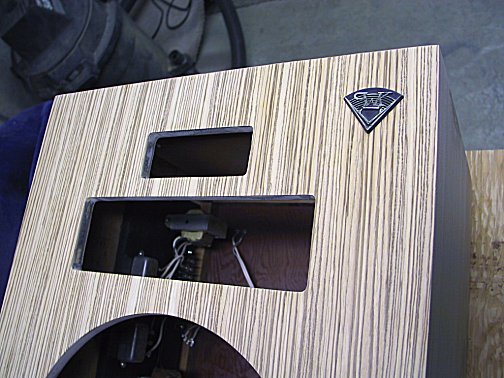
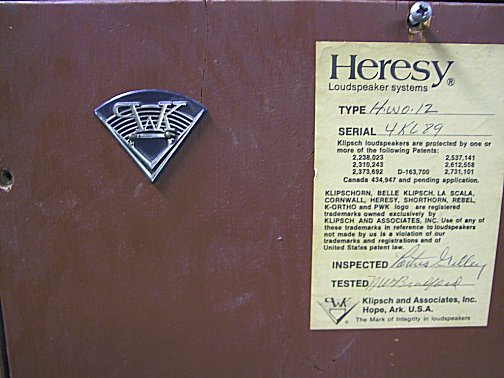
I mounted the PWK emblems on the back.
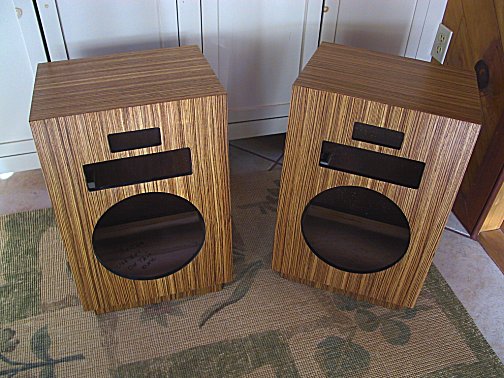
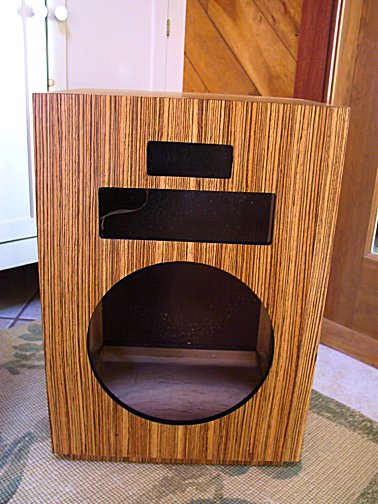
Finished Zebrawood Heresy Speakers
I now have 20.5 hours into this project with only a few coats of polyurethane left to go. I have moved these speakers to my other shop to apply the finish. Then I’ll pack em up and send em home!
Here they are, all finished and ready to go. Overall, the finish came out pretty good. I was disappointed to see some very small scratches from sanding between coats. Hard to believe, but 400 grit sandpaper can still leave scratches if the corner of the paper is hitting the finish just right.
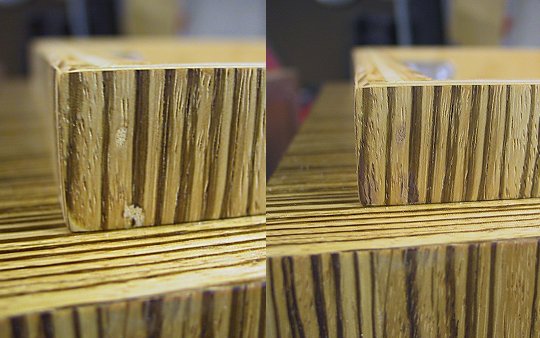
Here’s the bases with the grain going vertical. This looks much nicer than the way the factory bases were done with the grain going horizontal, especially with the zebrawood grain.
I also built a pair of angled bases.